
Jul 30
Jul 30
Jul 29
Jul 22
Jul 19
Jul 17
Many people take vitamins daily, but few realize these supplements can silently damage their teeth if brushing is done at the wrong time. Chewable, gummy, and acidic vitamins create an environment that weakens enamel and feeds oral bacteria. Brushing too soon can worsen enamel erosion, while brushing too late allows plaque-forming sugars and acids to linger. This article explains the science behind vitamin acidity, saliva response, and brushing timing — and how BrushO’s AI-guided brushing protects your enamel, gumline, and long-term oral health.
Vitamins — especially vitamin C, multivitamins, iron, B-complex, and gummy supplements — are often:
• Acidic
• Sugary
• Sticky
• Enamel-softening
Once they dissolve in your mouth, they:
• Lower oral pH
• Soften enamel
• Feed bacteria
• Increase plaque formation
This creates a temporary high-risk zone for tooth erosion and cavities.
After taking vitamins:
• Your enamel becomes softened by acid
• Brushing immediately scrapes away weakened enamel
• This accelerates tooth erosion, sensitivity, and yellowing
But if you wait too long:
• Sugars and acids remain
• Bacteria produce decay-causing acids
• Gumline plaque increases
Timing matters more than most people realize.
The best answer: Brush BEFORE taking vitamins.
Here’s why:
• Removes plaque before acid exposure
• Creates a clean surface
• Allows fluoride to strengthen enamel
• Prevents vitamins from sticking to bacteria-coated teeth
After taking vitamins:
• Rinse with water
• Wait 30–60 minutes
• Then brush again if needed
This protects enamel while still removing residue.
These are the worst for teeth:
• Vitamin C gummies
• Multivitamin gummies
• Iron syrups
• Effervescent tablets
They:
• Stick to teeth
• Pool around the gumline
• Feed plaque bacteria
• Erode enamel faster than soda
Without proper brushing timing, these supplements dramatically increase cavity risk.
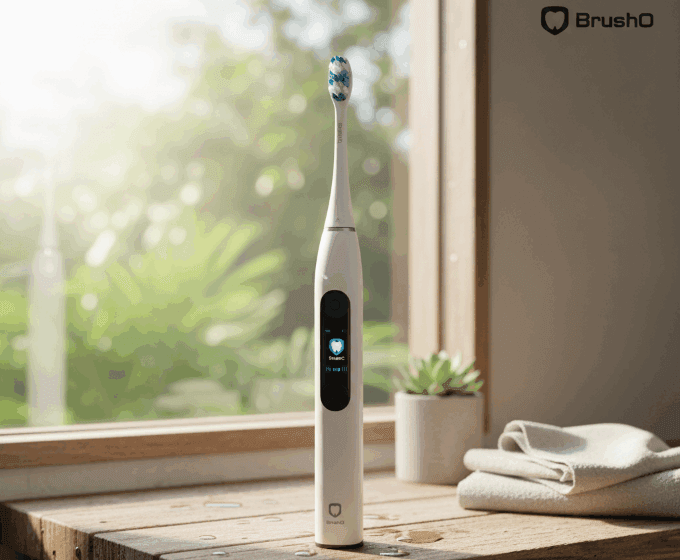
BrushO is designed for situations where timing and technique matter most.
BrushO helps by:
• Tracking gumline coverage where vitamin acids collect
• Monitoring pressure so softened enamel isn’t over-scrubbed
• Providing brushing reminders for safe timing
• Guiding zone-by-zone cleaning to remove vitamin residue
• Using AI to prevent enamel wear
This makes BrushO ideal for anyone taking daily supplements.
Do this:
1. Rinse with water
2. Chew sugar-free gum to boost saliva
3. Wait 30–60 minutes
4. Brush gently with BrushO
Never brush immediately after acidic supplements.
You are at higher risk if you take:
• Vitamin C
• Iron
• Prenatal vitamins
• Gummy supplements
• Sports or immunity boosters
These users benefit most from AI-guided brushing.
Vitamins support your health — but if taken without smart brushing timing, they quietly destroy enamel. Brushing before supplements and using BrushO’s AI-guided system ensures your teeth stay protected while your body gets the nutrients it needs. Your supplements should help you — not harm your smile.
Feb 4
Feb 4
Jul 30
Jul 30
Jul 29
Jul 22
Jul 19
Jul 17

Hyperdontia is the presence of one or more teeth in excess of the normal dental formula, and the resulting teeth are described as supernumerary. The condition is common enough to appear in routine practice but variable enough in presentation that the decision to intervene is rarely straightforwar...

Few patients complete orthodontic treatment without asking whether their teeth will move back. The honest answer is that they will, to some degree, in the majority of cases. Relapse is not a failure of treatment but a predictable biological response, and understanding why it happens is the basis ...

The mandible is the largest and most frequently fractured bone of the facial skeleton, and its management sits at the interface between trauma surgery and restorative dentistry. Treatment has shifted over four decades from prolonged maxillomandibular fixation towards rigid internal fixation with ...

Chronic liver disease affects hundreds of millions of people worldwide, and its prevalence continues to rise with the epidemic of metabolic liver disease. The liver is central to haemostasis, drug metabolism and immune competence, and its failure therefore alters the risk profile of almost every ...

Excessive gingival display, commonly described as a gummy smile, is one of the most frequent aesthetic concerns presented to dental practitioners. The condition is not a single entity but a clinical presentation that can arise from skeletal, gingival, muscular or dental factors, and the treatment...

Drug-induced gingival overgrowth is a well-recognised adverse effect of several widely prescribed medications, and it remains one of the most common drug-related findings in periodontal practice. The condition produces firm, fibrous enlargement of the gingiva that can interfere with speech, masti...

Denture stomatitis is an inflammatory condition of the denture-bearing mucosa that affects a large proportion of removable prosthesis wearers, yet it is frequently dismissed as a cosmetic annoyance. The condition is driven by a Candida biofilm on the fitting surface of the prosthesis, and it is m...

Chronic kidney disease affects an estimated 850 million people worldwide, and the number of patients surviving on dialysis or with a renal transplant continues to rise. These patients carry an oral disease burden that is substantially higher than that of the general population, and their medical ...

Angular cheilitis is an inflammatory lesion of the labial commissures that presents with erythema, fissuring and crusting at the corners of the mouth. It is one of the most common conditions encountered in general dental practice, yet it is frequently treated as a simple fungal infection and allo...

Adverse reactions to dental materials are uncommon but they are not rare, and they are frequently misdiagnosed because the oral mucosa responds to allergens in a limited number of ways. A burning sensation, a persistent ulcer or an unexplained area of erythema may all represent a hypersensitivity...

แปรงสีฟันไฟฟ้า BrushO AI ให้คำแนะนำการแปรงแบบเรียลไทม์ ฟีดแบ็กแรงกด การติดตามพื้นที่แปรง และรายงานความคืบหน้าในแอป เพื่อกิจวัตรประจำวันที่สะอาดขึ้น
แปรงสีฟันไฟฟ้า BrushO AI ให้คำแนะนำการแปรงแบบเรียลไทม์ ฟีดแบ็กแรงกด การติดตามพื้นที่แปรง และรายงานความคืบหน้าในแอป เพื่อกิจวัตรประจำวันที่สะอาดขึ้น


Address: RM 1427, 14/F RADIO CITY 505, HENNESSY RD CAUSEWAY BAY, HONG KONG
Code: 000000
Phone: +852-53758652
Email: customerservice@brusho.com