
Jul 30
Jul 30
Jul 29
Jul 22
Jul 19
Jul 17
Is an electric toothbrush good for health? More than just a gadget, today’s electric toothbrushes—and especially AI-powered electric toothbrushes—are proven to protect gum health, remove plaque, and support healthier daily habits. From preventing cavities to helping children and seniors build better routines, smart toothbrushes like the BrushO Toothbrush are redefining oral care as part of whole-body health.
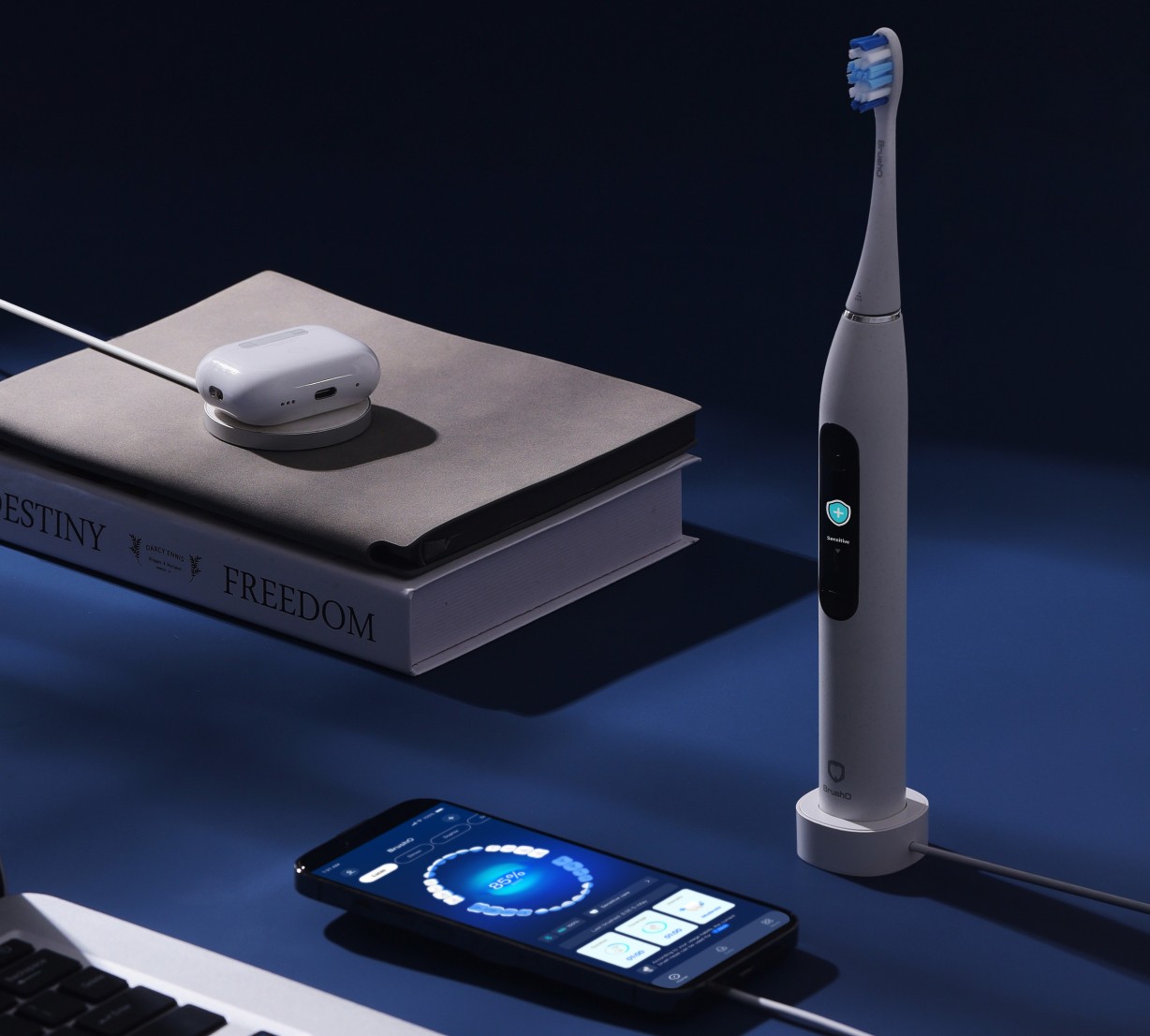
Switching to an electric toothbrush offers health advantages beyond clean teeth:
Plaque removal electric toothbrush → Vibrations break up plaque more efficiently than manual brushing.
Gum health electric toothbrush → Gentle brushing with a pressure sensor toothbrush reduces inflammation.
Oral hygiene habits → Timers and reminders encourage brushing for the dentist-recommended 2 minutes.
Whitening electric toothbrush → Special modes polish enamel and prevent surface stains.
👉 Using an electric toothbrush daily is linked to lower rates of gum disease and better long-term oral health.
Dentists often explain that gum health is linked to overall body health. Gum disease can increase the risks of heart disease and diabetes.
AI-Powered Electric Toothbrush → Prevents over-brushing with a pressure sensor.
Toothbrush with app → Tracks habits and highlights missed zones that could cause gum problems.
BrushO Toothbrush → Includes Gum Care Mode to massage gums and improve circulation.
By protecting gums, smart toothbrushes may indirectly support cardiovascular health.
The most challenging aspect of brushing is maintaining consistency. Most people brush too short or miss areas.
Toothbrush with timer → Keeps you brushing for a full 2 minutes.
Real-time brushing feedback → Shows coverage and brushing pressure.
Oral hygiene improvement tips → Help you gradually correct mistakes.
BrushO AI-Powered Electric Toothbrush not only guides users but also protects brushing data privacy with decentralized storage—meaning your data belongs to you.
Parents often ask: Is an electric toothbrush safe for children? The answer is yes—when designed properly.
Kids often brush too fast → A timer ensures they reach the 2-minute rule.
Hard-to-reach areas → Vibrations clean better around molars.
Fun brushing habits → With apps and feedback, brushing becomes engaging.
👉 The BrushO Toothbrush supports family profiles in its app, so parents can track kids’ progress and build lifelong oral hygiene habits.
Seniors may face challenges like limited dexterity or gum sensitivity.
Sensitive teeth toothbrush → Gentle vibration modes reduce discomfort.
Long battery life toothbrush → BrushO lasts 45 days on one charge, reducing charging hassle.
Replaceable brush heads → BrushO includes 4 DuPont soft heads, safe for aging enamel.
AI-powered feedback ensures seniors maintain effective brushing even if hand strength declines.
Yes. Cavities form when plaque and bacteria are left behind.
Plaque removal electric toothbrush → Cleans hard-to-reach zones more effectively.
Whitening electric toothbrush → Prevents discoloration, making it easier to spot early cavities.
BrushO Toothbrush with an app → Provides brushing scores so users know if they are cleaning thoroughly.
The BrushO Smart Toothbrush integrates multiple features to support long-term health:
AI-Powered Electric Toothbrush with real-time feedback.
Smart Pressure Sensor to protect gum health.
9 Modes for sensitive teeth, whitening, and gum care.
45-Day Battery Life + Qi Wireless Charging
4 Replaceable DuPont Brush Heads included in every set.
BrushO Toothbrush with app that tracks oral hygiene habits while keeping data private.
So, is an electric toothbrush good for health? The answer is a clear yes. By improving plaque removal, protecting gum health, supporting sensitive teeth, and helping both kids and seniors build lasting oral hygiene habits, electric toothbrushes—especially AI-powered ones like the BrushO Toothbrush—make daily brushing smarter and healthier.
Oct 10
Oct 9
Jul 30
Jul 30
Jul 29
Jul 22
Jul 19
Jul 17

Squamous cell carcinoma is not a single, uniform disease, and two of its oral variants illustrate the extremes of its behavior. Verrucous carcinoma is a slow-growing, exophytic tumor that almost never metastasizes, while spindle cell carcinoma is an aggressive, sarcomatoid malignancy that can be ...

Most people expect a toothache to be the first sign of pulp disease, but some forms of pulpitis are surprisingly silent. A pulp polyp is the visible result of chronic hyperplastic pulpitis, a condition in which the dental pulp grows out of a large carious opening as a fleshy mass. Recognizing thi...

Dry mouth is not merely uncomfortable; it is a medical condition with real consequences for teeth, speech, swallowing and quality of life. When the salivary glands cannot produce enough saliva, medications called sialogogues can restore some of the missing fluid. Pilocarpine and cevimeline are th...

A blister in the mouth can be the first warning of a systemic autoimmune disease, and two disorders deserve particular attention in the dental chair: pemphigus vulgaris and mucous membrane pemphigoid. Both produce chronic oral ulceration, yet their immunologic targets, clinical behavior and long-...

When infection drains from a tooth, the body often creates a visible escape route, and the dentist must interpret these fistulous openings correctly. A parulis is the common gum boil that signals chronic periapical infection, while an oroantral fistula is a communication between the mouth and the...

Among the fibro-osseous lesions of the jaws, the ossifying fibroma holds a unique position because it is a true neoplasm, unlike the reactive cemento-osseous dysplasia discussed in an earlier article. It grows continuously, expands bone and requires surgical removal, and its cemental variant adds...

Not all keratocystic lesions of the jaw behave alike, and one of the most important distinctions in oral pathology separates the orthokeratinized odontogenic cyst from its better-known relative, the odontogenic keratocyst. Although the two lesions look similar under the microscope at first glance...

Periodontal disease is usually a slowly progressive infection, but a rare form called necrotizing ulcerative periodontitis destroys tissue with alarming speed. Unlike ordinary periodontitis, this condition produces necrotic, cratered papillae, deep pocketing and rapid bone loss, and it appears al...

Every parent has met the child who refuses to eat because of painful mouth sores, and most of these children have one of two viral illnesses: herpangina or hand, foot and mouth disease. Both are caused by enteroviruses, both produce fever and oral ulcers, and both are overwhelmingly common in you...

Cementoosseous dysplasia is one of the most common fibro-osseous lesions found on dental radiographs, yet it is also one of the most frequently misdiagnosed. The lesion replaces normal bone with cellular fibrous tissue and cementum-like material, and it appears in several forms that range from a ...

Электрическая зубная щетка BrushO с ИИ дает подсказки в реальном времени, обратную связь по давлению, отслеживание покрытия и отчеты о прогрессе в приложении для более чистой ежедневной рутины.
Электрическая зубная щетка BrushO с ИИ дает подсказки в реальном времени, обратную связь по давлению, отслеживание покрытия и отчеты о прогрессе в приложении для более чистой ежедневной рутины.


Address: RM 1427, 14/F RADIO CITY 505, HENNESSY RD CAUSEWAY BAY, HONG KONG
Code: 000000
Phone: +852-53758652
Email: customerservice@brusho.com