
Jul 30
Jul 30
Jul 29
Jul 22
Jul 19
Jul 17
Why Dentists Love Electric Toothbrushes
Years of research and clinical evidence confirm the benefits of electric toothbrushes. According to the American Dental Association (ADA), electric toothbrushes can significantly reduce plaque and gingivitis compared to manual brushing. A landmark study published in the Journal of Clinical Periodontology even showed that electric toothbrush use resulted in an 11% reduction in plaque and a 21% reduction in gum recession over time.
Dentists consistently recommend electric toothbrushes to:
Patients with limited mobility (e.g., arthritis patients)
Children learning to brush independently
People who tend to overbrush
People who have trouble effectively removing plaque
What Dentists Expect from Electric Toothbrushes When dental professionals recommend toothbrushes, they look for specific attributes that directly impact the quality of oral hygiene:
✅ Built-in timer to ensure users brush for a full 2 minutes
✅ Zone navigation to evenly cover all areas of the mouth
✅ Soft bristles to protect tooth enamel and gums
✅ Steady brush head movement for efficient cleaning
✅ Pressure sensor to prevent over-pressure
✅ Smart feedback to correct brushing errors in real time
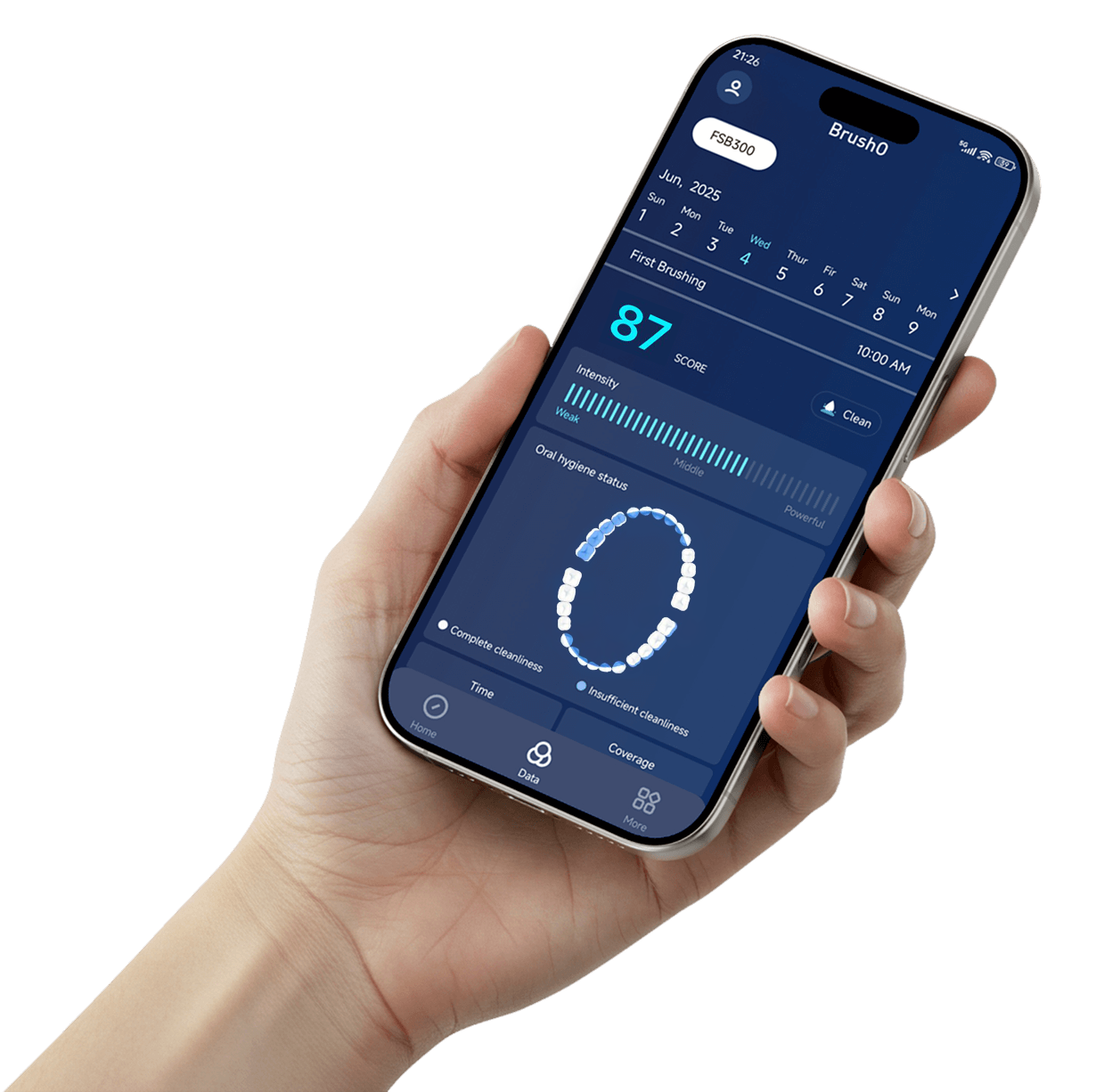
How BrushO Meets and Exceeds These Standards BrushO was designed with one goal in mind: to deliver a brushing experience designed by your dentist. How it aligns with professional standards:
🧠 AI Real-time Feedback: The BrushO app analyzes your brushing habits and provides instant guidance. It highlights missed areas, suggests improvements, and helps you develop a daily habit that your dentist will approve.
🕑 Built-in Smart Timer and Zone Guidance: BrushO guides you through each brushing session, ensuring even coverage and the right brushing duration.
⌛️ 11 Personalized Brushing Modes: Whether you need gentle care for sensitive gums or a deep clean mode to clean your teeth, BrushO has you covered.
🧵 Soft and Effective Bristles: Our ultra-fine bristles are designed to remove debris without damaging tooth enamel or gums.
💡 Pressure Sensor: When you use too much pressure, a red light lights up at the bottom of the brush to warn you and automatically reduce the speed and pressure to prevent over-brushing and gum irritation.
Bonus: Personalized Guidance from the App What really sets BrushO apart is its smart app integration. Think of it as your personal dental assistant. It offers:
Daily Brushing Reports
Personalized Oral Hygiene Scores
Long-term Progress Tracking
Motivates you to develop and maintain healthy habits
Real Results Backed by Experts More and more dental professionals are using smart oral care tools like BrushO. According to recent surveys, more than 70% of dentists say they believe an AI toothbrush can help their patients improve their hygiene between visits.
A dentist from Los Angeles noted, “BrushO fills the gap that our twice-yearly checkups don’t cover. It’s like having a mini oral health coach at home.”
Conclusion: So, do dentists recommend electric toothbrushes? Of course. But they recommend brushes that are effective, gentle, smart, and encourage better habits.
BrushO takes these expectations to the next level. With its AI feedback, customizable settings, and professional-grade performance, it’s not only recommended by dentists, it’s the electric toothbrush they dream of.
➡️ If you’re serious about oral health, choose BrushO!
For more information, visit brusho.com
Jul 30
Jul 30
Jul 29
Jul 22
Jul 19
Jul 17

The uncontrolled hypertension is the condition that the dental practice meets in the patient who presents with the elevated pressure that the guideline does not permit for the elective treatment, and the management of this patient requires the deferral of the dental procedure and the referral to ...

The closure of the extraction space in the orthodontic treatment is the phase that demands the careful selection of the mechanics and the monitoring of the force that the appliance delivers. The sliding mechanics that rely on the continuous archwire and the power chain that connects the brackets ...

The transverse discrepancy of the maxilla is the problem that the crowding and the posterior crossbite often hide, and the maxillary expansion is the treatment that addresses the width of the arch rather than the position of the individual tooth. The clinician who diagnoses the constriction early...

The local anaesthesia is the daily procedure that the modern dentistry treats as the routine, and the complications that follow it range from the transient and the trivial to the permanent and the serious. The clinician who injects by the habit without the anatomy in the mind is the clinician who...

The hypertension is the condition that the dental practice meets in the every day, and the patient who carries the elevated pressure without the symptoms is the patient who presents the risk that the chair-side measurement reveals. The dental team occupies the position that no other profession ho...

The glass-ceramic crown has become the default restoration for the anterior and the many posterior teeth, and the material selection within the family is the decision that determines the strength, the aesthetics, and the longevity of the result. The lithium disilicate, the leucite, and the zircon...

The dental phobia is the extreme form of the dental fear that prevents the patient from attending the treatment that the oral health requires, and the management of the phobia demands the skill that extends beyond the routine behaviour guidance. The systematic desensitization, the exposure therap...

The dental fear of the child is the condition that shapes the attitude for the lifetime, and the clinician who manages the first visits with the skill builds the patient who attends the recall without the dread. The fear that the child develops follows the many sources, and the practice that reco...

The patient with controlled hypertension is the patient who requires the dental care that the oral health demands and the treatment that the blood pressure permits, and the clinician who manages the controlled case safely follows the guideline that the evidence supports. The controlled hypertensi...

The ceramic veneer is the restoration that the aesthetic dentistry depends on, and the bond that retains the veneer on the enamel is the critical link that determines whether the restoration survives the function or fractures and debonds. The clinical technique from the preparation to the cementa...

Электрическая зубная щетка BrushO с ИИ дает подсказки в реальном времени, обратную связь по давлению, отслеживание покрытия и отчеты о прогрессе в приложении для более чистой ежедневной рутины.
Электрическая зубная щетка BrushO с ИИ дает подсказки в реальном времени, обратную связь по давлению, отслеживание покрытия и отчеты о прогрессе в приложении для более чистой ежедневной рутины.


Address: RM 1427, 14/F RADIO CITY 505, HENNESSY RD CAUSEWAY BAY, HONG KONG
Code: 000000
Phone: +852-53758652
Email: customerservice@brusho.com