
Jul 30
Jul 30
Jul 29
Jul 22
Jul 19
Jul 17
Brushing your teeth seems like one of the simplest daily routines, yet for many people, consistency remains a challenge. Skipped nights, rushed mornings, and uneven brushing are far more common than most realize. The issue isn’t laziness—it’s a matter of habit psychology. Understanding why brushing habits break down is the first step toward building a routine that actually lasts.
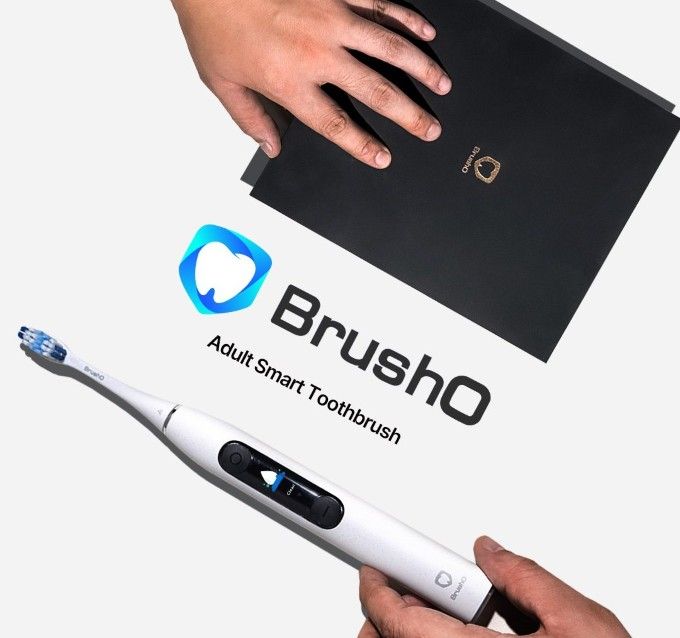
Human habits are not driven by logic alone. They are shaped by environment, emotional reward, feedback loops, and perceived effort. Brushing often fails as a habit because it lacks immediate feedback—unlike exercise, skincare, or diet changes, brushing feels repetitive with delayed rewards. When people don’t feel the benefit instantly, motivation drops.
Many people brush on autopilot. Without awareness of results—such as missed zones or overpressure—brushing feels like a checkbox task rather than a purposeful action. When a routine lacks meaning, it’s easier to skip.
Most people assume they brush “well enough.” Without feedback, they don’t realize:
• They consistently miss molars or gumlines
• They brush too hard or too fast
• They repeat the same mistakes daily
Without correction, poor habits become invisible—and permanent.
Late nights, early mornings, travel, stress, and screen fatigue all disrupt routines. Brushing is often the first habit sacrificed when time feels tight because it’s perceived as low-risk to skip occasionally. Unfortunately, oral health damage compounds silently.
Humans are motivated by progress. When brushing offers no visible improvement, no tracking, and no sense of achievement, the brain deprioritizes it. This is why people are more consistent with fitness trackers than toothbrushes.
“Brush twice a day for two minutes” is an instruction, not guidance.
• Are you brushing correctly?
• Are you missing areas?
• Is your pressure harming your gums?
Without personalization, habits don’t evolve—they stagnate.
When people see their habits, behavior changes naturally. Awareness creates accountability. Tracking brushing data—such as coverage, pressure, and consistency—turns brushing from a blind routine into a conscious habit. Small corrections, repeated daily, lead to lasting improvement. This is why data-driven brushing shows higher long-term adherence than manual routines.
Smart oral care tools like BrushO address habit failure at its root:
• Real-time feedback prevents silent mistakes
• Visual heatmaps highlight missed zones
• Brushing scores create motivation through measurable progress
• Habit tracking builds consistency without effort
Instead of relying on memory or discipline, brushing becomes guided, intuitive, and rewarding.
When brushing becomes:
• Personalized
• Measurable
• Interactive
…it stops feeling like a chore.
People are far more likely to maintain habits that respond to them, adapt to their behavior, and offer reinforcement—just like fitness or wellness apps do.
Struggling with brushing habits isn’t a personal failure—it’s a design problem. Traditional brushing offers no feedback, no engagement, and no sense of progress. By understanding the psychology behind habits and introducing smart guidance, brushing can shift from a neglected routine into a sustainable daily ritual. Consistency doesn’t come from effort alone—it comes from awareness.
BrushO is an AI-powered smart toothbrush designed to help users build better brushing habits through real-time feedback, brushing heatmaps, pressure monitoring, and personalized scoring. By turning daily brushing into a guided, data-driven experience, BrushO helps users improve oral health naturally—without relying on guesswork or willpower.
Jul 30
Jul 30
Jul 29
Jul 22
Jul 19
Jul 17

Hyperdontia is the presence of one or more teeth in excess of the normal dental formula, and the resulting teeth are described as supernumerary. The condition is common enough to appear in routine practice but variable enough in presentation that the decision to intervene is rarely straightforwar...

Few patients complete orthodontic treatment without asking whether their teeth will move back. The honest answer is that they will, to some degree, in the majority of cases. Relapse is not a failure of treatment but a predictable biological response, and understanding why it happens is the basis ...

The mandible is the largest and most frequently fractured bone of the facial skeleton, and its management sits at the interface between trauma surgery and restorative dentistry. Treatment has shifted over four decades from prolonged maxillomandibular fixation towards rigid internal fixation with ...

Chronic liver disease affects hundreds of millions of people worldwide, and its prevalence continues to rise with the epidemic of metabolic liver disease. The liver is central to haemostasis, drug metabolism and immune competence, and its failure therefore alters the risk profile of almost every ...

Excessive gingival display, commonly described as a gummy smile, is one of the most frequent aesthetic concerns presented to dental practitioners. The condition is not a single entity but a clinical presentation that can arise from skeletal, gingival, muscular or dental factors, and the treatment...

Drug-induced gingival overgrowth is a well-recognised adverse effect of several widely prescribed medications, and it remains one of the most common drug-related findings in periodontal practice. The condition produces firm, fibrous enlargement of the gingiva that can interfere with speech, masti...

Denture stomatitis is an inflammatory condition of the denture-bearing mucosa that affects a large proportion of removable prosthesis wearers, yet it is frequently dismissed as a cosmetic annoyance. The condition is driven by a Candida biofilm on the fitting surface of the prosthesis, and it is m...

Chronic kidney disease affects an estimated 850 million people worldwide, and the number of patients surviving on dialysis or with a renal transplant continues to rise. These patients carry an oral disease burden that is substantially higher than that of the general population, and their medical ...

Angular cheilitis is an inflammatory lesion of the labial commissures that presents with erythema, fissuring and crusting at the corners of the mouth. It is one of the most common conditions encountered in general dental practice, yet it is frequently treated as a simple fungal infection and allo...

Adverse reactions to dental materials are uncommon but they are not rare, and they are frequently misdiagnosed because the oral mucosa responds to allergens in a limited number of ways. A burning sensation, a persistent ulcer or an unexplained area of erythema may all represent a hypersensitivity...

A escova elétrica BrushO com IA oferece orientação em tempo real, feedback de pressão, rastreamento de cobertura e relatórios de progresso no app para uma rotina diária mais limpa.
A escova elétrica BrushO com IA oferece orientação em tempo real, feedback de pressão, rastreamento de cobertura e relatórios de progresso no app para uma rotina diária mais limpa.


Address: RM 1427, 14/F RADIO CITY 505, HENNESSY RD CAUSEWAY BAY, HONG KONG
Code: 000000
Phone: +852-53758652
Email: customerservice@brusho.com