
Jul 30
Jul 30
Jul 29
Jul 22
Jul 19
Jul 17
Most dental problems don’t start overnight. They develop slowly — through missed brushing zones, excessive pressure, and inconsistent habits that go unnoticed for weeks or even months. By the time a dentist detects these issues during a routine checkup, damage has often already begun. BrushO bridges this critical gap by tracking what traditional dental visits can only observe after the fact, giving users real-time insights and corrections that protect oral health before problems escalate.
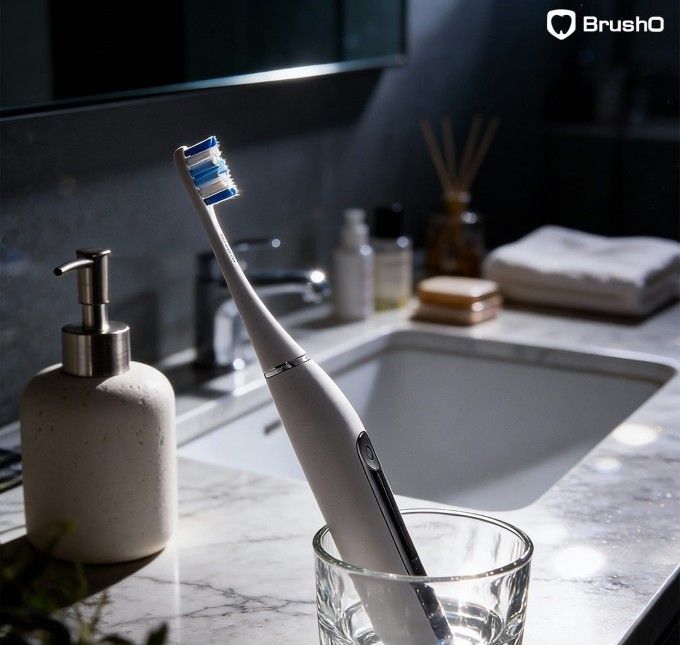
For most people, brushing is a habit performed on autopilot. The routine feels familiar, but familiarity often leads to mistakes:
• Focusing mainly on front teeth
• Rushing through molars and back surfaces
• Applying too much pressure without realizing it
• Brushing inconsistently day to day
These small errors rarely cause immediate pain, which is why they go unnoticed. Dentists typically detect the results later — plaque buildup, gum inflammation, early enamel erosion — long after the behavior causing them has become habitual. This delay is one of the biggest reasons oral health issues quietly worsen between dental visits.
BrushO transforms brushing from a guesswork routine into a data-driven process. Using advanced motion sensors and pressure detection, BrushO monitors brushing behavior as it happens, not months later.
• Brushing pressure to prevent gum damage and enamel wear
• Coverage across 16 tooth surfaces to ensure no zones are missed
• Brushing angle and duration to improve technique consistency
When brushing mistakes occur, BrushO provides immediate feedback through its smart handle indicators and connected app — correcting habits before damage sets in.
Beyond real-time alerts, BrushO builds a complete brushing history. This long-term tracking reveals patterns that even dentists can only infer during checkups:
• Frequently missed areas
• Chronic overbrushing or uneven pressure
• Inconsistent brushing duration
• Technique issues that repeat over time
Users gain a clear, visual understanding of their oral care habits, making it easier to adjust routines proactively instead of reactively.
For families, this insight is especially valuable. Parents can monitor children’s brushing accuracy, while adults can refine their technique to protect gums and enamel long-term.
Most dental treatments address damage that has already occurred. BrushO focuses on prevention.
By correcting brushing behavior early, BrushO helps reduce the risk of:
• Cavities caused by plaque accumulation
• Gum disease from chronic inflammation
• Enamel erosion from excessive pressure
• Persistent bad breath linked to missed zones
This proactive approach supports better oral health outcomes and reduces the likelihood of costly or invasive dental procedures later.
BrushO doesn’t replace dentists — it complements them. It acts as a daily extension of professional guidance, ensuring that what dentists recommend is actually practiced correctly at home. Instead of waiting for your dentist to point out problems after they’ve developed, BrushO helps prevent those issues from forming in the first place. It’s not just a toothbrush. It’s a real-time oral health monitoring tool.
Dentists see the results of poor brushing habits — but often too late. BrushO changes that by tracking the behaviors that lead to problems before they become visible or painful. With real-time monitoring, long-term habit analysis, and actionable feedback, BrushO empowers users to protect their oral health proactively, every single day.
BrushO is an AI-powered smart toothbrush designed to improve oral health through real-time feedback and intelligent habit tracking. By monitoring brushing pressure, coverage, timing, and technique across 16 tooth surfaces, BrushO helps users correct mistakes early and build healthier brushing habits long before issues require professional intervention.
Jul 30
Jul 30
Jul 29
Jul 22
Jul 19
Jul 17

Saliva has moved from the byproduct of the examination to the fluid that the modern practice can read, and the diagnostics that the salivary sample supports now reach from the caries risk to the periodontal inflammation and beyond. The fluid is easy to collect, safe to handle, and rich in the pro...

The narrow alveolar ridge is the common obstacle that the implant plan meets in the healed posterior site, and the ridge split technique is the approach that widens the crest without the block graft and the second surgical site. The technique uses the viscoelastic property of the bone, and the co...

The resin-bonded bridge is the conservative alternative to the conventional fixed prosthesis, and its place in the modern practice has widened as the adhesive dentistry matured. The prosthesis replaces the missing tooth with the minimal removal of the enamel from the abutment, and the retention i...

The systemic antibiotic has a defined and a narrow place in the periodontal therapy, and the clinician who respects its limits uses it well while the clinician who reaches for it routinely erodes both the result and the antibiotic stewardship. The mechanical debridement remains the foundation of ...

The bond failure of the bracket is the interruption that the fixed orthodontic treatment can tolerate in the small number but not in the pattern, and the clinician who understands the cause reduces the frequency that the repeated rebonding records. The failure that recurs on the single tooth poin...

The prescription pad is one of the most common sources of the oral complaint that the patient brings to the dental office, and the clinician who does not think of the medication may spend the appointment treating the symptom that the drug created. The list of the agents that affect the mouth grow...

The intraoral scanner has moved from the novelty of the early adopters to the standard equipment of the modern prosthodontic practice, and the comparison with the conventional impression has become a daily question rather than an academic one. The scanner captures the surface of the teeth and the...

The endodontic retreatment is the second chance that the tooth receives when the initial treatment fails to resolve the infection or the symptoms, and the procedure is both more demanding and more rewarding than the primary treatment. The clinician who retreats the tooth encounters the filling ma...

The access preparation is the gateway of every root canal treatment, and it is the step at which the outcome of the case is most often decided, for good or for ill. A well-designed access straightens the canal system, removes the coronal obstruction, and allows the instruments and the irrigants t...

The restoration that the laboratory returns is only as good as the information that the clinician sends, and the communication between the dentist and the technician is the step that determines whether the crown, the veneer, or the bridge meets the expectation of the patient. The shade, the form,...

A escova elétrica BrushO com IA oferece orientação em tempo real, feedback de pressão, rastreamento de cobertura e relatórios de progresso no app para uma rotina diária mais limpa.
A escova elétrica BrushO com IA oferece orientação em tempo real, feedback de pressão, rastreamento de cobertura e relatórios de progresso no app para uma rotina diária mais limpa.


Address: RM 1427, 14/F RADIO CITY 505, HENNESSY RD CAUSEWAY BAY, HONG KONG
Code: 000000
Phone: +852-53758652
Email: customerservice@brusho.com