
Jul 30
Jul 30
Jul 29
Jul 22
Jul 19
Jul 17
Morning breath isn’t just unpleasant—it’s also surprisingly common. Almost everyone wakes up with it, even those with good oral hygiene. But what exactly causes your breath to go sour overnight, and is it something you can prevent entirely? Let’s uncover the real science behind morning breath—and how smart oral care tools like BrushO can help you tackle it at its root.
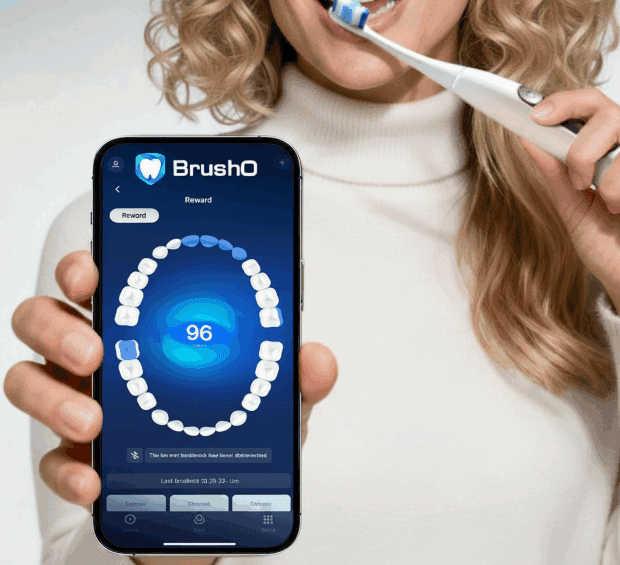
Your mouth is full of bacteria—both good and bad. During the day, saliva helps control these bacteria by constantly washing them away. But while you sleep, saliva production drops significantly, creating a dry environment. This dryness allows anaerobic bacteria (those that thrive in low-oxygen environments) to multiply, especially on the tongue and between teeth. These bacteria break down leftover food particles and dead cells, producing volatile sulfur compounds (VSCs)—the primary cause of that unpleasant morning odor.
Sleeping with your mouth open dries it out even more, creating a perfect breeding ground for odor-causing bacteria. This is especially common in people who:
• Snore or suffer from sleep apnea
• Have nasal congestion
• Use certain medications that cause dry mouth
If you eat sugary, acidic, or spicy foods before bed (without brushing afterward), you’re feeding oral bacteria overnight. Common culprits include:
• Alcohol
• Garlic and onions
• Sugary snacks
• Dairy products
Brushing your teeth but skipping your tongue is one of the most common reasons for bad morning breath. The tongue’s surface can trap bacteria and dead cells. Using a smart toothbrush with tongue-cleaning guidance, like BrushO, ensures complete cleaning coverage before bed.
While morning breath is usually harmless, persistent bad breath throughout the day—known as chronic halitosis—could signal:
• Gum disease
• Tooth decay
• Tonsil stones
• Digestive issues
• Sinus infections
If brushing and flossing don’t fix the issue, consult your dentist or doctor.
Using an AI-powered toothbrush like BrushO ensures that you’re:
• Cleaning all 6 zones and 16 surfaces of your mouth
• Applying the right pressure
• Cleaning your tongue effectively
• Following your dentist’s recommended brushing time
This reduces the bacteria left behind overnight.
Brushing too early—even an hour before sleep—can leave your mouth vulnerable. Make sure it’s the last thing you do before sleep.
Drink water before bed and immediately after waking up. This helps stimulate saliva and wash away bacteria.
Don’t skip your tongue. Many smart toothbrushes (like BrushO) include tongue-cleaning reminders or built-in tongue care features.
Floss removes food particles from between teeth, and alcohol-free mouthwash can reduce bacteria while protecting the enamel.
BrushO’s AI technology goes beyond simple brushing:
• Smart coverage feedback: No zone is missed
• Pressure detection: Avoid enamel and gum damage
• Tongue-cleaning reminders: Keep your breath fresher
• Habit tracking & reports: See what you’re missing at night
• Reward system: Encourages better bedtime hygiene
It’s not just brushing—it’s a full oral care system that addresses the real causes of bad breath.
Morning breath is your body’s signal that bacteria took over while you slept. But with smart brushing tools, tongue care, hydration, and a solid nighttime routine, you can wake up feeling fresher, more confident, and ready to smile. BrushO is a Stanford-introduced, AI-powered smart toothbrush designed to elevate your brushing into a guided, habit-building experience. With real-time zone detection, enamel protection feedback, and integrated oral health reports, BrushO makes clean teeth and fresh breath effortless.
Jul 30
Jul 30
Jul 29
Jul 22
Jul 19
Jul 17

The posterior maxilla is the most demanding site in implant dentistry, because the pneumatized maxillary sinus frequently leaves the clinician with less bone than the implant requires. Maxillary sinus augmentation, the surgical procedure that raises the sinus floor to create vertical bone, has be...

The rubber dam is the oldest and still the most effective isolation device in restorative dentistry, and its reputation as an inconvenient extra step survives among practitioners who have never measured the time it actually saves. The dam isolates the field from the saliva, the tongue, and the ch...

The margin is the most vulnerable line in fixed prosthodontics, because it is the only boundary between the prepared tooth, the restoration, and the oral environment that the clinician cannot fully seal by effort alone. A restoration that fits seamlessly at the margin resists leakage, caries, and...

The masticatory system is built for function, yet much of its damage comes from habits that serve no purpose. Parafunctional habits, the clenching, the grinding, and the tongue pressing performed outside of normal function, sit behind much of the tooth wear, the temporomandibular pain, and the my...

Chronic mouth breathing in the growing child is seldom a dental problem in origin and almost always a facial one in consequence. The child who sleeps with the mouth open bypasses the physiologic benefits of nasal respiration, and the posture that the airway forces upon the tongue, the mandible, a...

The immediate denture is the prosthesis placed on the day the teeth are extracted, sparing the patient the edentulous interval the conventional denture imposes and preserving the occlusal vertical dimension, the facial support, and the appearance through the transition. The clinical literature ha...

The Class III malocclusion in the growing child carries a special urgency, because the maxillary deficiency that marks the pattern does not correct itself and the window for the growth-modifying treatment closes with the skeletal maturity. Elastic protraction, the orthopedic therapy that pulls th...

The denture is the only prosthetic device in medicine that its owner is expected to wear daily and to clean personally, yet it is also the device most commonly neglected until the signs of disease appear. A biofilm that forms on the acrylic base within hours is a reservoir of candida and bacteria...

The complete denture stands or falls on the impression, because the impression determines how well the base follows the mucous membrane and how evenly the occlusal load is distributed across the basal seat. For a century the profession has argued about whether the impression should record the muc...

The all-ceramic crown has moved from a niche product to the default restoration for the anterior single tooth in a single clinical generation, driven by patient demand for metal-free appearance and by materials that now survive functional loading as reliably as their metal-ceramic predecessors. A...

A escova elétrica BrushO com IA oferece orientação em tempo real, feedback de pressão, rastreamento de cobertura e relatórios de progresso no app para uma rotina diária mais limpa.
A escova elétrica BrushO com IA oferece orientação em tempo real, feedback de pressão, rastreamento de cobertura e relatórios de progresso no app para uma rotina diária mais limpa.


Address: RM 1427, 14/F RADIO CITY 505, HENNESSY RD CAUSEWAY BAY, HONG KONG
Code: 000000
Phone: +852-53758652
Email: customerservice@brusho.com