
Jul 30
Jul 30
Jul 29
Jul 22
Jul 19
Jul 17
Even if you brush and floss every day, your diet might still be quietly sabotaging your oral health. From hidden sugars in healthy snacks to acidic drinks that wear down enamel, the food and drinks you consume can play a bigger role in cavities and gum problems than you think. In this article, we explore the top dietary culprits harming your teeth, the signs your mouth may be suffering, and how BrushO’s intelligent brushing system helps defend against diet-related damage with every session.
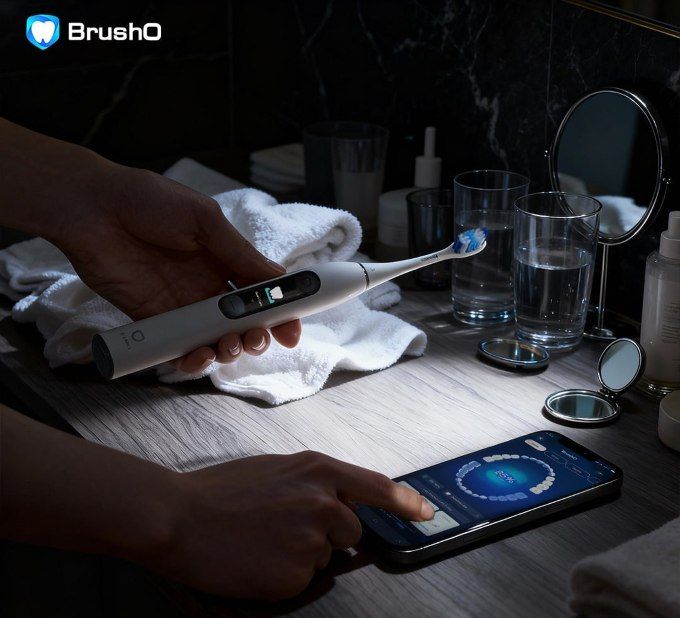
What you eat doesn’t just affect your waistline—it also directly impacts your teeth and gums. Oral bacteria feed on sugars and carbohydrates, producing acid that erodes enamel and irritates gums. And even foods that seem “healthy” can still create the perfect storm for cavities and plaque buildup.
Citrus juices, sports drinks, and even sparkling water can erode enamel, especially when consumed frequently. Sipping slowly over time increases exposure and damage.
Dried fruits and granola bars cling to tooth surfaces, feeding bacteria for longer than quickly rinsed foods. Natural sugars are still sugars.
White bread, chips, and crackers break down into sugars that fuel plaque production. These often get stuck between teeth, leading to decay.
These can dry the mouth, reduce saliva production, and disrupt the mouth’s natural cleansing system, making your teeth more vulnerable.
• Frequent tooth sensitivity
• Visible enamel erosion or yellowing
• Gum inflammation or bleeding
• More plaque buildup, especially near the gumline
• Bad breath that brushing alone doesn’t fix
You can’t always avoid these foods—but you can brush smarter to minimize the harm.
BrushO’s sensors detect if you’re using the correct pressure and brushing at the right angles to remove food residue effectively, even from hard-to-reach areas.
The BrushO app tracks which zones of your mouth need more attention—perfect for removing sticky, sugary debris after meals.
If your diet has occasional indulgences (hello, chocolate lovers), BrushO helps you build consistent brushing habits that counteract those choices with daily care.
After acidic or sugary meals, switch to a deep-clean mode or gum-care mode to give your mouth the extra defense it needs.
• Rinse your mouth with water after acidic or sugary meals
• Limit snacking between meals
• Choose high-fiber fruits and veggies to help scrub teeth
• Use BrushO to ensure you’re brushing smarter, not just harder
• Don’t skip night brushing—saliva decreases while you sleep, increasing acid exposure risks
Your toothbrush can’t control what you eat—but it can help undo the damage. Diet is a major, often overlooked contributor to oral health. But by pairing smart food choices with the intelligent, habit-focused design of BrushO, you give your mouth the daily defense it deserves.
BrushO is an AI-powered smart toothbrush that helps users brush more effectively with real-time pressure guidance, zone-by-zone feedback, and smart app tracking. With customizable modes like deep clean, gum care, and sensitivity, it’s the perfect oral health companion for any lifestyle—including one full of dietary temptations.
Dec 15
Dec 15
Jul 30
Jul 30
Jul 29
Jul 22
Jul 19
Jul 17

Saliva has moved from the byproduct of the examination to the fluid that the modern practice can read, and the diagnostics that the salivary sample supports now reach from the caries risk to the periodontal inflammation and beyond. The fluid is easy to collect, safe to handle, and rich in the pro...

The narrow alveolar ridge is the common obstacle that the implant plan meets in the healed posterior site, and the ridge split technique is the approach that widens the crest without the block graft and the second surgical site. The technique uses the viscoelastic property of the bone, and the co...

The resin-bonded bridge is the conservative alternative to the conventional fixed prosthesis, and its place in the modern practice has widened as the adhesive dentistry matured. The prosthesis replaces the missing tooth with the minimal removal of the enamel from the abutment, and the retention i...

The systemic antibiotic has a defined and a narrow place in the periodontal therapy, and the clinician who respects its limits uses it well while the clinician who reaches for it routinely erodes both the result and the antibiotic stewardship. The mechanical debridement remains the foundation of ...

The bond failure of the bracket is the interruption that the fixed orthodontic treatment can tolerate in the small number but not in the pattern, and the clinician who understands the cause reduces the frequency that the repeated rebonding records. The failure that recurs on the single tooth poin...

The prescription pad is one of the most common sources of the oral complaint that the patient brings to the dental office, and the clinician who does not think of the medication may spend the appointment treating the symptom that the drug created. The list of the agents that affect the mouth grow...

The intraoral scanner has moved from the novelty of the early adopters to the standard equipment of the modern prosthodontic practice, and the comparison with the conventional impression has become a daily question rather than an academic one. The scanner captures the surface of the teeth and the...

The endodontic retreatment is the second chance that the tooth receives when the initial treatment fails to resolve the infection or the symptoms, and the procedure is both more demanding and more rewarding than the primary treatment. The clinician who retreats the tooth encounters the filling ma...

The access preparation is the gateway of every root canal treatment, and it is the step at which the outcome of the case is most often decided, for good or for ill. A well-designed access straightens the canal system, removes the coronal obstruction, and allows the instruments and the irrigants t...

The restoration that the laboratory returns is only as good as the information that the clinician sends, and the communication between the dentist and the technician is the step that determines whether the crown, the veneer, or the bridge meets the expectation of the patient. The shade, the form,...

A escova elétrica BrushO com IA oferece orientação em tempo real, feedback de pressão, rastreamento de cobertura e relatórios de progresso no app para uma rotina diária mais limpa.
A escova elétrica BrushO com IA oferece orientação em tempo real, feedback de pressão, rastreamento de cobertura e relatórios de progresso no app para uma rotina diária mais limpa.


Address: RM 1427, 14/F RADIO CITY 505, HENNESSY RD CAUSEWAY BAY, HONG KONG
Code: 000000
Phone: +852-53758652
Email: customerservice@brusho.com