How Smart Brushes Reduce Dental Visit Costs
Jan 28

Jan 28
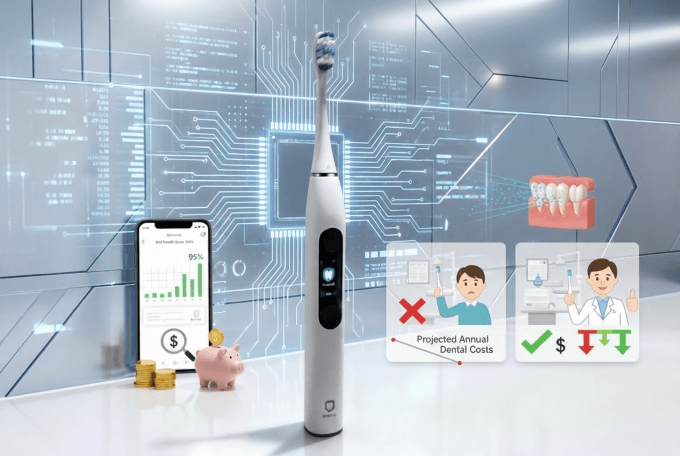
Smart toothbrushes, such as BrushO’s smart toothbrush, help reduce dental visit costs by preventing common oral problems through superior plaque removal, real-time feedback, and personalized tracking. By promoting better brushing habits and catching early signs of dental issues, smart toothbrush technology supports healthier teeth and gums, lowering the need for costly dental treatments over time.
 

Rising Dental Visit Costs and Preventive Care

Dental care costs continue to rise globally, creating financial barriers for many families seeking routine checkups, cleanings, and treatments. A significant portion of these costs stems from preventable issues such as cavities, gingivitis, and periodontal disease—conditions largely caused by inadequate daily oral hygiene. This is where smart toothbrushes play a valuable role: by enhancing daily brushing effectiveness with built-in technology and personalized insights, they can help reduce the likelihood of expensive dental procedures. Unlike manual brushes, smart toothbrushes integrate sensors, guided brushing, and connected apps to promote better technique, consistent habits, and early detection of potential issues. Over time, these benefits contribute directly to fewer dental problems—and lower overall dental expenses.
 

How Poor Brushing Contributes to Dental Costs

Before exploring how smart toothbrushes help, it’s critical to understand why inadequate brushing increases dental costs:
  • Plaque Buildup: Failure to thoroughly remove plaque leads to cavities and gum disease.
  • Gum Inflammation: Persistent bacterial buildup causes gingivitis and eventually periodontal disease.
  • Missed Early Signs: Without proper brushing feedback, early signs of dental issues go unnoticed until they require professional treatment.
Traditional toothbrushes rely entirely on user technique, making it easy to overlook hard-to-reach surfaces, apply incorrect pressure, or brush for insufficient time. These gaps in care allow bacterial buildup and decay to progress—often silently—until they escalate into costly dental procedures like fillings, root canals, or deep cleanings.

1. Better Plaque Removal Reduces Dental Problems

One of the most important ways smart brushes reduce dental visit costs is by enhancing plaque removal. Devices like BrushO’s smart toothbrush use sonic or oscillating-rotating technology combined with coverage sensors to break up plaque more effectively than manual brushing alone. By reaching interdental areas and gumline regions, these toothbrushes help prevent the bacterial buildup that leads to decay and gum disease—common drivers of dental treatment costs.More effective plaque control not only helps maintain a clean oral environment but also preserves enamel and gum integrity, reducing the risk of cavities and periodontal issues.

2. Real-Time Feedback Prevents Costly Mistakes

Unlike manual brushes, smart toothbrushes provide real-time feedback during brushing. By alerting users when they are applying excessive pressure or missing zones, they guide users toward healthier techniques and more thorough cleaning.
For example:
  • Pressure Alerts: Help users avoid brushing too hard, which can cause enamel wear and gum recession.
  • Zone Coverage Feedback: Ensures even attention across all quadrants of the mouth.
This immediate coaching reduces common brushing errors that contribute to oral disease, allowing users to correct habits before they lead to dental complications requiring professional intervention.

3. Personalized Tracking Helps Catch Early Issues

Smart toothbrushes connected to apps track brushing behavior over weeks, months, and years. These long-term insights allow users to spot patterns such as:
  • Frequently missed areas
  • Inconsistent brushing duration
  • Declining habit consistency
By identifying trends early, users can adjust brushing techniques or consult a dentist before issues become severe and costly. This preventive data is a powerful tool for maintaining oral health—and a proactive way to avoid expensive treatments.

4. Encouraging Consistency Through Motivation and Rewards

Many smart toothbrush systems incorporate motivational tools such as progress tracking, brushing “streaks,” and reward mechanisms. BrushO’s Brush & Earn reward system, for instance, incentivizes consistent brushing behaviors with points redeemable for brush heads or discounts. These positive reinforcements encourage users to maintain healthy habits, reducing the likelihood of oral health decline—one of the primary drivers of dental expenses. Consistently effective brushing is one of the most cost-efficient ways to prevent decay, inflammation, and gum disease.

5. Educating Users Leads to Smarter Dental Habits

Smart toothbrushes paired with dental care apps educate users on proper technique, pressure control, and full-mouth coverage. This ongoing education nurtures long-term brushing habits that keep plaque levels low and decrease the need for professional cleanings beyond regular checkups. Many users report improved technique and confidence in their daily oral care after integrating smart toothbrush feedback into their routines. As brushing quality improves, so does overall oral health, reducing the frequency and severity of dental issues that lead to expensive treatments.

6. Integration With Professional Dental Monitoring

Some advanced smart toothbrush apps allow users to share brushing data with their dentist, aiding in remote monitoring and early intervention. By documenting brushing habits and tracking issues over time, dental professionals can customize preventive advice, potentially reducing the need for more invasive procedures. This collaborative approach bridges daily oral care with professional guidance, helping patients avoid costly dental visits beyond routine checkups.
 

Smart Oral Care for Long-Term Savings

Although smart toothbrushes require an initial investment, their proven ability to enhance daily brushing effectiveness pays long-term dividends by preventing oral health problems that contribute to rising dental visit costs. By improving plaque removal, offering real-time feedback, tracking brushing habits, encouraging consistency, and educating users, smart toothbrushes empower better oral hygiene that significantly reduces the risk of cavities, gum disease, and costly dental interventions. In the journey to healthier teeth and gums, smart toothbrush technology—like BrushO’s smart toothbrush—offers a cost-effective way to safeguard your smile and your wallet.

Posts recentes

Maxillary Sinus Augmentation: Graft Choices and Complications

Maxillary Sinus Augmentation: Graft Choices and Complications

The posterior maxilla is the most demanding site in implant dentistry, because the pneumatized maxillary sinus frequently leaves the clinician with less bone than the implant requires. Maxillary sinus augmentation, the surgical procedure that raises the sinus floor to create vertical bone, has be...

Rubber Dam Isolation: Techniques and Practical Benefits

Rubber Dam Isolation: Techniques and Practical Benefits

The rubber dam is the oldest and still the most effective isolation device in restorative dentistry, and its reputation as an inconvenient extra step survives among practitioners who have never measured the time it actually saves. The dam isolates the field from the saliva, the tongue, and the ch...

Prosthetic Margin Adaptation: Measuring Fit and Clinical Significance

Prosthetic Margin Adaptation: Measuring Fit and Clinical Significance

The margin is the most vulnerable line in fixed prosthodontics, because it is the only boundary between the prepared tooth, the restoration, and the oral environment that the clinician cannot fully seal by effort alone. A restoration that fits seamlessly at the margin resists leakage, caries, and...

Parafunctional Habits: Clenching, Grinding, and Tongue Pressing

Parafunctional Habits: Clenching, Grinding, and Tongue Pressing

The masticatory system is built for function, yet much of its damage comes from habits that serve no purpose. Parafunctional habits, the clenching, the grinding, and the tongue pressing performed outside of normal function, sit behind much of the tooth wear, the temporomandibular pain, and the my...

Mouth Breathing and Facial Growth in Children: Orthodontic Implications

Mouth Breathing and Facial Growth in Children: Orthodontic Implications

Chronic mouth breathing in the growing child is seldom a dental problem in origin and almost always a facial one in consequence. The child who sleeps with the mouth open bypasses the physiologic benefits of nasal respiration, and the posture that the airway forces upon the tongue, the mandible, a...

Immediate Dentures: Planning, Delivery, and Post-Extraction Fit

Immediate Dentures: Planning, Delivery, and Post-Extraction Fit

The immediate denture is the prosthesis placed on the day the teeth are extracted, sparing the patient the edentulous interval the conventional denture imposes and preserving the occlusal vertical dimension, the facial support, and the appearance through the transition. The clinical literature ha...

Elastic Protraction for Class III Correction in Growing Children

Elastic Protraction for Class III Correction in Growing Children

The Class III malocclusion in the growing child carries a special urgency, because the maxillary deficiency that marks the pattern does not correct itself and the window for the growth-modifying treatment closes with the skeletal maturity. Elastic protraction, the orthopedic therapy that pulls th...

Denture Cleaning and Maintenance: Clinical Recommendations

Denture Cleaning and Maintenance: Clinical Recommendations

The denture is the only prosthetic device in medicine that its owner is expected to wear daily and to clean personally, yet it is also the device most commonly neglected until the signs of disease appear. A biofilm that forms on the acrylic base within hours is a reservoir of candida and bacteria...

Complete Denture Impression Techniques: Mucostatic vs Mucocompressive

Complete Denture Impression Techniques: Mucostatic vs Mucocompressive

The complete denture stands or falls on the impression, because the impression determines how well the base follows the mucous membrane and how evenly the occlusal load is distributed across the basal seat. For a century the profession has argued about whether the impression should record the muc...

All-Ceramic Crowns: Choosing the Right Ceramic System

All-Ceramic Crowns: Choosing the Right Ceramic System

The all-ceramic crown has moved from a niche product to the default restoration for the anterior single tooth in a single clinical generation, driven by patient demand for metal-free appearance and by materials that now survive functional loading as reliably as their metal-ceramic predecessors. A...