
Jul 30
Jul 30
Jul 29
Jul 22
Jul 19
Jul 17
Your bathroom may seem like the perfect place to store a toothbrush—but its warm, damp environment could be cutting your toothbrush’s life short without you realizing it. High humidity accelerates bacteria growth, weakens structural integrity, and shortens both manual and electric toothbrush performance. In this post, we explore how humidity affects the lifespan of your toothbrush, signs of moisture damage, and how BrushO’s waterproof design is built to resist these everyday threats.
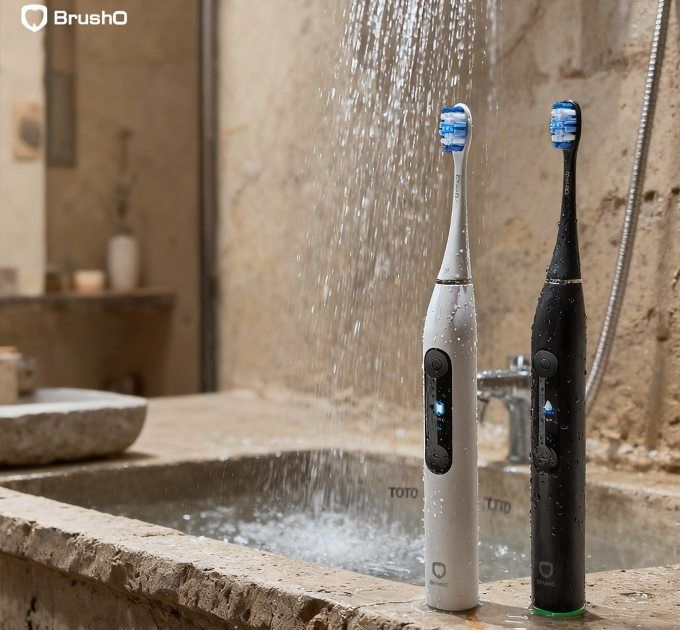
Bathrooms are one of the most humid spaces in any home. Daily showers create steam, condensation clings to surfaces, and airflow is often limited.
Toothbrushes stored near sinks, tubs, or in enclosed holders are frequently exposed to:
• Trapped moisture
• Warm, stagnant air
• Splash zones from faucets
This humidity doesn’t just cause mild discomfort—it can lead to bacterial growth, mildew, and long-term material breakdown.
Even simple manual brushes are vulnerable. Excess moisture can:
• Soften bristles prematurely
• Warp brush heads over time
• Promote mold growth at the base or in travel caps
• Cause musty odors from bacterial buildup
Most people keep their toothbrush in a cup or holder with no airflow, creating a breeding ground for germs that cling to your brush—even after rinsing.
Electric toothbrushes involve sensitive electronics, batteries, and motors. Humidity-related risks include:
• Corroded charging ports
• Short-circuited internal boards
• Sticky or unresponsive buttons
• Condensation under sealed screens
Over time, this moisture damage can degrade performance or cause complete failure—especially if the toothbrush isn’t IP-rated for waterproof use.
BrushO was engineered with real bathrooms in mind—not just ideal lab conditions. That’s why its design includes:
Sealed casing and no exposed screws protect internal electronics from steam, splashes, and moisture.
No metal prongs or corrosion-prone contacts.
Reduces buildup of moisture in the handle area for hygienic daily use.
BrushO’s packaging and travel kits include breathable features to prevent trapped moisture.
No matter what toothbrush you use, follow these simple steps to extend its life in a damp bathroom:
• Store upright in an open-air space
• Avoid closed containers or drawers
• Wipe electric toothbrush handles dry after each use
• Use a UV sanitizer or fast-drying stand if available
• Keep your brush away from steamy shower zones
• Replace brush heads every 3 months (or sooner if bristles fray or smell)
Your toothbrush works hard every day—but if humidity is quietly damaging it, you may not be getting the clean you think. Bacteria, mold, and electronic wear are all silent threats that can be prevented with smart storage and durable design. With BrushO, you don’t just get a smart toothbrush—you get peace of mind that your device can handle the real-world conditions of your bathroom.
BrushO is a next-generation AI-powered smart toothbrush that adapts to your brushing behavior with real-time feedback and zone scoring. Engineered with waterproof materials, ergonomic comfort, and smart charging, BrushO helps users build better oral care habits—even in humid, high-moisture environments.
Dec 17
Dec 17
Jul 30
Jul 30
Jul 29
Jul 22
Jul 19
Jul 17

PPM describes concentration, not the amount to put on the brush. Learn how to read fluoride information while keeping regional guidance and individual advice in view.

That forgotten tube deserves a label check. Learn what toothpaste shelf-life information refers to, why storage matters, and how to avoid guessing from appearance.

Clear gel or opaque paste? Texture is only one feature. Learn which label details matter when comparing toothpastes for your brushing routine.

Minty toothpaste can create a cooling sensation without being chilled. Explore what menthol does and why a fresh feeling is different from complete cleaning.

The sound of a powered brush comes with its moving mechanism. Learn how normal operating noise differs from alerts or an unexpected change that needs checking.

Toothpaste on the mirror? Check when you switch the brush on and off, how you position it, and how to pause without rushing your routine.

A whitening brushing program and a bleaching treatment are different things. Learn how to interpret mode names, surface-stain claims, and realistic expectations.

A tiny cluster of bristles serves a different purpose from a full-size head. Learn where a single-tuft brush may fit into an individually recommended cleaning routine.

Angled tufts, different bristle heights, and the angle of your hand are separate design questions. Learn how to read a toothbrush-head description clearly.

A larger head is not an automatic shortcut to cleaner teeth. Learn how head size affects access, positioning, and the fit of your daily brushing routine.

A escova elétrica BrushO com IA oferece orientação em tempo real, feedback de pressão, rastreamento de cobertura e relatórios de progresso no app para uma rotina diária mais limpa.
A escova elétrica BrushO com IA oferece orientação em tempo real, feedback de pressão, rastreamento de cobertura e relatórios de progresso no app para uma rotina diária mais limpa.


Address: RM 1427, 14/F RADIO CITY 505, HENNESSY RD CAUSEWAY BAY, HONG KONG
Code: 000000
Phone: +852-53758652
Email: customerservice@brusho.com