
Jul 30
Jul 30
Jul 29
Jul 22
Jul 19
Jul 17
Discover how switching to an AI-powered toothbrush like BrushO can transform your oral care routine. From real-time feedback to lifetime free brush head refills, this personal journey reveals the power of smart brushing habits, precision cleaning, and motivational health tech.
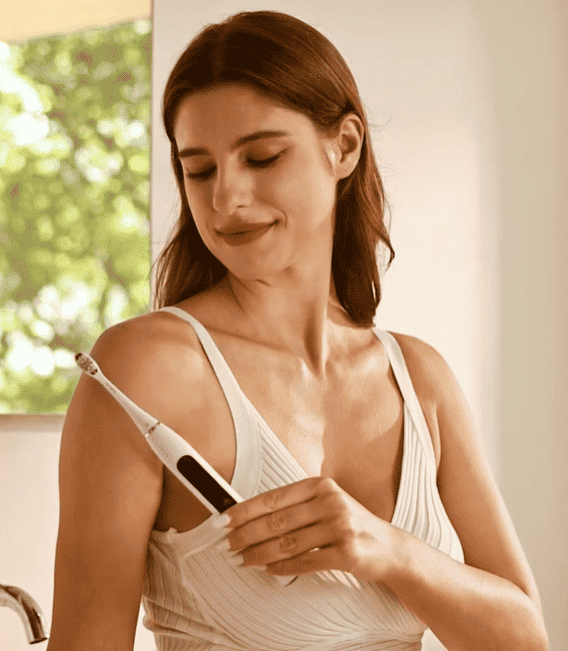
Most people brush out of habit. But after switching to BrushO, brushing became a data-backed, results-driven ritual. Unlike manual brushing or basic electric models, BrushO gave me real-time guidance and personalized feedback I didn’t know I needed.
Setting up the BrushO smart toothbrush took under a minute. Bluetooth pairing was fast, and the BrushO app asked me to define my brushing goals:
Whitening
Reducing plaque
Improving gum health
For the first time, my toothbrush was customized for me.
During my first session, I noticed how BrushO’s TFT screen showed subtle color changes to indicate pressure or coverage issues. Its 6-zone, 16-surface tracking ensured I didn’t skip areas I used to miss—like back molars or the gumline.
The app also gently warned me when I brushed too hard—one of the biggest causes of gum recession and enamel erosion.
After brushing, the app provided a detailed report:
Brushing time
Pressure data
Missed zones
Suggested improvements
Unlike other brands that bombard you with stats, BrushO focused on actionable insights, not fluff.
The app encouraged consistency. I earned points for:
Completing 2-minute sessions
Brushing twice a day
Covering all zones
These points go toward free brush head replacements, part of BrushO’s Lifetime Brush Head Program—a major cost-saver and incentive.
With 45-day battery life and 6-hour fast charging, I didn’t worry about recharging on trips. Plus, BrushO supports Qi wireless charging, which worked perfectly with my phone charger pad.
My dentist was impressed when I brought in brushing reports. Instead of vague advice, we discussed real data. My gums bled less. My breath stayed fresher. My confidence grew.
Friends who tried BrushO said the same: brushing didn’t feel like a chore anymore—it felt empowering.
BrushO isn’t just another electric toothbrush. It’s a brand driven by the belief that oral care should be intelligent, rewarding, and personalized. Here’s what makes it unique:
Recommended by 40+ dental clinics in the UK
Introduced by Stanford Innovation Labs
Lifetime free brush head plan (earn through brushing consistency)
Web3-integrated reward system turning good habits into real value
Advanced pressure, angle, and zone tracking
App-based health reports to share with your dentist
You’re not just buying a toothbrush—you’re joining a global movement that values better habits.
If you’re tired of guessing whether your brushing routine is working, it’s time to upgrade. BrushO makes oral hygiene smarter, easier, and more rewarding—and for me, that’s worth every second of the two minutes I now look forward to twice a day.
Jul 30
Jul 30
Jul 29
Jul 22
Jul 19
Jul 17

Saliva has moved from the byproduct of the examination to the fluid that the modern practice can read, and the diagnostics that the salivary sample supports now reach from the caries risk to the periodontal inflammation and beyond. The fluid is easy to collect, safe to handle, and rich in the pro...

The narrow alveolar ridge is the common obstacle that the implant plan meets in the healed posterior site, and the ridge split technique is the approach that widens the crest without the block graft and the second surgical site. The technique uses the viscoelastic property of the bone, and the co...

The resin-bonded bridge is the conservative alternative to the conventional fixed prosthesis, and its place in the modern practice has widened as the adhesive dentistry matured. The prosthesis replaces the missing tooth with the minimal removal of the enamel from the abutment, and the retention i...

The systemic antibiotic has a defined and a narrow place in the periodontal therapy, and the clinician who respects its limits uses it well while the clinician who reaches for it routinely erodes both the result and the antibiotic stewardship. The mechanical debridement remains the foundation of ...

The bond failure of the bracket is the interruption that the fixed orthodontic treatment can tolerate in the small number but not in the pattern, and the clinician who understands the cause reduces the frequency that the repeated rebonding records. The failure that recurs on the single tooth poin...

The prescription pad is one of the most common sources of the oral complaint that the patient brings to the dental office, and the clinician who does not think of the medication may spend the appointment treating the symptom that the drug created. The list of the agents that affect the mouth grow...

The intraoral scanner has moved from the novelty of the early adopters to the standard equipment of the modern prosthodontic practice, and the comparison with the conventional impression has become a daily question rather than an academic one. The scanner captures the surface of the teeth and the...

The endodontic retreatment is the second chance that the tooth receives when the initial treatment fails to resolve the infection or the symptoms, and the procedure is both more demanding and more rewarding than the primary treatment. The clinician who retreats the tooth encounters the filling ma...

The access preparation is the gateway of every root canal treatment, and it is the step at which the outcome of the case is most often decided, for good or for ill. A well-designed access straightens the canal system, removes the coronal obstruction, and allows the instruments and the irrigants t...

The restoration that the laboratory returns is only as good as the information that the clinician sends, and the communication between the dentist and the technician is the step that determines whether the crown, the veneer, or the bridge meets the expectation of the patient. The shade, the form,...


Address: RM 1427, 14/F RADIO CITY 505, HENNESSY RD CAUSEWAY BAY, HONG KONG
Code: 000000
Phone: +852-53758652
Email: customerservice@brusho.com
