
Jul 30
Jul 30
Jul 29
Jul 22
Jul 19
Jul 17
Tongue scrapers are gaining popularity in modern oral care routines—but are they actually effective? Research suggests that the tongue harbors up to 50% of the bacteria in the mouth, contributing to bad breath, plaque formation, and even oral infections. Unlike brushing alone, scraping the tongue can remove a significant layer of biofilm that traps odor-causing compounds. In this article, we break down what tongue scrapers do, how they work, what dentists say, and how you can integrate this simple yet powerful step into your daily brushing routine—especially when paired with AI-powered tools like BrushO.
A tongue scraper is a tool designed to clean the surface of the tongue by physically removing:
• Bacteria
• Food debris
• Dead cells
• Volatile sulfur compounds (VSCs), which cause bad breath
Tongue scrapers are typically made from plastic, stainless steel, or copper and are used by dragging gently from the back of the tongue to the tip.
The tongue’s rough, grooved surface (especially the posterior third) traps:
• Anaerobic bacteria that thrive without oxygen
• Debris that contributes to a white or yellow tongue coating
• Compounds responsible for halitosis (bad breath)
• Tongue cleaning can reduce VSCs by up to 75% when done consistently.
• Tongue scraping is more effective than brushing the tongue with a toothbrush.
✅ Clinical Evidence:
• A 2004 study in the Journal of Periodontology found that tongue scrapers were more effective than toothbrushes at reducing odor-causing bacteria.
• The American Dental Association (ADA) recommends tongue cleaning as part of a comprehensive oral hygiene routine.
🚫 But Remember:
• Tongue scraping is not a replacement for brushing and flossing, but rather a complementary step.
• It’s most effective in the morning, when bacteria have built up overnight.
| Benefit | Explanation |
| ✅ Fights bad breath | Removes sulfur-producing bacteria |
| ✅ Improves taste sensitivity | Clears taste buds of debris |
| ✅ Reduces plaque formation | Minimizes bacterial re-colonization |
| ✅ Boosts oral cleanliness | Completes your hygiene routine |
| ✅ May reduce systemic inflammation | Decreases total oral bacterial load |
1. Brush and floss your teeth first.
2. Stick out your tongue as far as possible.
3. Place the scraper at the back of your tongue.
4. Gently pull it forward using light pressure.
5. Rinse the scraper under water after each pass.
6. Repeat 3–5 times until the tongue is visibly clean.
7. Finish by rinsing your mouth or using mouthwash.
⚠️ Avoid scraping too hard—it may irritate the tongue or cause minor cuts.
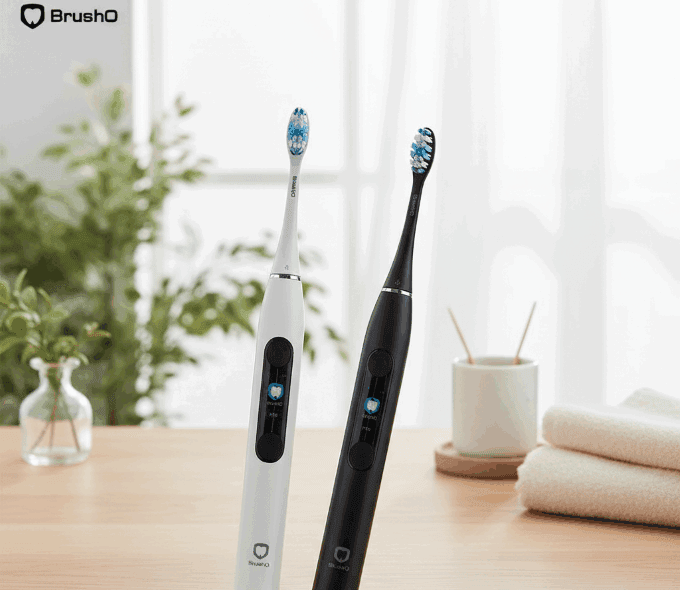
While BrushO does not yet include a built-in tongue scraping tool, its app-based ecosystem educates users on complete oral hygiene, including tongue care.
📲 App tips: Track full oral care habits—including tongue cleaning reminders
🎯 Routine coaching: Customizes routines based on user behavior
🪥 AI-guided brushing: Ensures all areas are cleaned properly before tongue cleaning
Integrating manual tools like tongue scrapers with AI-powered brushes ensures full-spectrum oral health.
Yes—tongue scrapers do work, especially for people prone to:
• Morning breath
• Dry mouth
• Thick tongue coatings
• High-sulfur diets (e.g., garlic, onions)
They’re inexpensive, easy to use, and backed by science as an effective tool to support overall oral hygiene.
Jan 30
Jan 30
Jul 30
Jul 30
Jul 29
Jul 22
Jul 19
Jul 17

Teledentistry—the use of information and communication technologies to deliver dental care, consultation, education, and public health services across geographic distances—has undergone an unprecedented transformation in recent years. While the concept dates to the 1990s, the COVID-19 pandemic catal

The field of endodontics has undergone a paradigm shift over the past two decades. Traditional root canal therapy, while effective at eliminating infection and preserving teeth, ultimately results in a non-vital tooth that is more brittle and susceptible to fracture. Regenerative endodontics offers

The human oral cavity harbors one of the most diverse and dynamic microbial communities in the body, second only to the gut in complexity. Advances in culture-independent molecular techniques—particularly 16S rRNA gene sequencing and shotgun metagenomics—have transformed our understanding of the ora

Medication-related osteonecrosis of the jaw (MRONJ) is a serious adverse event characterized by exposed necrotic bone in the maxillofacial region that persists for more than eight weeks in patients with current or previous antiresorptive or antiangiogenic therapy and no history of head and neck radi

The dental patient population is aging, and the prevalence of chronic medical conditions continues to rise. The World Health Organization projects that by 2050, the proportion of the global population over 60 years will double from 12% to 22%, with a corresponding increase in the burden of multimorb

Saliva has emerged as a powerful diagnostic fluid that reflects the physiological and pathological state of the body. As an ultrafiltrate of blood, saliva contains a complex mixture of proteins, nucleic acids, metabolites, and microorganisms that originate from multiple sources: salivary glands, gin

Peri-implantitis has emerged as one of the most significant complications in implant dentistry, affecting an estimated 20% of patients and 10% of implants at the patient and implant levels respectively. As the global population of dental implants grows, the burden of peri-implant disease is expandin

Molar Incisor Hypomineralization (MIH) is a qualitative developmental enamel defect affecting one to four first permanent molars, frequently with concurrent involvement of permanent incisors. First described systematically by Weerheijm and colleagues in 2001, MIH has since been recognized as a globa

Digital Smile Design (DSD) has revolutionized aesthetic dentistry by providing a systematic, communication-centered approach to treatment planning. Developed by Dr. Christian Coachman in 2007, DSD integrates facial and dental analysis, intraoral and extraoral digital data, and interdisciplinary coll

Additive manufacturing, commonly known as 3D printing, has transformed dentistry over the past decade from a niche prototyping tool into an integral component of digital workflows. The technology enables the fabrication of surgical guides, dental models, temporary and permanent restorations, denture


Address: RM 1427, 14/F RADIO CITY 505, HENNESSY RD CAUSEWAY BAY, HONG KONG
Code: 000000
Phone: +852-53758652
Email: customerservice@brusho.com
