
Jul 30
Jul 30
Jul 29
Jul 22
Jul 19
Jul 17
It is a common misconception that oral health outcomes depend primarily on the tools used. In reality, behavioral technique, biomechanical pressure application, coverage accuracy, brushing duration, and oral microbiome variability all play far greater roles than the toothbrush model alone. Clinical research consistently shows that users of identical toothbrushes can produce vastly different plaque removal rates, gum responses, and enamel preservation outcomes. Understanding the behavioral and physiological variables behind these differences provides insight into how oral hygiene effectiveness can be optimized. Modern smart brushing technologies that provide real-time feedback and performance tracking help reduce human variability, ensuring that brushing results are determined by precision rather than guesswork.
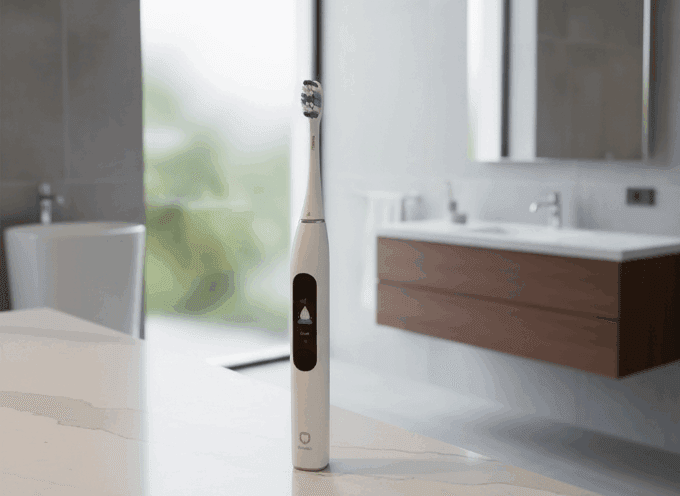
Many individuals assume that purchasing a high-quality toothbrush guarantees improved dental outcomes. However, dental science shows that user behavior accounts for the majority of brushing effectiveness variation.
Two users with identical equipment can produce:
• Different plaque reduction levels
• Different gum irritation responses
• Different enamel wear patterns
• Different long-term oral health outcomes
The toothbrush is only a delivery mechanism — technique determines performance.
Angle, motion, and positioning dramatically influence plaque removal.
Effective technique typically includes:
• 45-degree gumline angle
• Small controlled strokes
• Full-surface coverage
Incorrect technique leaves bacterial biofilm intact regardless of brush quality.
Force variability affects both cleaning efficiency and tissue safety.
Too much pressure leads to:
• Gum recession
• Enamel abrasion
• Sensitivity
Too little pressure results in:
• Plaque retention
• Tartar formation
Humans are poor at self-assessing applied force without feedback.
Studies show users commonly miss:
• Back molars
• Inner tooth surfaces
• Gumline edges
Even experienced brushers may leave up to 30% of surfaces insufficiently cleaned. Uneven coverage explains large outcome discrepancies.
The recommended brushing duration is two minutes, yet behavioral data indicates many users stop early.
Short sessions reduce:
• Mechanical plaque disruption
• Fluoride distribution
• Biofilm destabilization
Time inconsistency produces measurable hygiene differences.
Individual physiology also contributes:
• Saliva composition
• Microbiome diversity
• Tooth alignment
• Gum sensitivity
These factors affect how quickly plaque accumulates and how tissue responds to brushing.
Manual and standard electric brushes provide limited performance feedback. Users rely on perception rather than measurement, leading to:
• Inconsistent habit formation
• Undetected technique errors
• Persistent coverage gaps
This behavioral variability explains why identical tools yield unequal results.
Smart oral care systems like BrushO address variability by introducing measurable guidance.
Sensors alert users to excessive force, protecting gums and enamel.
Tracking of the 6 oral zones and 16 surfaces ensures uniform cleaning.
Session monitoring encourages full-duration brushing.
Performance reports help users refine technique over time.
Reducing behavioral variability produces measurable improvements:
• More consistent plaque control
• Reduced gingival inflammation
• Slower enamel wear
• Predictable oral health outcomes
Data-guided brushing transforms hygiene from habit-based variability to performance-based consistency.
The effectiveness of oral hygiene is determined far less by the toothbrush itself and far more by human behavioral execution. Differences in technique, pressure, coverage, duration, and biology explain why identical tools produce different results. AI-guided brushing technologies like BrushO narrow these performance gaps by introducing measurable feedback, helping users refine technique and achieve consistent, predictable oral health outcomes regardless of baseline habits.
Feb 6
Feb 6
Jul 30
Jul 30
Jul 29
Jul 22
Jul 19
Jul 17

A lateral cephalometric radiograph is only as useful as the analysis applied to it. The same tracing can be read as a skeletal discrepancy by one method and as a dental compensation by another, and the conclusions reached about extraction, surgery or growth modification may differ accordingly. Un...

Premature fusion of the cranial sutures produces a group of conditions in which the skull, the midface and the occlusion develop abnormally, and the dental team is central to long-term care. Apert and Crouzon syndromes are the best known craniosynostosis syndromes with major oral consequences. Bo...

A dense opacity on a panoramic radiograph above the molar roots or within the nasal cavity is a familiar finding that is often dismissed as an incidental artifact. When that opacity proves to be an antrolith or a rhinolith, the discovery explains years of unilateral obstruction, discharge and fac...

A firm, board-like swelling at the angle of the jaw that slowly breaks down into multiple draining sinuses should raise suspicion of cervicofacial actinomycosis, a chronic bacterial infection that is easily mistaken for a tumor. Nocardiosis, caused by related filamentous organisms, can produce a ...

Enlargement of the jaw, widening spaces between the teeth and a slowly changing facial profile may bring a patient to the dental office years before the underlying endocrine disease is diagnosed. Acromegaly and Cushing syndrome both leave recognizable signatures in the craniofacial region, and th...

A slowly growing, painless lump at the angle of the jaw in a middle-aged or older man who smokes is the classic presentation of a Warthin tumor. Formally called papillary cystadenoma lymphomatosum, this benign neoplasm is one of the most common tumors of the parotid gland and the second most comm...

Painful ulcerated gums that bleed easily, a foul metallic taste and severe mouth odor can signal Vincent stomatitis, an acute fusospirochetal necrotizing infection of the gingival and oral tissues. First described during wartime and historically called trench mouth, the disease still occurs today...

A painful swelling under the jaw that appears at mealtimes and subsides slowly afterward is the classic symptom of a salivary stone blocking a duct. Sialolithiasis, the formation of calcified stones in the salivary glands, and sialodochitis, the inflammation of the ducts that follows, are common ...

Paget disease of bone, also called osteitis deformans, is a chronic disorder of bone remodeling that can silently affect the skull and the jaws. In the maxillofacial region it produces progressive bony enlargement, distinctive cotton-wool radiographs and dental complications such as hypercementos...

The sudden appearance of widespread, painful oral erosions with crusted lips can be alarming, and it may represent either erythema multiforme or a drug-induced severe reaction such as Stevens-Johnson syndrome. Both belong to a spectrum of immune-mediated mucocutaneous disorders, and both can begi...

BrushO AI電動歯ブラシは、リアルタイムのブラッシングガイド、圧力フィードバック、磨き残しの確認、アプリでの進捗レポートにより、毎日のケアをより清潔にサポートします。


Address: RM 1427, 14/F RADIO CITY 505, HENNESSY RD CAUSEWAY BAY, HONG KONG
Code: 000000
Phone: +852-53758652
Email: customerservice@brusho.com