
Jul 30
Jul 30
Jul 29
Jul 22
Jul 19
Jul 17
Many users ask: “Why does my toothbrush splash everywhere?” It’s one of the most common frustrations with electric toothbrushes. Water and toothpaste spray across mirrors and shirts, turning a simple habit into a messy chore. But it doesn’t have to be this way. In this article, we’ll explore why toothbrush splashing happens, the mistakes to avoid, and how BrushO’s FSB300 smart toothbrush—with its 64,000 RPM Maglev motor and auto-sensing anti-splash design—solves the problem.
Turning it on too early: Switching on before the brush is in your mouth sprays foam everywhere.
Too much toothpaste: Excess foam escapes easily.
Open-mouth brushing: Foam flies out instead of staying contained.
Uncontrolled vibrations: Standard motors at 30K–40K RPM often produce uneven splatter.
👉 Splashes are not just about speed; it’s also about design and technique.
Powering On Before Brushing
Always place the brush in your mouth before pressing the start button.
Using Too Much Toothpaste
A pea-sized amount is enough. More = more foam = more splashes.
Brushing with Mouth Wide Open
Keep lips lightly closed to reduce spray.
Wrong Angle of Brushing
Pointing the brush outward instead of toward the gum line spreads the water.
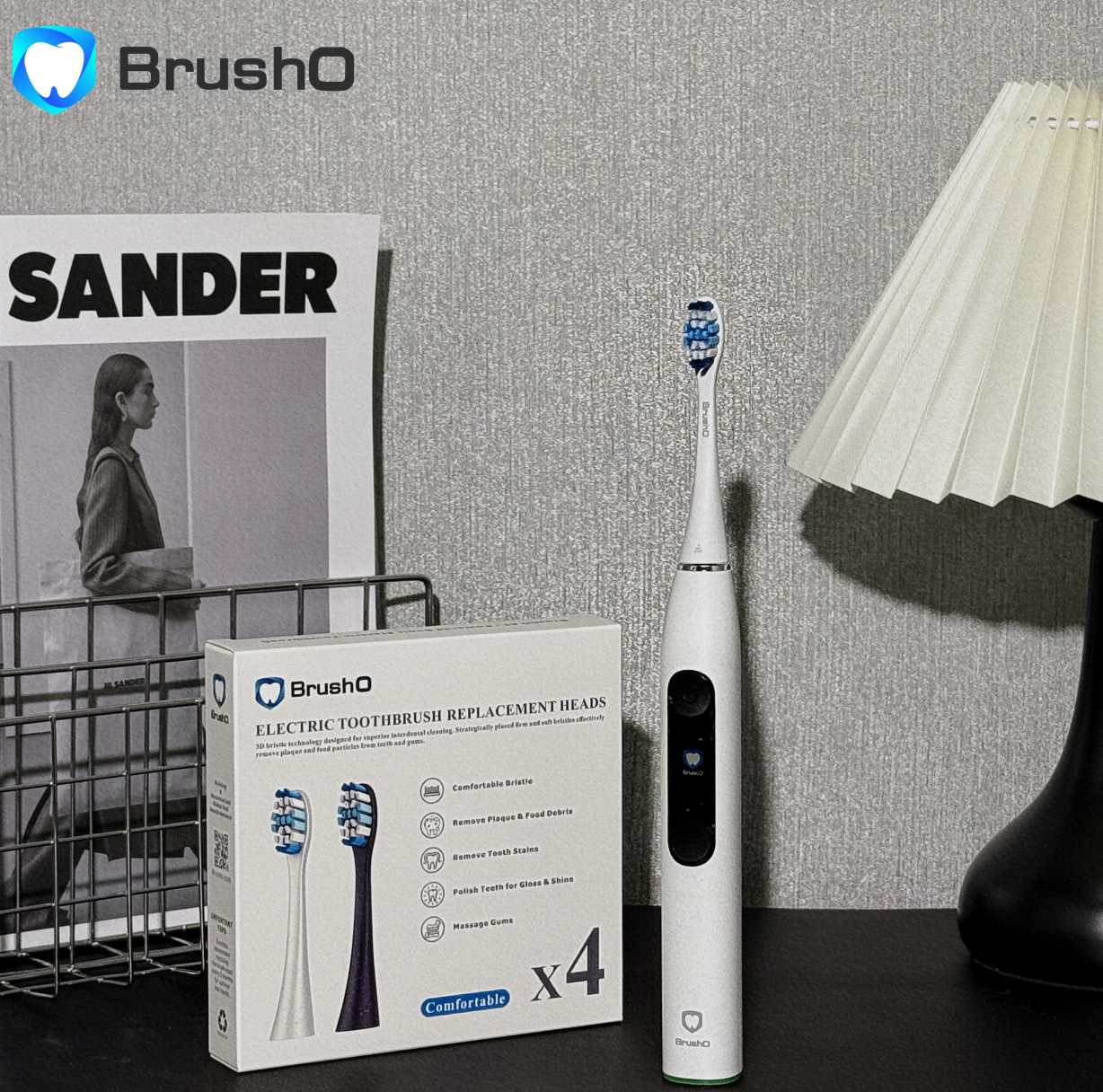
Unlike many toothbrushes, BrushO’s FSB300 Smart Toothbrush is engineered to prevent splashes, even at ultra-high speeds.
64,000 RPM Maglev Motor ⚡
Despite one of the industry’s highest frequencies, BrushO uses linear magnetic suspension for smooth, controlled vibrations that don’t fling foam around.
Auto-Sensing Technology 🧠
The FSB300 detects pressure and brushing position, adapting vibration amplitude to minimize spray.
Optimized Brush Head Design 🪥
The brush head channels toothpaste and water directly onto teeth, not out of your mouth.
Smart Mode Selection 🔄
With sensitive and gum-care modes, users can choose gentler speeds that reduce mess without sacrificing cleaning.
Cleaner Bathroom: No more scrubbing toothpaste off mirrors.
Better Morning Routine: Quick brush before work without worrying about your shirt.
Kid-Friendly: Children can brush without making a mess.
Professional-Level Cleaning: High-frequency cleaning without the usual downsides.
Q1: Why does my toothbrush splash everywhere?
Because of excess foam, open-mouth brushing, or uncontrolled vibrations.
Q2: Can I stop splashing with a better technique?
Yes, use less toothpaste, close your lips, and power on after placing it in your mouth.
Q3: How does BrushO prevent splashing?
With a 64K RPM Maglev motor, auto-sensing technology, and optimized brush head design, it keeps brushing powerfully but clean.
Most electric toothbrushes splash because of poor design and user mistakes. But BrushO proves that powerful doesn’t have to mean messy. With its 64,000 RPM Maglev motor and auto-sensing anti-splash technology, BrushO FSB300 delivers a clean, efficient, and splash-free brushing experience every time.
Jul 30
Jul 30
Jul 29
Jul 22
Jul 19
Jul 17

PPM describes concentration, not the amount to put on the brush. Learn how to read fluoride information while keeping regional guidance and individual advice in view.

That forgotten tube deserves a label check. Learn what toothpaste shelf-life information refers to, why storage matters, and how to avoid guessing from appearance.

Clear gel or opaque paste? Texture is only one feature. Learn which label details matter when comparing toothpastes for your brushing routine.

Minty toothpaste can create a cooling sensation without being chilled. Explore what menthol does and why a fresh feeling is different from complete cleaning.

The sound of a powered brush comes with its moving mechanism. Learn how normal operating noise differs from alerts or an unexpected change that needs checking.

Toothpaste on the mirror? Check when you switch the brush on and off, how you position it, and how to pause without rushing your routine.

A whitening brushing program and a bleaching treatment are different things. Learn how to interpret mode names, surface-stain claims, and realistic expectations.

A tiny cluster of bristles serves a different purpose from a full-size head. Learn where a single-tuft brush may fit into an individually recommended cleaning routine.

Angled tufts, different bristle heights, and the angle of your hand are separate design questions. Learn how to read a toothbrush-head description clearly.

A larger head is not an automatic shortcut to cleaner teeth. Learn how head size affects access, positioning, and the fit of your daily brushing routine.

BrushO AI電動歯ブラシは、リアルタイムのブラッシングガイド、圧力フィードバック、磨き残しの確認、アプリでの進捗レポートにより、毎日のケアをより清潔にサポートします。


Address: RM 1427, 14/F RADIO CITY 505, HENNESSY RD CAUSEWAY BAY, HONG KONG
Code: 000000
Phone: +852-53758652
Email: customerservice@brusho.com