
Jul 30
Jul 30
Jul 29
Jul 22
Jul 19
Jul 17
Building healthy brushing habits in children requires more than daily reminders—it depends on engagement, correct technique, and long-term consistency. Many kids struggle with brushing properly due to boredom, poor technique, or irregular routines, which can lead to cavities and gum problems over time. Smart toothbrushes address these challenges by combining real-time guidance, interactive features, and habit tracking. With AI-powered feedback, gamified rewards, and parental monitoring tools, smart toothbrushes like BrushO help children learn proper brushing techniques while making oral care enjoyable and effective from an early age. A smart toothbrush provides a modern solution by transforming daily brushing into an engaging and educational routine that supports healthy habits and proper technique.
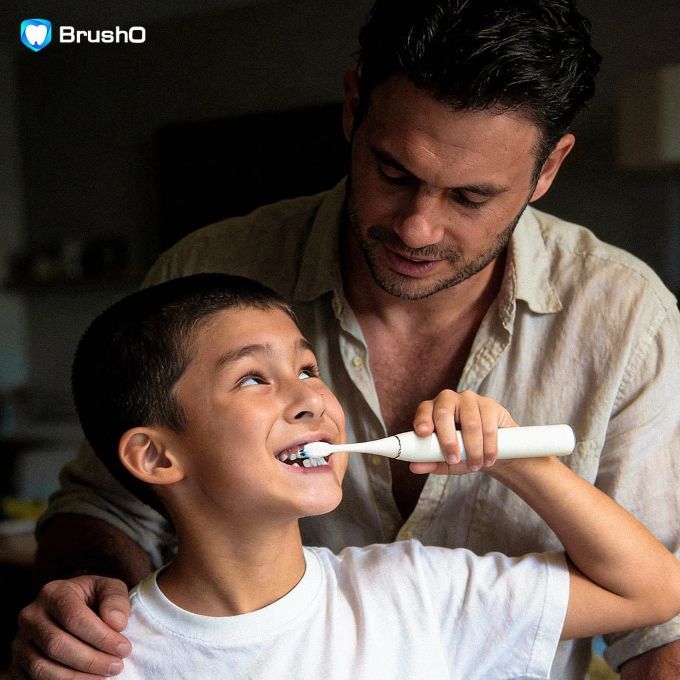
Helping children develop good oral hygiene habits comes with several common challenges:
Lack of engagement: Many kids find brushing boring and may rush through it or skip it entirely.
Inconsistent brushing technique: Without guidance, children may miss key tooth surfaces or apply too much pressure.
Irregular brushing routines: Inconsistent schedules make it harder for kids to form lasting habits.
Over time, these issues increase the risk of cavities, gum disease, and enamel erosion. This is why early habit formation, along with the right tools, is critical.
A smart toothbrush for kids utilizes sensors, AI, and app-based feedback to transform brushing into an interactive experience that promotes correct brushing behavior.
Smart toothbrushes provide immediate feedback to help children brush properly. Devices like the BrushO monitor:
Brushing pressure: Alerts kids when they brush too hard, protecting gums and enamel.
Brushing duration: Encourages brushing for the dentist-recommended two minutes.
Full-mouth coverage: Tracks all 6 brushing zones and 16 tooth surfaces to reduce missed areas.
This real-time guidance helps children learn proper brushing techniques naturally.
Every child’s oral care needs are different. Smart toothbrushes offer customized modes to support growing mouths, including:
Sensitive Mode: Designed for young children with delicate gums.
Deep Clean Mode: Useful after sugary snacks or meals.
White+ Mode: Suitable for older kids or teens concerned about tooth discoloration.
These personalized modes make brushing both safe and effective as children grow.
Gamification plays a key role in habit formation. The BrushO Brush & Earn system rewards kids with $BRUSH tokens for completing brushing goals such as full coverage, correct duration, and daily consistency. These rewards motivate children to brush regularly and reinforce positive behavior through fun incentives.
Track brushing frequency and duration
Review coverage data to identify missed areas
Set brushing reminders for morning and night routines
This visibility helps parents guide children toward better oral hygiene—even when they’re not physically supervising.
Using a smart toothbrush helps children build healthy habits that last well beyond childhood:
Stronger brushing consistency through real-time feedback
Higher engagement thanks to interactive and reward-based features
Improved oral health outcomes with better technique and coverage
Greater parental confidence through data-driven tracking
To maximize the benefits of smart toothbrushes for kids:
Establish fixed brushing times every morning and evening
Use positive reinforcement, such as rewards or progress milestones
Brush together to model proper technique
Reduce distractions and keep brushing time screen-free
Consistency, combined with smart technology, helps children develop strong oral care habits naturally.
Smart toothbrushes are redefining how children learn oral hygiene. By combining real-time feedback, personalized guidance, and gamified motivation, these tools make brushing both effective and enjoyable. As kids develop proper brushing habits early, they are more likely to maintain healthy teeth and gums throughout their lives.
BrushO is an AI-powered smart toothbrush designed to improve oral health through real-time brushing feedback, full-mouth coverage tracking, and personalized guidance. With features such as pressure monitoring, habit analytics, and a Web3-enabled Brush & Earn rewards system, BrushO helps kids and parents turn daily brushing into a fun, data-driven wellness habit.
Jan 16
Jan 16
Jul 30
Jul 30
Jul 29
Jul 22
Jul 19
Jul 17

Thumb sucking and pacifier use are normal self-soothing behaviors in infancy, and most children give them up on their own by school age. The dental problem arises when the habit continues past the eruption of the permanent front teeth, because the persistent pressure reshapes the growing jaw and ...

Most people never think about the shape of their tooth roots, but root morphology determines how a tooth is treated when disease strikes. Taurodontism and dilaceration are two developmental anomalies that change root anatomy in distinctive ways, and both have major implications for endodontics, e...

Dental injuries are among the most common sports-related injuries, and a mouthguard is the simplest piece of equipment an athlete can wear. Yet many players still train without one, often because they have never been told which type to choose or how a well-fitted guard feels. Understanding the pr...

Piezoelectric surgery has changed the way oral surgeons cut bone. Instead of a rotating bur, a piezotome uses ultrasonic vibrations to cut mineralized tissue while leaving soft tissue largely untouched. The technique is now routine for osteotomies, sinus lifts and delicate procedures where precis...

Children's teeth vary naturally in size, but some variations are large enough to affect function, appearance and future orthodontic care. Microdontia means teeth that are smaller than normal, and macrodontia means teeth that are larger than normal, and both can appear as isolated findings or as p...

Two patients can have identical teeth and completely different treatment outcomes, and the reason is often hiding in the gums. Gingival biotype describes the thickness and morphology of the soft tissue around the teeth, and it influences how the gum reacts to surgery, implants, braces and even si...

Guided bone regeneration, or GBR, is the standard method for rebuilding bone before and around dental implants. The concept is simple: a membrane creates a protected space that allows bone-forming cells to grow while excluding competing soft tissue. Choosing a resorbable membrane changes the prot...

Periodontal disease destroys not only the gum but the bone and ligament that anchor teeth, and the goal of regenerative treatment is to rebuild all three. Emdogain, an enamel matrix derivative, has become one of the most studied biological agents for this task, and its results improve further whe...

A chipped tooth is one of the most common dental emergencies, affecting children and adults alike through falls, sports, biting on hard objects and even normal wear. The right repair depends less on the size of the fragment and more on which layer of the tooth is exposed. Bonding, veneers and cro...

A knocked-out tooth is one of the few dental emergencies where minutes decide the outcome. When a permanent tooth is completely displaced from its socket, immediate and correct handling can save it, while delays or mistakes can condemn it to loss. The steps are simple enough for any parent, coach...

BrushO AI電動歯ブラシは、リアルタイムのブラッシングガイド、圧力フィードバック、磨き残しの確認、アプリでの進捗レポートにより、毎日のケアをより清潔にサポートします。


Address: RM 1427, 14/F RADIO CITY 505, HENNESSY RD CAUSEWAY BAY, HONG KONG
Code: 000000
Phone: +852-53758652
Email: customerservice@brusho.com