
Jul 30
Jul 30
Jul 29
Jul 22
Jul 19
Jul 17
When it comes to electric toothbrushes, speed is more than a spec—it’s what determines how effectively plaque is removed, how gentle the brush is on your gums, and even how enjoyable your daily brushing routine feels. BrushO’s 64,000 rpm high-frequency motor is designed to outperform traditional models in speed, torque, and sound—making it a leader in smart oral technology.
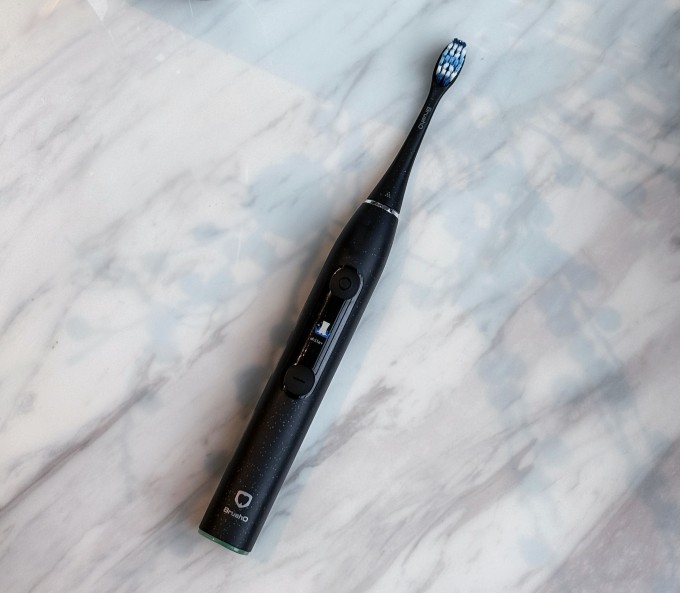
Toothbrush motor speed is measured in rotations per minute (rpm). The higher the speed, the more vibrations or sonic movements the brush head delivers to your teeth. These rapid movements help dislodge plaque, clean between teeth, and stimulate gums for better overall oral health.
BrushO’s motor delivers 64,000 rpm—almost double that of many leading competitors—ensuring high-efficiency cleaning even in hard-to-reach areas.
High-speed brushing means each tooth receives thousands of micro-cleaning actions. This breaks down plaque faster than manual brushing or low-speed electric models.
With higher rpm, users don’t need to press hard to clean effectively. The brush does the work for you, maintaining consistency across brushing sessions—especially important for kids or older adults.
Despite the power, BrushO’s motor works in harmony with its 200 gf·cm torque and real-time feedback system, ensuring users don’t apply excessive pressure that could harm the gums.
BrushO isn’t just fast—it’s powerful. The brush uses 200 gf·cm of torque to ensure that even at high speeds, the motor maintains a consistent force. This means better contact with tooth surfaces, fewer missed spots, and enhanced cleaning even under pressure.
Many high-speed brushes are loud and uncomfortable. BrushO’s advanced motor redesign keeps noise levels below 55 dB, making it one of the quietest yet most powerful brushes on the market. You can brush comfortably without waking the household.
| Feature | BrushO Smart Motor | Traditional Sonic Motor |
| Motor Speed | 64,000 rpm | 31,000 – 40,000 rpm |
| Torque | 200 gf·cm | 100 – 120 gf·cm (avg) |
| Vibration Amplitude | 5.6 mm | 3 – 4 mm |
| Noise Level | < 55 dB | 60–70 dB |
| Brushing Modes | 100+ Custom Modes | Limited to 3–5 modes |
When choosing a smart toothbrush, most consumers look at features, battery life, or app design, but often ignore motor performance. In reality, motor speed and torque directly impact:
• Cleaning effectiveness
• Brushing comfort
• Noise level
• Durability and consistency
BrushO’s next-gen motor combines top-tier performance with long-term reliability, making it the smart choice for serious oral health.
BrushO’s second-generation motor system redefines what toothbrush speed should mean. With 64,000 rpm, advanced torque, and quiet operation, you’re not just brushing—you’re getting a clinical-grade clean at home, every day.
If you’re looking for a toothbrush that delivers more than just a vibration, BrushO’s powerful motor makes it a top-tier choice for serious results.
BrushO is a next-generation health technology brand revolutionizing oral care with AI-powered electric toothbrushes. Backed by Stanford innovation and recommended by 40+ UK dental clinics, BrushO empowers users to build better habits with precision tech, real-time feedback, and sustainable design.
Jul 30
Jul 30
Jul 29
Jul 22
Jul 19
Jul 17

Hyperdontia is the presence of one or more teeth in excess of the normal dental formula, and the resulting teeth are described as supernumerary. The condition is common enough to appear in routine practice but variable enough in presentation that the decision to intervene is rarely straightforwar...

Few patients complete orthodontic treatment without asking whether their teeth will move back. The honest answer is that they will, to some degree, in the majority of cases. Relapse is not a failure of treatment but a predictable biological response, and understanding why it happens is the basis ...

The mandible is the largest and most frequently fractured bone of the facial skeleton, and its management sits at the interface between trauma surgery and restorative dentistry. Treatment has shifted over four decades from prolonged maxillomandibular fixation towards rigid internal fixation with ...

Chronic liver disease affects hundreds of millions of people worldwide, and its prevalence continues to rise with the epidemic of metabolic liver disease. The liver is central to haemostasis, drug metabolism and immune competence, and its failure therefore alters the risk profile of almost every ...

Excessive gingival display, commonly described as a gummy smile, is one of the most frequent aesthetic concerns presented to dental practitioners. The condition is not a single entity but a clinical presentation that can arise from skeletal, gingival, muscular or dental factors, and the treatment...

Drug-induced gingival overgrowth is a well-recognised adverse effect of several widely prescribed medications, and it remains one of the most common drug-related findings in periodontal practice. The condition produces firm, fibrous enlargement of the gingiva that can interfere with speech, masti...

Denture stomatitis is an inflammatory condition of the denture-bearing mucosa that affects a large proportion of removable prosthesis wearers, yet it is frequently dismissed as a cosmetic annoyance. The condition is driven by a Candida biofilm on the fitting surface of the prosthesis, and it is m...

Chronic kidney disease affects an estimated 850 million people worldwide, and the number of patients surviving on dialysis or with a renal transplant continues to rise. These patients carry an oral disease burden that is substantially higher than that of the general population, and their medical ...

Angular cheilitis is an inflammatory lesion of the labial commissures that presents with erythema, fissuring and crusting at the corners of the mouth. It is one of the most common conditions encountered in general dental practice, yet it is frequently treated as a simple fungal infection and allo...

Adverse reactions to dental materials are uncommon but they are not rare, and they are frequently misdiagnosed because the oral mucosa responds to allergens in a limited number of ways. A burning sensation, a persistent ulcer or an unexplained area of erythema may all represent a hypersensitivity...

Lo spazzolino elettrico BrushO con IA offre guida in tempo reale, feedback sulla pressione, monitoraggio della copertura e report di progresso nell’app per una routine quotidiana più pulita.
Lo spazzolino elettrico BrushO con IA offre guida in tempo reale, feedback sulla pressione, monitoraggio della copertura e report di progresso nell’app per una routine quotidiana più pulita.


Address: RM 1427, 14/F RADIO CITY 505, HENNESSY RD CAUSEWAY BAY, HONG KONG
Code: 000000
Phone: +852-53758652
Email: customerservice@brusho.com