
Jul 30
Jul 30
Jul 29
Jul 22
Jul 19
Jul 17
Crossing time zones often means battling jet lag, changing routines, and adjusting your internal clock—but one overlooked casualty is your oral hygiene. Whether you’re on a long-haul flight, backpacking through continents, or just visiting a new country, your brushing habits are likely to suffer. Skipped brushing, irregular eating, dehydration, and exhaustion all increase your risk for plaque buildup, bad breath, and even cavities. Fortunately, with better awareness and the help of smart tools like BrushO, you can maintain strong oral care even while your body adjusts to new schedules.
Jet lag throws off your circadian rhythm, which governs your brushing routines just like it does sleep. When you:
• Fall asleep before brushing due to exhaustion
• Wake up disoriented and skip morning brushing
• Forget when your “nighttime” brushing should occur
…oral bacteria thrive. This disruption gives plaque more time to build up, leading to inflammation and decay.
Travel often means grazing throughout the day, trying unfamiliar foods, or relying on sugary, processed snacks at airports. These habits:
• Feed bacteria in the mouth
• Create more frequent acid attacks on enamel
• Are rarely followed by immediate brushing
Without proper cleaning, your teeth are more vulnerable to erosion and cavities.
Airplane cabins have low humidity levels, which reduce saliva flow—your body’s natural defense against bacteria. A dry mouth:
• Increases bad breath
• Weakens enamel protection
• Leads to a higher risk of gum inflammation
And travelers often drink less water or rely on caffeinated beverages, making it worse.
• Skipping a brushing session on overnight flights
• Brushing too soon after acidic in-flight meals or drinks
• Not packing travel-friendly oral care tools
• Using unfamiliar water sources without rinsing properly
These habits may seem minor, but can compound over several days.
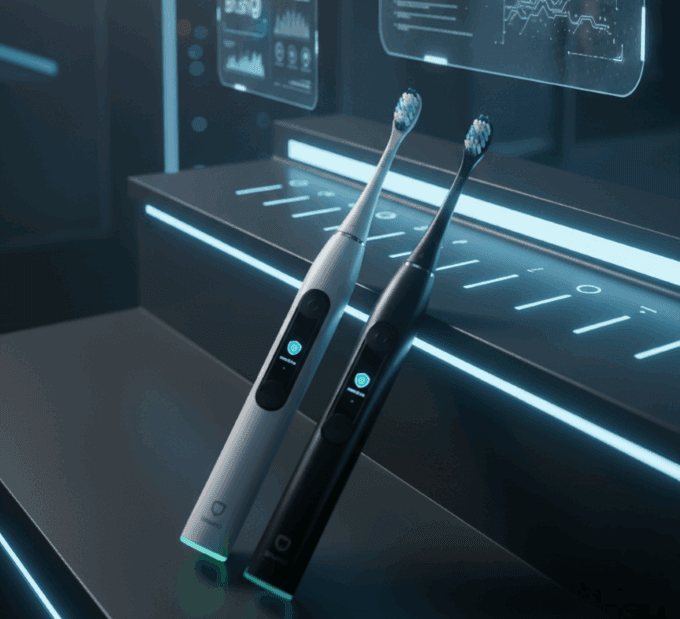
BrushO is an AI-powered smart toothbrush that makes oral hygiene convenient and consistent—even when you’re jet-lagged or on the go.
• Time Zone-Aware Reminders: The app can adjust reminders based on local time, helping you brush in sync with your new schedule.
• Habit Streak Tracking: Even when your routine shifts, BrushO logs your brushing data and motivates consistency with $BRUSH token rewards.
• Travel Mode: Long-lasting battery life (up to 45 days) and compact design make it easy to carry without extra accessories.
• Custom Modes for Sensitive Teeth: Perfect for those sensitive to dry air or frequent snacking during flights.
With FSB technology, BrushO monitors your brushing pressure, duration, and coverage—even if you’re brushing in an unfamiliar hotel bathroom or airport lounge.
• Pack a travel-sized BrushO and extra brush head
• Brush after waking up—even if it’s not your “home” morning
• Use bottled water to rinse if local tap water is questionable
• Chew sugar-free gum to stimulate saliva during flights
• Rinse with water after in-flight snacks or acidic beverages
• Set app reminders based on local time zones
Brushing regularly—even without your full routine—goes a long way.
Traveling across time zones doesn’t mean you have to sacrifice your oral health. In fact, the more disruptive your journey, the more important it is to protect your teeth and gums. With smart tools like BrushO, you can automate good habits, track your consistency, and brush smarter—even when everything else is in flux.
Jan 16
Jan 16
Jul 30
Jul 30
Jul 29
Jul 22
Jul 19
Jul 17

Wisdom teeth, or third molars, are the last teeth to erupt, and a large proportion of them never achieve a functional position. When a wisdom tooth is trapped beneath the gum or bone, it is described as impacted, and the decision to remove it is one of the most common surgical judgments in dentis...

Disk displacement is the most common internal derangement of the temporomandibular joint (TMJ) and a frequent reason for orofacial pain consultations. Magnetic resonance imaging (MRI) is the accepted gold standard for confirming the position of the articular disk because it visualizes soft tissue...

Pulp sensibility testing remains the first diagnostic step before any endodontic intervention. Cold, heat and electric pulp tests (EPT) probe the neural response of the pulp through enamel and dentin, and their results decide whether a tooth needs root canal treatment, a direct pulp cap or simple...

Mouthguards protect teeth from sports trauma and night-time grinding, but a dirty guard can become a reservoir for bacteria, fungi and oral disease. Studies show that used mouthguards accumulate plaque, streptococci and Candida within days of normal wear, and poor hygiene has been linked to gingi...

Halitosis, or persistent bad breath, affects a large share of the adult population and carries real social and psychological consequences. In the vast majority of cases the source is the mouth itself, and the most important reservoir is the coating on the dorsal surface of the tongue. Understandi...

Root canal treatment succeeds only when instrumentation stops at the right place. Working length is the distance from a stable coronal reference point to the apical constriction, and every millimeter of error changes the outcome: over-instrumentation pushes debris and irrigant beyond the apex, wh...

Dry mouth is one of the most common complaints in dental practice, yet it is frequently underestimated. Xerostomia is the subjective feeling of oral dryness, while salivary hypofunction is the measurable reduction in saliva output, and the two do not always coincide. Because saliva protects teeth...

Diabetes affects more than blood sugar, and the mouth is often one of the first places where the disease makes itself known. The relationship is genuinely bidirectional: uncontrolled diabetes increases the risk and severity of periodontal disease, while severe gum inflammation makes blood sugar h...

Enamel is the hardest tissue in the human body, but it is not indestructible. Dental erosion is the chemical dissolution of enamel by acids that are not produced by bacteria, and modern diets supply those acids in abundance. Understanding how acidic foods and drinks attack the tooth surface is th...

A good toothbrush should work as well in a hotel bathroom as it does at home, and that is exactly what BrushO Travel Mode is designed to do. By lowering motor speed and trimming acoustic output, Travel Mode keeps the full two-minute cleaning routine in a form that is discreet enough for shared ro...

Lo spazzolino elettrico BrushO con IA offre guida in tempo reale, feedback sulla pressione, monitoraggio della copertura e report di progresso nell’app per una routine quotidiana più pulita.
Lo spazzolino elettrico BrushO con IA offre guida in tempo reale, feedback sulla pressione, monitoraggio della copertura e report di progresso nell’app per una routine quotidiana più pulita.


Address: RM 1427, 14/F RADIO CITY 505, HENNESSY RD CAUSEWAY BAY, HONG KONG
Code: 000000
Phone: +852-53758652
Email: customerservice@brusho.com