
Jul 30
Jul 30
Jul 29
Jul 22
Jul 19
Jul 17
Electric toothbrushes have become a staple in modern oral care routines, offering advanced features, better plaque removal, and improved gum protection compared to manual brushes. However, even the smartest device won’t last without proper care. Whether you’re using a premium model like BrushO or another brand, knowing how to maintain your electric toothbrush is essential for maximizing its lifespan, preserving performance, and saving money in the long run. From storage and cleaning to charging habits and brush head replacement, this guide explores everything you need to keep your brush working at its best. You’ll also learn how BrushO’s innovative features—like real-time pressure alerts, smart reminders, and free replacement brush heads—make long-term maintenance easier than ever. Don’t let a neglected toothbrush cost you your smile. Follow these practical tips to get the most value out of your oral health investment.
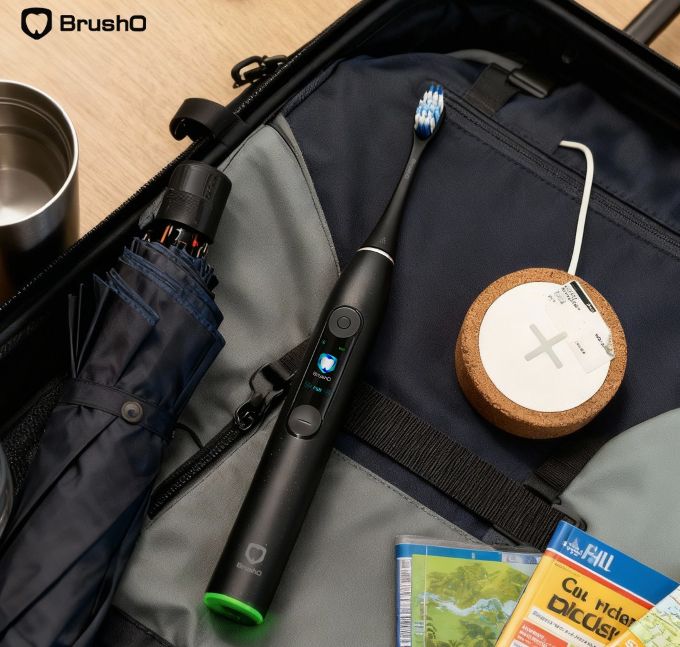
Avoid airtight containers. After brushing, rinse the brush head and let it air dry in an upright position. Moisture trapped in enclosed spaces can promote bacterial growth and degrade materials.
Keep it away from water exposure. While many electric toothbrushes like BrushO are waterproof, prolonged exposure to water, especially around the charging port, can reduce battery life over time.
Worn bristles not only clean less effectively but can also cause gum irritation. Most dental professionals recommend replacing brush heads every 3 months, or sooner if the bristles are frayed.
With BrushO, users can redeem free replacement heads through the Brush & Earn program. This makes regular replacement both affordable and easy—no excuse to skip it.
Over time, toothpaste and grime can build up on the handle, under the brush head, or around the charging base. Use a damp cloth and mild soap to gently wipe these areas once a week.
For BrushO users: the sleek, waterproof design makes cleaning easy, and the base is designed to resist corrosion—but regular care still keeps it looking and functioning like new.
To extend battery lifespan:
• Avoid constantly leaving the brush on the charger.
• Let the battery run down every 1–2 months before recharging fully.
• Use original chargers only—BrushO supports QI wireless charging, making it convenient and safer.
BrushO’s 6-hour fast charge and 45-day battery life already outperform many brands, but smart charging habits can push it even further.
Excessive pressure damages both your gums and your toothbrush. BrushO’s pressure-sensitive LED ring alerts you if you’re brushing too hard, protecting both your mouth and the motor.
Over time, aggressive brushing can wear out internal mechanisms, shorten battery life, and lead to early device failure. Let the brush do the work—gentle guidance is more effective.
When traveling:
• Use a protective case (if available) or a padded pouch.
• Lock or disconnect the brush head to prevent accidental activation.
• Don’t pack near liquids unless sealed.
Although BrushO is designed for durability, travel mishandling is a common cause of early failure for all electronic devices.
The BrushO app not only tracks brushing habits but can also remind users when it’s time to:
• Replace brush heads
• Recharge the battery
• Check for firmware updates (if applicable)
These proactive reminders help maintain peak performance over the long run.
Your electric toothbrush is a daily health tool—and like any precision device, it needs care. By storing it properly, replacing heads on time, cleaning it regularly, and managing battery usage, you can extend its life significantly. Smart tools like BrushO make it even easier with built-in protection features, free replacement programs, and app-guided maintenance.
Take care of your toothbrush, and it will take care of your smile for years to come.
BrushO is a next-generation smart oral care brand combining AI-powered brushing technology, real-time feedback, and a reward-based ecosystem. With over 100 customizable modes, FSB (Fully Smart Brushing) technology, and a commitment to sustainability, BrushO empowers users to brush better and smarter—every single day.
Nov 12
Nov 12
Jul 30
Jul 30
Jul 29
Jul 22
Jul 19
Jul 17

Hyperdontia is the presence of one or more teeth in excess of the normal dental formula, and the resulting teeth are described as supernumerary. The condition is common enough to appear in routine practice but variable enough in presentation that the decision to intervene is rarely straightforwar...

Few patients complete orthodontic treatment without asking whether their teeth will move back. The honest answer is that they will, to some degree, in the majority of cases. Relapse is not a failure of treatment but a predictable biological response, and understanding why it happens is the basis ...

The mandible is the largest and most frequently fractured bone of the facial skeleton, and its management sits at the interface between trauma surgery and restorative dentistry. Treatment has shifted over four decades from prolonged maxillomandibular fixation towards rigid internal fixation with ...

Chronic liver disease affects hundreds of millions of people worldwide, and its prevalence continues to rise with the epidemic of metabolic liver disease. The liver is central to haemostasis, drug metabolism and immune competence, and its failure therefore alters the risk profile of almost every ...

Excessive gingival display, commonly described as a gummy smile, is one of the most frequent aesthetic concerns presented to dental practitioners. The condition is not a single entity but a clinical presentation that can arise from skeletal, gingival, muscular or dental factors, and the treatment...

Drug-induced gingival overgrowth is a well-recognised adverse effect of several widely prescribed medications, and it remains one of the most common drug-related findings in periodontal practice. The condition produces firm, fibrous enlargement of the gingiva that can interfere with speech, masti...

Denture stomatitis is an inflammatory condition of the denture-bearing mucosa that affects a large proportion of removable prosthesis wearers, yet it is frequently dismissed as a cosmetic annoyance. The condition is driven by a Candida biofilm on the fitting surface of the prosthesis, and it is m...

Chronic kidney disease affects an estimated 850 million people worldwide, and the number of patients surviving on dialysis or with a renal transplant continues to rise. These patients carry an oral disease burden that is substantially higher than that of the general population, and their medical ...

Angular cheilitis is an inflammatory lesion of the labial commissures that presents with erythema, fissuring and crusting at the corners of the mouth. It is one of the most common conditions encountered in general dental practice, yet it is frequently treated as a simple fungal infection and allo...

Adverse reactions to dental materials are uncommon but they are not rare, and they are frequently misdiagnosed because the oral mucosa responds to allergens in a limited number of ways. A burning sensation, a persistent ulcer or an unexplained area of erythema may all represent a hypersensitivity...

Lo spazzolino elettrico BrushO con IA offre guida in tempo reale, feedback sulla pressione, monitoraggio della copertura e report di progresso nell’app per una routine quotidiana più pulita.
Lo spazzolino elettrico BrushO con IA offre guida in tempo reale, feedback sulla pressione, monitoraggio della copertura e report di progresso nell’app per una routine quotidiana più pulita.


Address: RM 1427, 14/F RADIO CITY 505, HENNESSY RD CAUSEWAY BAY, HONG KONG
Code: 000000
Phone: +852-53758652
Email: customerservice@brusho.com