
Jul 30
Jul 30
Jul 29
Jul 22
Jul 19
Jul 17
Plaque is the sticky biofilm that quietly erodes your oral health if left unchecked. While it forms daily, it can also be disrupted and removed daily—with the right tools and habits. In this guide, we explore what plaque really is, how it forms, and why removing it thoroughly every day is critical for cavity prevention, fresh breath, and healthy gums. We’ll also break down smart solutions like BrushO that help eliminate plaque more effectively than traditional brushing alone.
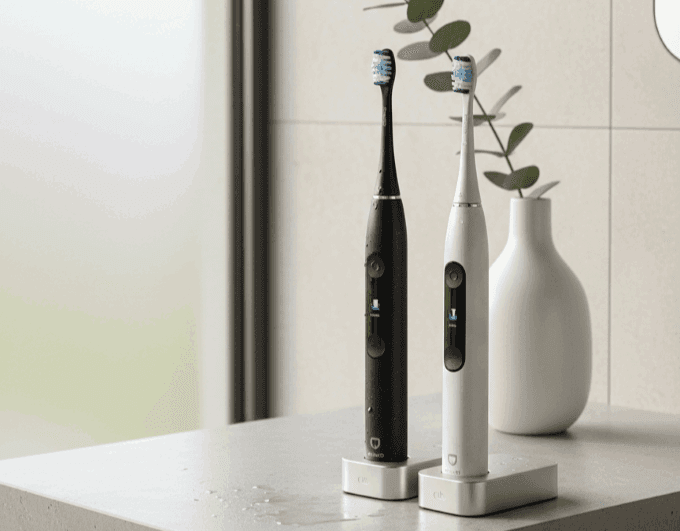
Plaque is a soft, invisible film made up of bacteria, food debris, and saliva. It forms constantly on your teeth and gums—especially in hard-to-reach areas like between teeth, along the gumline, and on the back molars. If not removed daily, plaque hardens into tartar (calculus), which can only be removed by professional dental cleaning. Worse, it becomes a breeding ground for:
• Tooth decay (cavities)
• Gingivitis and gum disease
• Bad breath (halitosis)
• Tooth discoloration
Brushing twice a day is non-negotiable—but technique matters more than pressure.
• Use gentle, circular motions
• Focus on all surfaces: outer, inner, and chewing
• Angle your brush 45° toward the gumline
💡 With BrushO’s real-time feedback system, users are guided through all 6 zones and 16 surfaces to ensure complete plaque removal—no missed spots.
Brushing alone only cleans about 60% of tooth surfaces. Flossing daily removes plaque hiding between teeth and under the gumline.
• Use traditional floss, floss picks, or water flossers
• Be gentle to avoid bleeding or gum damage
The tongue harbors bacteria too. Brush or scrape your tongue daily to prevent bacterial buildup and bad breath.
An antibacterial or fluoride mouthwash can reduce plaque-forming bacteria—especially helpful after meals when brushing isn’t possible.
• BrushO divides the mouth into 6 smart zones and uses sensors to detect missed areas
• Users receive instant feedback on pressure, angle, and coverage
• The BrushO app provides daily brushing performance reports—including plaque-prone zones needing more care
• Users earn points for every complete, high-score brush session
• Redeem rewards like free brush heads—making daily brushing more motivating
• Limit sugary snacks: Plaque bacteria feed on sugar to produce acid that erodes enamel
• Drink plenty of water: It helps wash away food debris and bacteria
• Chew xylitol gum: Helps stimulate saliva and neutralize acid
Defeating plaque isn’t about brushing harder—it’s about brushing smarter and more consistently. With the help of AI-driven tools like BrushO, you can take daily control of your oral health and stop plaque before it causes damage. Your teeth (and your dentist) will thank you.
Jan 27
Jan 27
Jul 30
Jul 30
Jul 29
Jul 22
Jul 19
Jul 17

PPM describes concentration, not the amount to put on the brush. Learn how to read fluoride information while keeping regional guidance and individual advice in view.

That forgotten tube deserves a label check. Learn what toothpaste shelf-life information refers to, why storage matters, and how to avoid guessing from appearance.

Clear gel or opaque paste? Texture is only one feature. Learn which label details matter when comparing toothpastes for your brushing routine.

Minty toothpaste can create a cooling sensation without being chilled. Explore what menthol does and why a fresh feeling is different from complete cleaning.

The sound of a powered brush comes with its moving mechanism. Learn how normal operating noise differs from alerts or an unexpected change that needs checking.

Toothpaste on the mirror? Check when you switch the brush on and off, how you position it, and how to pause without rushing your routine.

A whitening brushing program and a bleaching treatment are different things. Learn how to interpret mode names, surface-stain claims, and realistic expectations.

A tiny cluster of bristles serves a different purpose from a full-size head. Learn where a single-tuft brush may fit into an individually recommended cleaning routine.

Angled tufts, different bristle heights, and the angle of your hand are separate design questions. Learn how to read a toothbrush-head description clearly.

A larger head is not an automatic shortcut to cleaner teeth. Learn how head size affects access, positioning, and the fit of your daily brushing routine.

Lo spazzolino elettrico BrushO con IA offre guida in tempo reale, feedback sulla pressione, monitoraggio della copertura e report di progresso nell’app per una routine quotidiana più pulita.
Lo spazzolino elettrico BrushO con IA offre guida in tempo reale, feedback sulla pressione, monitoraggio della copertura e report di progresso nell’app per una routine quotidiana più pulita.


Address: RM 1427, 14/F RADIO CITY 505, HENNESSY RD CAUSEWAY BAY, HONG KONG
Code: 000000
Phone: +852-53758652
Email: customerservice@brusho.com