
Jul 30
Jul 30
Jul 29
Jul 22
Jul 19
Jul 17
Building a consistent dental routine isn’t just about remembering to brush twice a day—it’s about creating habits rooted in science, personalization, and long-term motivation. Many people start strong and quickly fall off track due to a lack of feedback, poor technique, or a routine that feels tedious. But with the right structure, tools, and mindset, your dental care can become second nature. This guide will walk you through how to build a dental routine that sticks—for good.
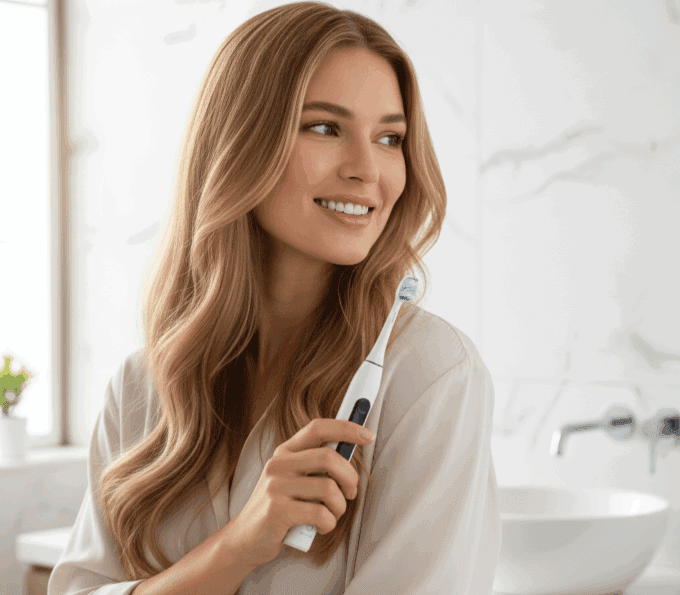
Let’s face it—most people don’t struggle with knowing what to do (brush, floss, rinse), but rather with doing it consistently. The biggest reasons dental routines fail include:
• Lack of Immediate Results: Unlike skincare or fitness, dental results take time.
• Repetitiveness: Brushing can feel like a chore when it’s not engaging.
• No Feedback Loop: Most routines lack feedback, leaving you unsure if you’re improving or regressing.
• Lifestyle Interruptions: Travel, fatigue, stress, or illness easily break routines.
These barriers can be overcome with a combination of habit science and smart technology.
Do you want whiter teeth? Healthier gums? Less sensitivity? Tailor your routine toward a goal—it increases motivation.
Everyone’s oral health status is different. Factors like gum recession, crowding, enamel thickness, or past dental treatments affect the kind of routine you need. Consult your dentist and understand your risk factors.
• Twice daily for 2 minutes using fluoride toothpaste.
• Divide the mouth into 6 zones: upper/lower, outer/inner/chewing surfaces.
• Don’t forget the tongue—it harbors bacteria.
• Floss once a day to remove plaque between teeth.
• Use floss picks or water flossers if string floss is challenging.
• Use an alcohol-free mouthwash tailored to your needs (antibacterial, whitening, sensitivity).
Attach brushing to an existing routine (e.g., right after coffee or shower). This creates a mental trigger.
Brush at the same time each morning and evening. Our brains form habits faster with predictable cues.
Habit-tracking apps or smart toothbrush dashboards (like BrushO) give visual feedback and reinforce progress.
It takes 21 days to build a habit and 90 days to make it a lifestyle. Stick with it even when motivation dips.
AI-powered brushes like BrushO dramatically improve adherence and technique through:
• Real-time feedback on pressure, duration, and coverage.
• 6-zone and 16-surface analysis to ensure complete cleaning.
• Gamified brushing reports to track improvement.
• Rewards for consistency through the BrushO points system.
This kind of smart integration keeps brushing engaging, measurable, and rewarding.
A successful dental routine evolves with your needs:
• Braces or aligners? You’ll need extra cleaning tools like interdental brushes.
• Gum issues? Switch to a soft-bristled brush and anti-inflammatory mouthwash.
• Pregnancy or aging? These life stages require more frequent dental visits.
BrushO adapts to these changes by offering personalized brushing plans and real-time alerts to adjust your technique.
• Set reminders or alarms until brushing becomes automatic.
• Involve family or partners—especially useful for kids and the elderly.
• Schedule bi-annual checkups and cleanings with your dentist.
A dental routine that lasts isn’t about willpower—it’s about structure, personalization, and feedback. By combining science-backed habits with smart technology like BrushO, you can transform your daily oral care into a sustainable, effective, and even enjoyable experience. Start small, stay consistent, and let your smile show the results. BrushO is a cutting-edge AI-powered toothbrush designed to deliver fully smart brushing through real-time feedback, pressure sensors, and brushing analytics. With customizable modes and a rewards system, BrushO ensures every brushing session supports long-term oral health.
Jul 30
Jul 30
Jul 29
Jul 22
Jul 19
Jul 17

The posterior maxilla is the most demanding site in implant dentistry, because the pneumatized maxillary sinus frequently leaves the clinician with less bone than the implant requires. Maxillary sinus augmentation, the surgical procedure that raises the sinus floor to create vertical bone, has be...

The rubber dam is the oldest and still the most effective isolation device in restorative dentistry, and its reputation as an inconvenient extra step survives among practitioners who have never measured the time it actually saves. The dam isolates the field from the saliva, the tongue, and the ch...

The margin is the most vulnerable line in fixed prosthodontics, because it is the only boundary between the prepared tooth, the restoration, and the oral environment that the clinician cannot fully seal by effort alone. A restoration that fits seamlessly at the margin resists leakage, caries, and...

The masticatory system is built for function, yet much of its damage comes from habits that serve no purpose. Parafunctional habits, the clenching, the grinding, and the tongue pressing performed outside of normal function, sit behind much of the tooth wear, the temporomandibular pain, and the my...

Chronic mouth breathing in the growing child is seldom a dental problem in origin and almost always a facial one in consequence. The child who sleeps with the mouth open bypasses the physiologic benefits of nasal respiration, and the posture that the airway forces upon the tongue, the mandible, a...

The immediate denture is the prosthesis placed on the day the teeth are extracted, sparing the patient the edentulous interval the conventional denture imposes and preserving the occlusal vertical dimension, the facial support, and the appearance through the transition. The clinical literature ha...

The Class III malocclusion in the growing child carries a special urgency, because the maxillary deficiency that marks the pattern does not correct itself and the window for the growth-modifying treatment closes with the skeletal maturity. Elastic protraction, the orthopedic therapy that pulls th...

The denture is the only prosthetic device in medicine that its owner is expected to wear daily and to clean personally, yet it is also the device most commonly neglected until the signs of disease appear. A biofilm that forms on the acrylic base within hours is a reservoir of candida and bacteria...

The complete denture stands or falls on the impression, because the impression determines how well the base follows the mucous membrane and how evenly the occlusal load is distributed across the basal seat. For a century the profession has argued about whether the impression should record the muc...

The all-ceramic crown has moved from a niche product to the default restoration for the anterior single tooth in a single clinical generation, driven by patient demand for metal-free appearance and by materials that now survive functional loading as reliably as their metal-ceramic predecessors. A...

Lo spazzolino elettrico BrushO con IA offre guida in tempo reale, feedback sulla pressione, monitoraggio della copertura e report di progresso nell’app per una routine quotidiana più pulita.
Lo spazzolino elettrico BrushO con IA offre guida in tempo reale, feedback sulla pressione, monitoraggio della copertura e report di progresso nell’app per una routine quotidiana più pulita.


Address: RM 1427, 14/F RADIO CITY 505, HENNESSY RD CAUSEWAY BAY, HONG KONG
Code: 000000
Phone: +852-53758652
Email: customerservice@brusho.com