
Jul 30
Jul 30
Jul 29
Jul 22
Jul 19
Jul 17
This guide answers the most Googled questions about smart and electric toothbrushes—backed by science, real-life results, and our own BrushO technology.
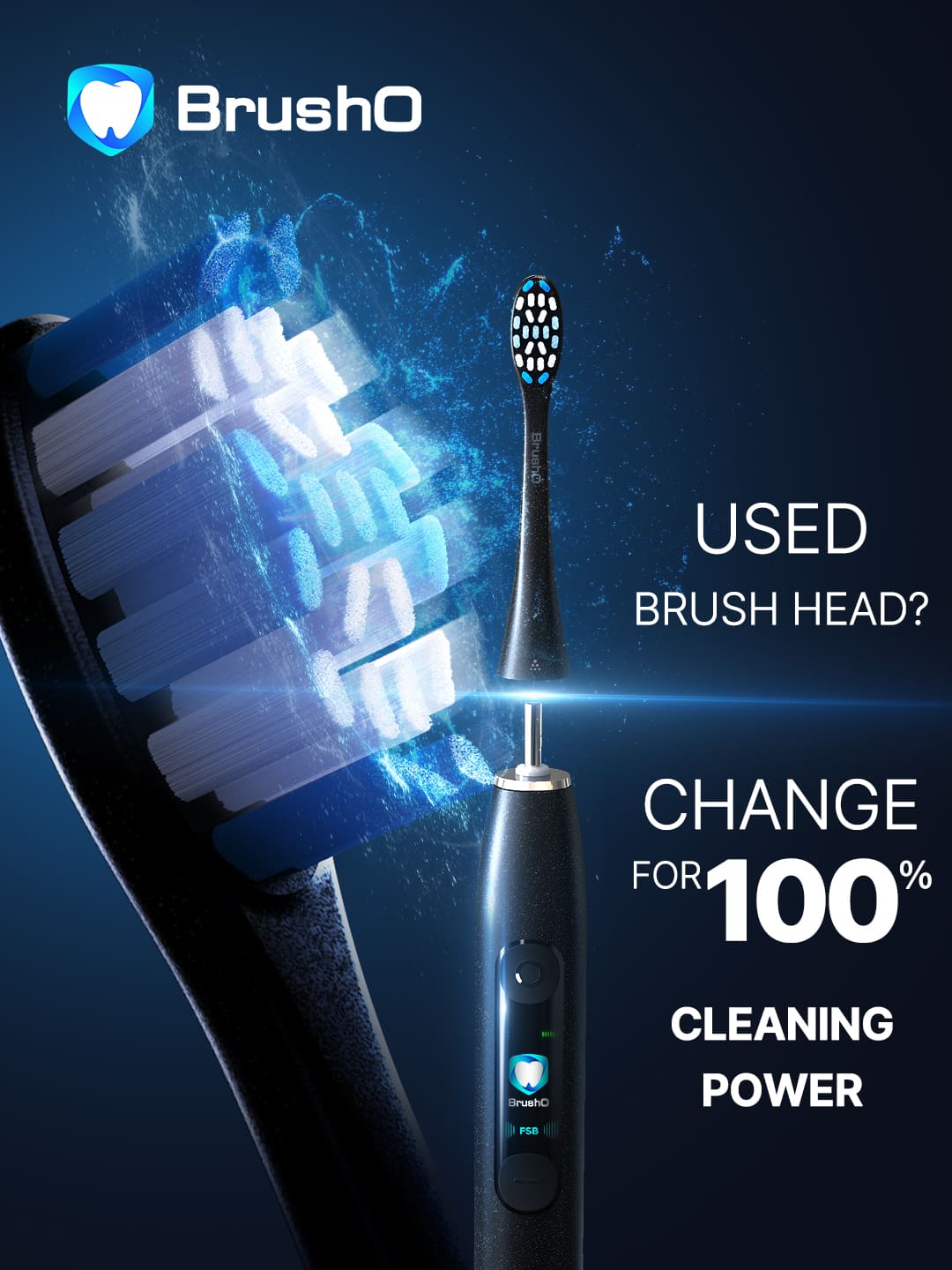
Short answer: Yes—but not in the way you might think.
Electric toothbrushes don't bleach your teeth like whitening strips or dental treatments. Instead, they improve whitening by:
High-frequency sonic vibrations (like BrushO's 40,000+ strokes/minute) help break up stains caused by coffee, wine, and smoking far more effectively than manual brushes.
The consistent power and advanced brush head design make it easier to clean between teeth and around the gumline—places where stains often start.
Many smart electric toothbrushes (including BrushO) include a "whitening" mode that increases speed and duration in targeted areas to gently polish enamel without damaging it.
Real Talk: Whitening with an electric toothbrush is a gradual, safe process. You'll notice a visible difference in brightness and cleanliness within 2–4 weeks of consistent use.
The AutoBrush and similar “mouthpiece-style” toothbrushes claim to clean all teeth at once. But here’s what the evidence shows:
Because they brush all teeth simultaneously with soft silicone bristles, they often miss plaque in between teeth and along the gumline.
Several dental studies and reviews have found that these devices don’t clean as effectively as traditional electric brushes—especially in critical zones.
Verdict: While convenient, most auto-cleaning toothbrushes do not meet clinical cleaning standards. If you want thorough cleaning, choose a smart electric toothbrush with a guided routine.
A smart toothbrush—like BrushO—isn’t just an electric brush with extra buttons. It’s a personalized oral care assistant designed to improve how (and how well) you brush.
AI-Powered Brushing Feedback
Detects your brushing angle, pressure, and coverage in real time.
Leakage & Splatter Protection (FSB Mode)
Stops the brush from splattering toothpaste if it’s turned on accidentally or removed mid-brush.
Custom Brushing Modes
With BrushO, you get 9 modes, including 3 customizable ones that let you adjust intensity, speed, and duration.
App Syncing
Tracks your brushing habits, highlights missed zones, and gives you a brushing “score” after every session.
Smart Timers & Zone Reminders
Helps you brush evenly across all mouth sections, avoiding over-brushing or missed spots.
If you care about your oral health—and want a smarter, more efficient way to maintain it—the answer is absolutely yes.
Here’s why users are switching to smart brushes like BrushO:
|
Traditional Brush |
Smart Toothbrush (BrushO) |
|
Manual, guess-based |
AI feedback + brushing guidance |
|
No data or reminders |
App tracking & improvement tips |
|
Easy to skip areas |
Smart zone timers, alerts |
|
One-speed fits all |
9 modes for different needs |
|
No whitening support |
Built-in whitening mode |
In the long run, a smart toothbrush may actually save you money by preventing cavities, gum issues, and expensive dental treatments.
“I didn't realize I was brushing wrong for years—until BrushO showed me exactly what I was missing.”
— A BrushO user, 2025
A smart toothbrush doesn’t just vibrate—it thinks. It gives you real-time feedback, customized care, and an experience tailored to your mouth. You brush better. You brush safer. And over time, you smile brighter.
Whether you're trying to whiten your teeth, clean more effectively, or just stop guessing with your routine—BrushO brings intelligence into every brushstroke.
Ready to upgrade to smarter oral care?
➡️ Try BrushO today and start brushing like it’s 2025.
Jul 30
Jul 30
Jul 29
Jul 22
Jul 19
Jul 17

The uncontrolled hypertension is the condition that the dental practice meets in the patient who presents with the elevated pressure that the guideline does not permit for the elective treatment, and the management of this patient requires the deferral of the dental procedure and the referral to ...

The closure of the extraction space in the orthodontic treatment is the phase that demands the careful selection of the mechanics and the monitoring of the force that the appliance delivers. The sliding mechanics that rely on the continuous archwire and the power chain that connects the brackets ...

The transverse discrepancy of the maxilla is the problem that the crowding and the posterior crossbite often hide, and the maxillary expansion is the treatment that addresses the width of the arch rather than the position of the individual tooth. The clinician who diagnoses the constriction early...

The local anaesthesia is the daily procedure that the modern dentistry treats as the routine, and the complications that follow it range from the transient and the trivial to the permanent and the serious. The clinician who injects by the habit without the anatomy in the mind is the clinician who...

The hypertension is the condition that the dental practice meets in the every day, and the patient who carries the elevated pressure without the symptoms is the patient who presents the risk that the chair-side measurement reveals. The dental team occupies the position that no other profession ho...

The glass-ceramic crown has become the default restoration for the anterior and the many posterior teeth, and the material selection within the family is the decision that determines the strength, the aesthetics, and the longevity of the result. The lithium disilicate, the leucite, and the zircon...

The dental phobia is the extreme form of the dental fear that prevents the patient from attending the treatment that the oral health requires, and the management of the phobia demands the skill that extends beyond the routine behaviour guidance. The systematic desensitization, the exposure therap...

The dental fear of the child is the condition that shapes the attitude for the lifetime, and the clinician who manages the first visits with the skill builds the patient who attends the recall without the dread. The fear that the child develops follows the many sources, and the practice that reco...

The patient with controlled hypertension is the patient who requires the dental care that the oral health demands and the treatment that the blood pressure permits, and the clinician who manages the controlled case safely follows the guideline that the evidence supports. The controlled hypertensi...

The ceramic veneer is the restoration that the aesthetic dentistry depends on, and the bond that retains the veneer on the enamel is the critical link that determines whether the restoration survives the function or fractures and debonds. The clinical technique from the preparation to the cementa...

Lo spazzolino elettrico BrushO con IA offre guida in tempo reale, feedback sulla pressione, monitoraggio della copertura e report di progresso nell’app per una routine quotidiana più pulita.
Lo spazzolino elettrico BrushO con IA offre guida in tempo reale, feedback sulla pressione, monitoraggio della copertura e report di progresso nell’app per una routine quotidiana più pulita.


Address: RM 1427, 14/F RADIO CITY 505, HENNESSY RD CAUSEWAY BAY, HONG KONG
Code: 000000
Phone: +852-53758652
Email: customerservice@brusho.com