
Jul 30
Jul 30
Jul 29
Jul 22
Jul 19
Jul 17
Do you think your toothbrush is personal and hygienic? Think again. Studies show that toothbrushes can harbor millions of bacteria, and under certain conditions, they can even transmit germs between people—especially when toothbrushes are stored close together or improperly cleaned. In this article, we’ll break down how germs spread through toothbrushes, the science behind contamination, and most importantly, how smart toothbrush hygiene habits and AI-powered tools like BrushO can help you stay protected.
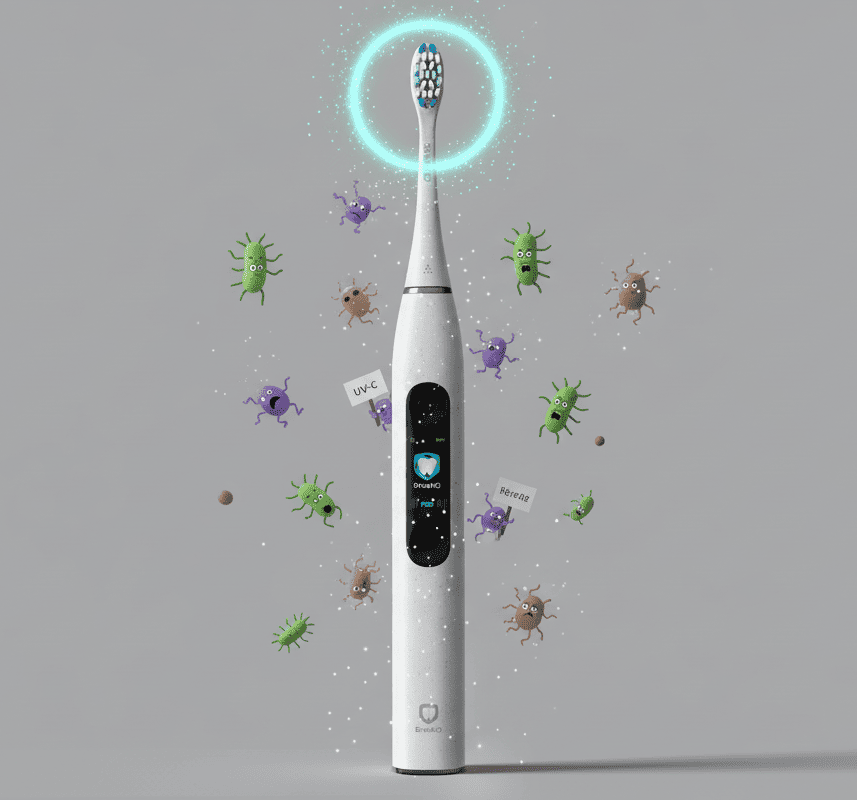
Even though you use it with toothpaste, your toothbrush can still accumulate harmful bacteria, viruses, and even mold. After each use, moisture combined with a warm bathroom environment creates a perfect breeding ground for microbial growth.
Bacterial buildup: Streptococcus, Staphylococcus, E. coli
Cross-contamination: From nearby brushes or shared holders
Fungal growth: From wet brush heads that never fully dry
Yes, especially when brushes are stored together in small spaces or cups, their bristles may touch, transferring bacteria. Even aerosols from toilet flushes can contaminate nearby toothbrushes if they’re left uncovered.
Couples or roommates storing brushes together
Families using shared holders in a single bathroom
Travel kits where brushes are crammed in one pouch
While most healthy adults won’t get sick from toothbrush germs, certain groups are more vulnerable:
Children with developing immune systems
Elderly individuals
People recovering from illnesses
Anyone with gum disease or oral wounds
Keep toothbrushes upright in a holder with enough space between each—never let bristles touch.
Caps can help during travel, but can also trap moisture. Use only ventilated covers, and avoid sealing a wet brush.
Air-drying is essential. BrushO’s charging base helps eliminate bacteria while drying your brush effectively.
Soak the head in antibacterial mouthwash or 3% hydrogen peroxide weekly to reduce bacterial load.
Unlike traditional toothbrushes, BrushO’s AI-powered toothbrush and smart system are designed with hygiene and safety in mind.
Reminds you when to replace your brush head
Compatible with free brush head replacement via reward points
Secure travel case design that supports proper airflow
BrushO isn’t just smarter—it’s cleaner. From AI hygiene monitoring to habit tracking, the system is built to protect your health, not just clean your teeth.
✅ Replace brush head every 3 months
Or sooner if you’ve been sick or the bristles look worn.
✅ Avoid group storage in the bathroom
Especially if someone is ill.
✅ Don’t share brushes—ever
Even with family or partners.
Jul 30
Jul 30
Jul 29
Jul 22
Jul 19
Jul 17

Saliva has moved from the byproduct of the examination to the fluid that the modern practice can read, and the diagnostics that the salivary sample supports now reach from the caries risk to the periodontal inflammation and beyond. The fluid is easy to collect, safe to handle, and rich in the pro...

The narrow alveolar ridge is the common obstacle that the implant plan meets in the healed posterior site, and the ridge split technique is the approach that widens the crest without the block graft and the second surgical site. The technique uses the viscoelastic property of the bone, and the co...

The resin-bonded bridge is the conservative alternative to the conventional fixed prosthesis, and its place in the modern practice has widened as the adhesive dentistry matured. The prosthesis replaces the missing tooth with the minimal removal of the enamel from the abutment, and the retention i...

The systemic antibiotic has a defined and a narrow place in the periodontal therapy, and the clinician who respects its limits uses it well while the clinician who reaches for it routinely erodes both the result and the antibiotic stewardship. The mechanical debridement remains the foundation of ...

The bond failure of the bracket is the interruption that the fixed orthodontic treatment can tolerate in the small number but not in the pattern, and the clinician who understands the cause reduces the frequency that the repeated rebonding records. The failure that recurs on the single tooth poin...

The prescription pad is one of the most common sources of the oral complaint that the patient brings to the dental office, and the clinician who does not think of the medication may spend the appointment treating the symptom that the drug created. The list of the agents that affect the mouth grow...

The intraoral scanner has moved from the novelty of the early adopters to the standard equipment of the modern prosthodontic practice, and the comparison with the conventional impression has become a daily question rather than an academic one. The scanner captures the surface of the teeth and the...

The endodontic retreatment is the second chance that the tooth receives when the initial treatment fails to resolve the infection or the symptoms, and the procedure is both more demanding and more rewarding than the primary treatment. The clinician who retreats the tooth encounters the filling ma...

The access preparation is the gateway of every root canal treatment, and it is the step at which the outcome of the case is most often decided, for good or for ill. A well-designed access straightens the canal system, removes the coronal obstruction, and allows the instruments and the irrigants t...

The restoration that the laboratory returns is only as good as the information that the clinician sends, and the communication between the dentist and the technician is the step that determines whether the crown, the veneer, or the bridge meets the expectation of the patient. The shade, the form,...

BrushO AI इलेक्ट्रिक टूथब्रश रियल-टाइम ब्रशिंग गाइड, प्रेशर फीडबैक, कवरेज ट्रैकिंग और ऐप-आधारित प्रगति रिपोर्ट देता है, ताकि आपकी दैनिक दिनचर्या अधिक साफ और समझने योग्य बने।
BrushO AI इलेक्ट्रिक टूथब्रश रियल-टाइम ब्रशिंग गाइड, प्रेशर फीडबैक, कवरेज ट्रैकिंग और ऐप-आधारित प्रगति रिपोर्ट देता है, ताकि आपकी दैनिक दिनचर्या अधिक साफ और समझने योग्य बने।


Address: RM 1427, 14/F RADIO CITY 505, HENNESSY RD CAUSEWAY BAY, HONG KONG
Code: 000000
Phone: +852-53758652
Email: customerservice@brusho.com