
Jul 30
Jul 30
Jul 29
Jul 22
Jul 19
Jul 17
Waking up with a strange, sour, or metallic taste in your mouth is common — but it shouldn’t be ignored. This unpleasant sensation, often referred to as morning breath, can point to a variety of underlying oral or systemic issues. Let’s break down what’s happening while you sleep and how to fix it.
During sleep, especially if you snore or breathe through your mouth, saliva production decreases significantly. Saliva is essential for:
• Washing away food particles
• Neutralizing acids from bacteria
• Preventing bacterial overgrowth
Without adequate saliva, your mouth becomes the perfect breeding ground for odor-producing bacteria, resulting in a foul taste by morning.
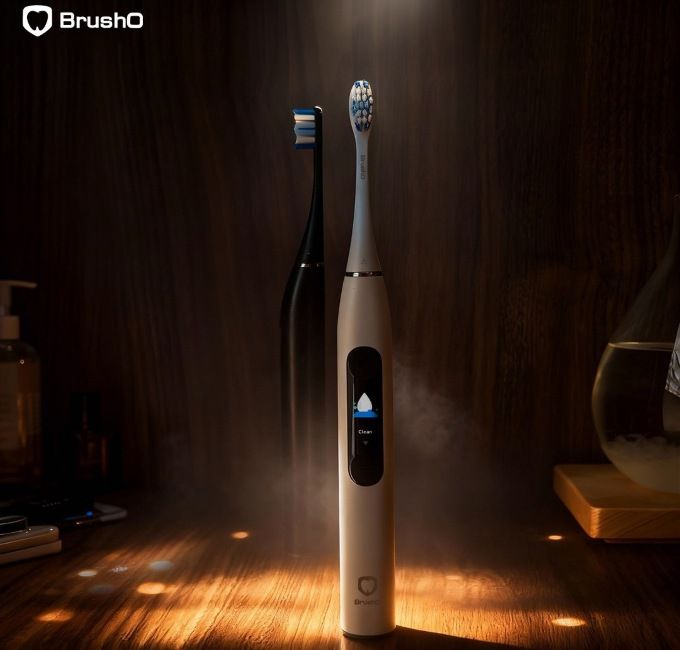
BrushO Tip: BrushO’s smart brushing modes, such as Gum Care, can stimulate saliva production and improve gum health over time.
When your mouth is at rest, bacteria take the opportunity to multiply — particularly on the back of your tongue, between your teeth, and along the gumline. These bacteria release volatile sulfur compounds (VSCs), which contribute to:
• Bad taste
• Bad breath
• Increased plaque formation
Did You Know? BrushO’s 16-surface analysis and tongue-cleaning guidance help you clean the most bacteria-prone areas every time.
If you often eat late at night or suffer from acid reflux (GERD), stomach acids can move up into your mouth while lying down. This leaves a bitter or sour taste when you wake up.
• Avoid spicy or acidic foods before bed.
• Elevate your head slightly during sleep.
Brushing too quickly or skipping brushing entirely before bed allows bacteria, food particles, and plaque to accumulate.
With BrushO, you’re not guessing. You receive real-time brushing scores and zone-by-zone feedback to ensure your nighttime routine is thorough — every night.
Some medications (like antihistamines, antidepressants, or blood pressure meds) can reduce saliva flow, contributing to dry mouth and bad taste. Additionally, conditions like diabetes, sinus infections, or even dehydration can play a role.
Here’s how to fight back against morning mouth:
Use an AI-powered toothbrush like BrushO to ensure full coverage — especially before bed.
Most bacteria that cause bad taste live on the tongue. Use BrushO’s tongue-cleaning feedback or a separate scraper.
Drink water before bed and upon waking to support saliva production.
Avoid alcohol-based mouthwashes that may dry your mouth more. Choose gentle, hydrating options.
A bad taste in the mouth may seem harmless, but it can signal deeper oral health concerns. With smart tools like BrushO, you gain more than just cleanliness — you gain control over your oral environment, even while you sleep. Start your day fresher with BrushO. Because waking up should taste better.
Jul 30
Jul 30
Jul 29
Jul 22
Jul 19
Jul 17

Trigeminal neuralgia (TN), also known as tic douloureux, is a chronic orofacial pain disorder characterized by recurrent, unilateral, brief, electric shock-like pain in the distribution of one or more divisions of the trigeminal nerve. It is widely regarded as one of the most severe pain conditions

Tooth whitening has become one of the most sought-after elective dental procedures worldwide. With increasing emphasis on facial aesthetics, a bright, white smile is now widely perceived as a marker of health, youth, and social confidence. This article provides a comprehensive review of contemporary

The edentulous posterior maxilla presents unique challenges for implant rehabilitation due to the pneumatization of the maxillary sinus and the progressive resorption of the alveolar ridge following tooth loss. Sinus floor elevation, or sinus lift surgery, is a predictable and well-documented surgic

Photodynamic therapy (PDT) is a minimally invasive therapeutic modality that combines a photosensitizing agent, light of a specific wavelength, and molecular oxygen to produce cytotoxic reactive oxygen species. Originally developed for oncological applications, PDT has been increasingly adopted in d

The introduction of temporary anchorage devices (TADs) has fundamentally transformed orthodontic treatment by providing skeletal anchorage that is independent of patient compliance. TADs, also known as mini-implants or miniscrews, enable tooth movements that were previously impossible or required co

Dental caries remains one of the most prevalent chronic diseases worldwide, disproportionately affecting children, elderly populations, and communities with limited access to conventional restorative care. The traditional restorative approach requires expensive equipment, cooperative patients, and m

Platelet-rich fibrin (PRF), a second-generation platelet concentrate, has emerged as one of the most widely adopted autologous biomaterials in contemporary dentistry and oral surgery. Developed by Dr. Joseph Choukroun and colleagues in France in 2001, PRF represents a conceptual evolution from first

The transition from conventional to digital impressions represents one of the most significant technological shifts in contemporary dentistry. Intraoral scanners (IOS) have evolved from experimental prototypes in the 1980s to sophisticated clinical instruments that now rival and, in several key metr

Gingival recession, defined as the apical migration of the gingival margin beyond the cementoenamel junction with exposure of the root surface, is a prevalent condition affecting a substantial proportion of the adult population. Epidemiological studies report that approximately 50% of adults exhibit

Cone beam computed tomography (CBCT) has revolutionized endodontic diagnosis and treatment planning by providing three-dimensional imaging that overcomes the inherent limitations of conventional periapical radiography. While two-dimensional radiographs remain the first-line imaging modality for endo

La brosse à dents électrique BrushO avec IA offre un guidage en temps réel, un retour sur la pression, un suivi de la couverture et des rapports de progression dans l’app pour une routine quotidienne plus propre.
La brosse à dents électrique BrushO avec IA offre un guidage en temps réel, un retour sur la pression, un suivi de la couverture et des rapports de progression dans l’app pour une routine quotidienne plus propre.


Address: RM 1427, 14/F RADIO CITY 505, HENNESSY RD CAUSEWAY BAY, HONG KONG
Code: 000000
Phone: +852-53758652
Email: customerservice@brusho.com