
Jul 30
Jul 30
Jul 29
Jul 22
Jul 19
Jul 17
Plaque accumulation does not occur evenly across the mouth. Some teeth are far more vulnerable due to their position, surface structure, and exposure to saliva and chewing forces. Understanding where and why plaque forms fastest allows individuals to adopt targeted cleaning strategies that reduce cavities, gum disease, and long-term dental damage. This article explains the biological and mechanical reasons behind uneven plaque buildup and outlines science-backed brushing approaches — including AI-guided smart brushing — that ensure comprehensive coverage and improved oral health outcomes.
Dental plaque is a sticky biofilm made of bacteria, proteins, and food residues that constantly develops on tooth surfaces. While plaque formation is natural, accumulation rates vary based on anatomy and environment.
Certain teeth provide more favorable conditions for bacterial colonization due to:
• Limited mechanical cleaning from chewing
• Reduced saliva exposure
• Complex surface grooves
• Difficult accessibility during brushing
These factors create localized zones where bacteria multiply faster, and biofilm matures more rapidly.
Molars are among the most plaque-prone teeth because of their:
• Deep pits and fissures
• Larger chewing surfaces
• Distance from direct brushing visibility
Food particles often remain trapped in these grooves, giving bacteria an ideal growth environment.
Plaque frequently accumulates behind the lower incisors due to:
• Proximity to salivary ducts
• Mineral-rich saliva accelerates tartar formation
• Neglect during routine brushing
This area is one of the most common sites for hardened plaque deposits.
The junction between teeth and gums is especially vulnerable because:
• Plaque accumulates where brushing angles are incorrect
• Biofilm thrives in moist protected margins
• Inflammation can begin unnoticed
Failure to clean this area consistently increases the risk of gingivitis and periodontal disease.
Saliva protects teeth by neutralizing acids and washing away debris. Teeth with reduced saliva exposure accumulate plaque faster.
Misaligned teeth create sheltered niches where toothbrush bristles struggle to reach.
Roughened or eroded enamel allows bacteria to adhere more easily compared to smooth surfaces.
Frequent sugar or starch exposure promotes bacterial metabolism and localized plaque growth.
Brushing twice daily is essential — but coverage quality determines effectiveness.
Common technique issues include:
• Overlooking back teeth
• Inadequate gumline angling
• Uneven brushing duration per zone
• Excessive pressure reducing cleaning precision
Traditional brushes provide no feedback, leaving these errors unnoticed.
AI-driven toothbrush systems address uneven plaque removal through real-time monitoring.
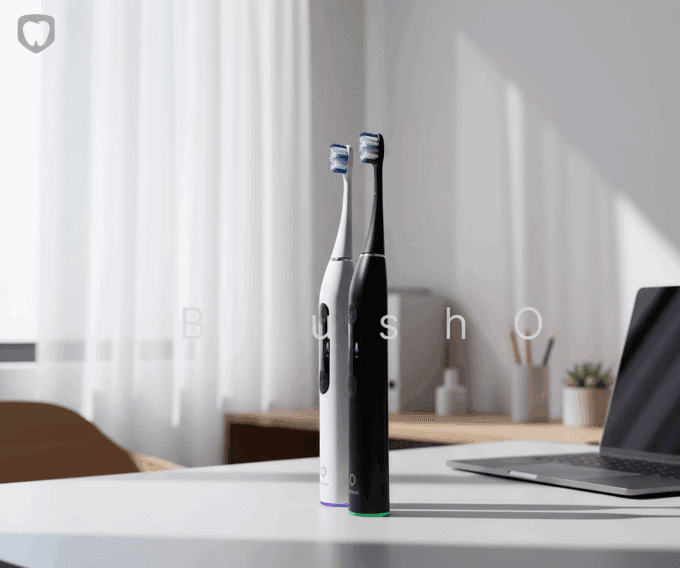
BrushO supports plaque prevention by:
• Tracking 6 oral zones and 16 surfaces
• Detecting skipped areas
• Monitoring pressure levels
• Providing post-session coverage reports
• Reinforcing habit consistency through reward-based engagement
This data-driven approach transforms brushing from guesswork into targeted plaque management.
Dentist-backed preventive actions include:
• Angling bristles 45° toward the gumline
• Spending equal time per mouth zone
• Cleaning molar grooves carefully
• Flossing daily
• Monitoring brushing performance
Personalized brushing feedback significantly improves compliance and long-term oral outcomes.
Plaque buildup is not random — it reflects the interplay of tooth anatomy, saliva flow, brushing behavior, and lifestyle factors. Certain teeth accumulate plaque faster due to structural and accessibility challenges, increasing their vulnerability to decay and gum disease. Understanding these patterns allows individuals to clean strategically rather than uniformly. AI-guided brushing tools like BrushO further enhance plaque control by identifying neglected zones and optimizing technique in real time, promoting healthier teeth and gums through precision-driven oral care.
Feb 11
Feb 6
Jul 30
Jul 30
Jul 29
Jul 22
Jul 19
Jul 17

A lateral cephalometric radiograph is only as useful as the analysis applied to it. The same tracing can be read as a skeletal discrepancy by one method and as a dental compensation by another, and the conclusions reached about extraction, surgery or growth modification may differ accordingly. Un...

Premature fusion of the cranial sutures produces a group of conditions in which the skull, the midface and the occlusion develop abnormally, and the dental team is central to long-term care. Apert and Crouzon syndromes are the best known craniosynostosis syndromes with major oral consequences. Bo...

A dense opacity on a panoramic radiograph above the molar roots or within the nasal cavity is a familiar finding that is often dismissed as an incidental artifact. When that opacity proves to be an antrolith or a rhinolith, the discovery explains years of unilateral obstruction, discharge and fac...

A firm, board-like swelling at the angle of the jaw that slowly breaks down into multiple draining sinuses should raise suspicion of cervicofacial actinomycosis, a chronic bacterial infection that is easily mistaken for a tumor. Nocardiosis, caused by related filamentous organisms, can produce a ...

Enlargement of the jaw, widening spaces between the teeth and a slowly changing facial profile may bring a patient to the dental office years before the underlying endocrine disease is diagnosed. Acromegaly and Cushing syndrome both leave recognizable signatures in the craniofacial region, and th...

A slowly growing, painless lump at the angle of the jaw in a middle-aged or older man who smokes is the classic presentation of a Warthin tumor. Formally called papillary cystadenoma lymphomatosum, this benign neoplasm is one of the most common tumors of the parotid gland and the second most comm...

Painful ulcerated gums that bleed easily, a foul metallic taste and severe mouth odor can signal Vincent stomatitis, an acute fusospirochetal necrotizing infection of the gingival and oral tissues. First described during wartime and historically called trench mouth, the disease still occurs today...

A painful swelling under the jaw that appears at mealtimes and subsides slowly afterward is the classic symptom of a salivary stone blocking a duct. Sialolithiasis, the formation of calcified stones in the salivary glands, and sialodochitis, the inflammation of the ducts that follows, are common ...

Paget disease of bone, also called osteitis deformans, is a chronic disorder of bone remodeling that can silently affect the skull and the jaws. In the maxillofacial region it produces progressive bony enlargement, distinctive cotton-wool radiographs and dental complications such as hypercementos...

The sudden appearance of widespread, painful oral erosions with crusted lips can be alarming, and it may represent either erythema multiforme or a drug-induced severe reaction such as Stevens-Johnson syndrome. Both belong to a spectrum of immune-mediated mucocutaneous disorders, and both can begi...

La brosse à dents électrique BrushO avec IA offre un guidage en temps réel, un retour sur la pression, un suivi de la couverture et des rapports de progression dans l’app pour une routine quotidienne plus propre.
La brosse à dents électrique BrushO avec IA offre un guidage en temps réel, un retour sur la pression, un suivi de la couverture et des rapports de progression dans l’app pour une routine quotidienne plus propre.


Address: RM 1427, 14/F RADIO CITY 505, HENNESSY RD CAUSEWAY BAY, HONG KONG
Code: 000000
Phone: +852-53758652
Email: customerservice@brusho.com