
Jul 30
Jul 30
Jul 29
Jul 22
Jul 19
Jul 17
Have you ever noticed your food tastes different lately—or that some flavors seem duller than before? It may not be the food—it could be your oral habits. Your tastebuds are directly influenced by your dental hygiene, diet, and even brushing technique. From gum health to plaque buildup, your daily oral care routine plays a bigger role in how you experience flavor than you might think. In this article, we explore how your tastebuds reflect your oral health and how smart brushing with tools like BrushO can help restore your full sense of taste.
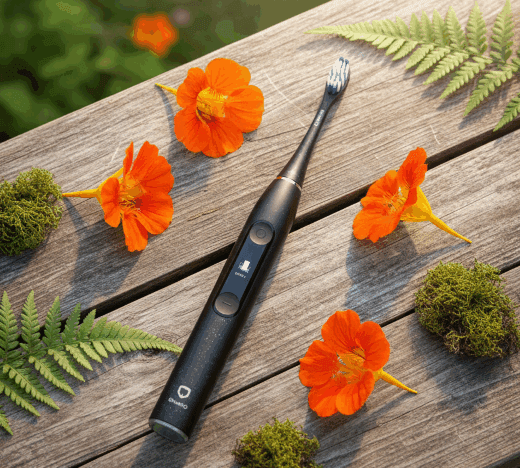
Your tongue is covered with thousands of tastebuds—but it’s also a common hiding place for bacteria, food debris, and plaque. Poor brushing or skipping tongue cleaning allows these bacteria to form biofilms, coating your taste receptors and dulling your ability to perceive flavors.
• Diminished taste for salty, sweet, or sour flavors
• Metallic or bitter aftertastes
• Bad breath or tongue coating
• Increased sensitivity to spicy foods (often linked to inflamed tissues)
Not brushing your tongue allows odor-causing bacteria and dead cells to accumulate. This layer can block taste receptors, leading to muted flavors and a “fuzzy tongue” feeling.
✅ Solution: BrushO encourages full-mouth cleaning, including gentle brushing of the tongue. Some models offer sensitive modes ideal for this.
Inflamed gums from plaque buildup or gingivitis can release compounds that affect saliva composition, subtly altering your perception of taste.
✅ Solution: BrushO’s pressure sensors help avoid over-brushing while ensuring gumline cleaning is consistent and gentle.
Saliva is essential for dissolving food particles and allowing taste molecules to reach your receptors. Inconsistent brushing, especially at night, can lead to dry mouth, which reduces taste sensitivity.
✅ Solution: BrushO reminds you to brush at the optimal times and encourages routine hydration as part of smart oral habits.
Some mouthwashes contain alcohol or strong antiseptics that temporarily numb tastebuds or alter their ability to detect flavors.
✅ Solution: Balance mouthwash use with gentle smart brushing, and avoid high-alcohol formulas.
BrushO is designed to improve every aspect of your oral routine:
• Real-time coverage alerts ensure you never miss the tongue or inner surfaces.
• Custom brushing modes like “sensitive” and “deep clean” help remove tongue film and plaque gently.
• Habit tracking and $BRUSH rewards motivate consistency so your mouth stays fresh and clean daily.
• Reports and feedback reveal patterns that may be causing taste dullness.
While many taste issues are linked to hygiene, some may signal underlying health problems:
• Persistent metallic taste
• Sudden loss of taste (could be due to infections or medications)
• Burning sensation on the tongue (possible vitamin deficiencies or oral infections)
If these symptoms persist, consult a dentist or physician.
• Brush your tongue daily, not just your teeth.
• Use a smart toothbrush like BrushO to maintain balanced pressure and complete coverage.
• Stay hydrated to support saliva production.
• Avoid sugary snacks that contribute to bacterial buildup.
• Don’t ignore gum inflammation or plaque at the back of the tongue.
Your tastebuds offer more than just flavor—they’re subtle messengers of your oral hygiene habits. If things aren’t tasting quite right lately, it may be time to evaluate your brushing technique, tongue cleaning, and oral routine. With BrushO’s smart guidance, you can keep your mouth clean, your gums healthy, and your tastebuds fully activated—so every bite tastes exactly as it should.
Jan 16
Jan 16
Jul 30
Jul 30
Jul 29
Jul 22
Jul 19
Jul 17

Wisdom teeth, or third molars, are the last teeth to erupt, and a large proportion of them never achieve a functional position. When a wisdom tooth is trapped beneath the gum or bone, it is described as impacted, and the decision to remove it is one of the most common surgical judgments in dentis...

Disk displacement is the most common internal derangement of the temporomandibular joint (TMJ) and a frequent reason for orofacial pain consultations. Magnetic resonance imaging (MRI) is the accepted gold standard for confirming the position of the articular disk because it visualizes soft tissue...

Pulp sensibility testing remains the first diagnostic step before any endodontic intervention. Cold, heat and electric pulp tests (EPT) probe the neural response of the pulp through enamel and dentin, and their results decide whether a tooth needs root canal treatment, a direct pulp cap or simple...

Mouthguards protect teeth from sports trauma and night-time grinding, but a dirty guard can become a reservoir for bacteria, fungi and oral disease. Studies show that used mouthguards accumulate plaque, streptococci and Candida within days of normal wear, and poor hygiene has been linked to gingi...

Halitosis, or persistent bad breath, affects a large share of the adult population and carries real social and psychological consequences. In the vast majority of cases the source is the mouth itself, and the most important reservoir is the coating on the dorsal surface of the tongue. Understandi...

Root canal treatment succeeds only when instrumentation stops at the right place. Working length is the distance from a stable coronal reference point to the apical constriction, and every millimeter of error changes the outcome: over-instrumentation pushes debris and irrigant beyond the apex, wh...

Dry mouth is one of the most common complaints in dental practice, yet it is frequently underestimated. Xerostomia is the subjective feeling of oral dryness, while salivary hypofunction is the measurable reduction in saliva output, and the two do not always coincide. Because saliva protects teeth...

Diabetes affects more than blood sugar, and the mouth is often one of the first places where the disease makes itself known. The relationship is genuinely bidirectional: uncontrolled diabetes increases the risk and severity of periodontal disease, while severe gum inflammation makes blood sugar h...

Enamel is the hardest tissue in the human body, but it is not indestructible. Dental erosion is the chemical dissolution of enamel by acids that are not produced by bacteria, and modern diets supply those acids in abundance. Understanding how acidic foods and drinks attack the tooth surface is th...

A good toothbrush should work as well in a hotel bathroom as it does at home, and that is exactly what BrushO Travel Mode is designed to do. By lowering motor speed and trimming acoustic output, Travel Mode keeps the full two-minute cleaning routine in a form that is discreet enough for shared ro...

La brosse à dents électrique BrushO avec IA offre un guidage en temps réel, un retour sur la pression, un suivi de la couverture et des rapports de progression dans l’app pour une routine quotidienne plus propre.
La brosse à dents électrique BrushO avec IA offre un guidage en temps réel, un retour sur la pression, un suivi de la couverture et des rapports de progression dans l’app pour une routine quotidienne plus propre.


Address: RM 1427, 14/F RADIO CITY 505, HENNESSY RD CAUSEWAY BAY, HONG KONG
Code: 000000
Phone: +852-53758652
Email: customerservice@brusho.com