
Jul 30
Jul 30
Jul 29
Jul 22
Jul 19
Jul 17
A healthy mouth is more than just a bright smile—it’s a crucial part of your overall well-being. Gum disease, tooth decay, bad breath, and even systemic issues often start with poor oral hygiene. Fortunately, maintaining a healthy mouth doesn’t require perfection—just consistency, awareness, and the right tools. In this article, we’ll cover the essential steps to keeping your teeth and gums healthy, how your daily habits play a role, and why using a smart toothbrush like BrushO can make all the difference in your long-term oral care routine.
Oral health is about more than preventing cavities—it directly impacts your digestion, heart health, and even mental clarity. Neglecting your teeth and gums can lead to:
• Gum Disease (gingivitis or periodontitis)
• Tooth Loss and Decay
• Persistent Bad Breath
• Systemic Inflammation
• Lowered Self-Confidence
Keeping your mouth healthy requires a combination of proper brushing, good lifestyle choices, and proactive care.
Brushing twice a day is essential—but how you brush matters just as much as how often.
• Use fluoride toothpaste and a soft-bristle brush
• Brush for 2 full minutes
• Don’t forget your gumline, molars, and tongue
• Use a 45° angle to gently clean around the gums
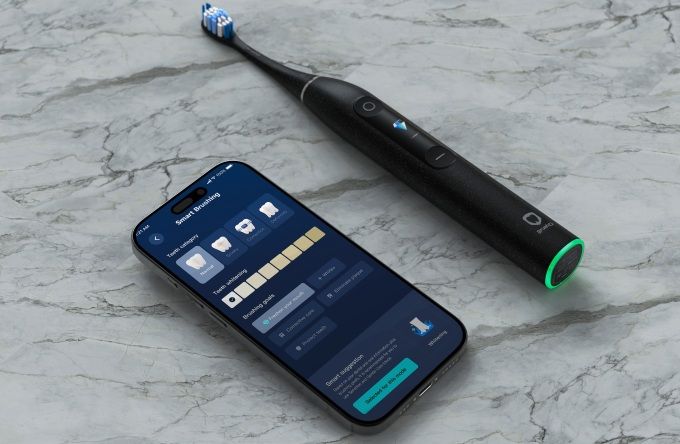
With BrushO’s AI-powered toothbrush, you get real-time feedback, reminders, and zone-by-zone guidance to ensure every surface is cleaned correctly.
Flossing removes plaque and food particles from between teeth—areas your toothbrush can’t reach.
• Choose traditional floss or water flossers
• Gently curve floss around each tooth
• Avoid snapping, which can irritate gums
The tongue harbors bacteria that cause bad breath and contribute to plaque formation.
• Use a tongue scraper or toothbrush back
• Clean from back to front, gently
Saliva is your mouth’s natural defense system. It neutralizes acid, washes away debris, and maintains pH balance.
• Drink water throughout the day
• Limit dehydrating beverages like alcohol or coffee
Your diet plays a major role in the health of your teeth and gums:
• Eat calcium-rich foods: dairy, leafy greens, almonds
• Limit sugar and acidic drinks: soda, energy drinks, candy
• Chew crunchy veggies: like carrots or celery, to stimulate saliva
Visit your dentist every 6 months for cleanings and checkups. These visits help:
• Detect cavities and gum issues early
• Remove hardened plaque (tartar)
• Monitor changes in your oral health
BrushO isn’t just another toothbrush—it’s an AI-powered oral care system:
• Zone-based guidance: Ensures full-mouth coverage (6 zones, 16 surfaces)
• Pressure sensors: Prevent gum recession and enamel wear
• Brushing reports: Track consistency and technique daily
• Habit rewards: Earn $BRUSH tokens for healthy habits
BrushO empowers users of all ages to build consistent, measurable brushing routines that actually improve oral health—not just appearance.
Oral health is a lifelong commitment. Unlike mouthwash or mints, real hygiene is about daily care, correct technique, and ongoing improvement. Don’t rely solely on whitening or cosmetic products—focus on habits that support gum health, plaque removal, and cavity prevention.
• Brush 2x daily with proper technique
• Use an AI toothbrush like BrushO for optimal care
• Floss and clean your tongue every day
• Drink water and eat tooth-friendly foods
• Visit your dentist regularly—even if nothing feels wrong
BrushO is an AI-powered smart toothbrush that transforms oral hygiene into a personalized, tech-driven routine. With real-time feedback, brushing analytics, and $BRUSH token rewards, BrushO empowers users to build consistent habits that keep their mouth truly healthy.
Jan 20
Jan 20
Jul 30
Jul 30
Jul 29
Jul 22
Jul 19
Jul 17

Squamous cell carcinoma is not a single, uniform disease, and two of its oral variants illustrate the extremes of its behavior. Verrucous carcinoma is a slow-growing, exophytic tumor that almost never metastasizes, while spindle cell carcinoma is an aggressive, sarcomatoid malignancy that can be ...

Most people expect a toothache to be the first sign of pulp disease, but some forms of pulpitis are surprisingly silent. A pulp polyp is the visible result of chronic hyperplastic pulpitis, a condition in which the dental pulp grows out of a large carious opening as a fleshy mass. Recognizing thi...

Dry mouth is not merely uncomfortable; it is a medical condition with real consequences for teeth, speech, swallowing and quality of life. When the salivary glands cannot produce enough saliva, medications called sialogogues can restore some of the missing fluid. Pilocarpine and cevimeline are th...

A blister in the mouth can be the first warning of a systemic autoimmune disease, and two disorders deserve particular attention in the dental chair: pemphigus vulgaris and mucous membrane pemphigoid. Both produce chronic oral ulceration, yet their immunologic targets, clinical behavior and long-...

When infection drains from a tooth, the body often creates a visible escape route, and the dentist must interpret these fistulous openings correctly. A parulis is the common gum boil that signals chronic periapical infection, while an oroantral fistula is a communication between the mouth and the...

Among the fibro-osseous lesions of the jaws, the ossifying fibroma holds a unique position because it is a true neoplasm, unlike the reactive cemento-osseous dysplasia discussed in an earlier article. It grows continuously, expands bone and requires surgical removal, and its cemental variant adds...

Not all keratocystic lesions of the jaw behave alike, and one of the most important distinctions in oral pathology separates the orthokeratinized odontogenic cyst from its better-known relative, the odontogenic keratocyst. Although the two lesions look similar under the microscope at first glance...

Periodontal disease is usually a slowly progressive infection, but a rare form called necrotizing ulcerative periodontitis destroys tissue with alarming speed. Unlike ordinary periodontitis, this condition produces necrotic, cratered papillae, deep pocketing and rapid bone loss, and it appears al...

Every parent has met the child who refuses to eat because of painful mouth sores, and most of these children have one of two viral illnesses: herpangina or hand, foot and mouth disease. Both are caused by enteroviruses, both produce fever and oral ulcers, and both are overwhelmingly common in you...

Cementoosseous dysplasia is one of the most common fibro-osseous lesions found on dental radiographs, yet it is also one of the most frequently misdiagnosed. The lesion replaces normal bone with cellular fibrous tissue and cementum-like material, and it appears in several forms that range from a ...

La brosse à dents électrique BrushO avec IA offre un guidage en temps réel, un retour sur la pression, un suivi de la couverture et des rapports de progression dans l’app pour une routine quotidienne plus propre.
La brosse à dents électrique BrushO avec IA offre un guidage en temps réel, un retour sur la pression, un suivi de la couverture et des rapports de progression dans l’app pour une routine quotidienne plus propre.


Address: RM 1427, 14/F RADIO CITY 505, HENNESSY RD CAUSEWAY BAY, HONG KONG
Code: 000000
Phone: +852-53758652
Email: customerservice@brusho.com