
Jul 30
Jul 30
Jul 29
Jul 22
Jul 19
Jul 17
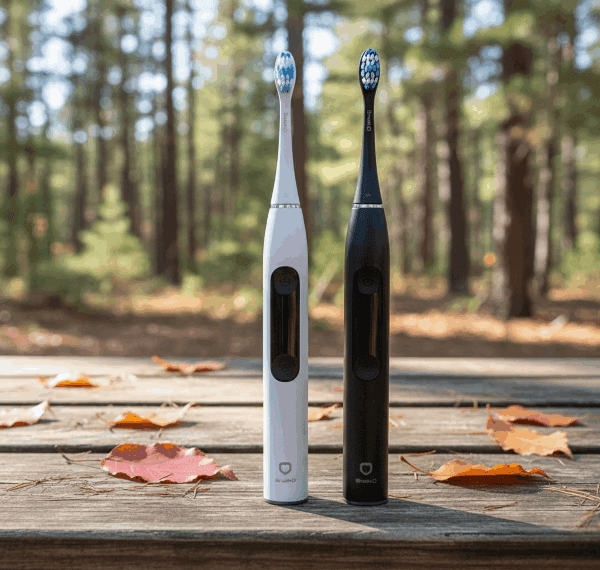
Your hormones don’t just affect your mood or energy levels—they also have a powerful influence on your teeth and gums. At different stages of life, such as puberty, menstruation, pregnancy, and menopause, hormonal fluctuations can trigger a range of oral health challenges, including gum sensitivity, inflammation, and even bone loss. This article examines the long-term impact of hormones on oral health and how tools like BrushO’s AI-powered smart toothbrush can help manage symptoms and protect your smile throughout every phase.
Hormones regulate many systems in the body, including your immune response, blood circulation, and tissue repair. Since the mouth is filled with blood vessels, nerves, and soft tissue, it’s particularly sensitive to hormonal changes. Fluctuations in estrogen and progesterone can increase blood flow to the gums, affect how your body reacts to plaque, and alter saliva composition—all of which play a key role in oral health outcomes.
During puberty, an increase in sex hormones can make gum tissue more reactive to plaque and bacteria.
• Red, swollen, or bleeding gums
• Increased risk of gingivitis
• Bad breath
Why it happens: Hormonal surges heighten the gum’s response to irritants—even minimal plaque buildup can cause inflammation.
• Establish solid brushing routines early.
• Use BrushO’s gamified app to encourage consistent technique and build lifelong oral habits.
• Floss daily to reduce inflammation.
Hormonal fluctuations around menstruation can also lead to short-term oral issues.
• Sore or swollen gums
• Canker sores
• Bad breath
Though symptoms are usually mild and temporary, consistent brushing and tracking can help reduce flare-ups.
Pregnancy-related hormonal changes can drastically affect oral health.
• Pregnancy Gingivitis: Red, tender, bleeding gums
• Pregnancy Tumors: Benign growths on gums due to excess plaque
• Increased cavity risk due to cravings and frequent snacking
Estrogen and progesterone levels rise significantly during pregnancy, increasing vascularity in gums and the body’s inflammatory response to plaque.
• Brush at least twice a day with AI guidance from BrushO.
• Use soft modes if gums are sore.
• Maintain hydration to reduce dry mouth.
• Don’t skip dental checkups.
As estrogen levels decline, many women experience significant oral changes.
• Dry mouth (xerostomia)
• Burning mouth syndrome
• Increased risk of periodontitis
• Bone loss in the jaw
These symptoms can accelerate tooth decay and gum recession if not managed carefully.
• Use BrushO’s real-time pressure monitoring to avoid overbrushing.
• Choose modes for sensitive teeth or gum massage.
• Stay hydrated and use fluoride toothpaste.
• Get regular dental screenings for bone density and gum health.
Hormonal shifts often coincide with emotional and psychological changes—especially during adolescence, pregnancy, or menopause. Stress can worsen bruxism (teeth grinding) and reduce motivation for regular brushing. BrushO’s streak-tracking and rewards system helps users maintain healthy habits even during mentally challenging times.
No matter your life stage, BrushO personalizes care to meet changing oral needs.
• Smart pressure sensors protect inflamed gums.
• Custom brushing modes accommodate sensitivities during pregnancy or menopause.
• Habit tracking + reminders help teens and adults stay consistent.
• $BRUSH token rewards create positive reinforcement throughout hormonal shifts.
Hormones play a huge role in your oral health journey—often in ways you don’t immediately see. From swollen gums in puberty to dry mouth in menopause, these changes are natural but manageable. By combining awareness, regular dental care, and smart brushing tools like BrushO, you can protect your oral health through every stage of life.
Jan 16
Jan 16
Jul 30
Jul 30
Jul 29
Jul 22
Jul 19
Jul 17

Thumb sucking and pacifier use are normal self-soothing behaviors in infancy, and most children give them up on their own by school age. The dental problem arises when the habit continues past the eruption of the permanent front teeth, because the persistent pressure reshapes the growing jaw and ...

Most people never think about the shape of their tooth roots, but root morphology determines how a tooth is treated when disease strikes. Taurodontism and dilaceration are two developmental anomalies that change root anatomy in distinctive ways, and both have major implications for endodontics, e...

Dental injuries are among the most common sports-related injuries, and a mouthguard is the simplest piece of equipment an athlete can wear. Yet many players still train without one, often because they have never been told which type to choose or how a well-fitted guard feels. Understanding the pr...

Piezoelectric surgery has changed the way oral surgeons cut bone. Instead of a rotating bur, a piezotome uses ultrasonic vibrations to cut mineralized tissue while leaving soft tissue largely untouched. The technique is now routine for osteotomies, sinus lifts and delicate procedures where precis...

Children's teeth vary naturally in size, but some variations are large enough to affect function, appearance and future orthodontic care. Microdontia means teeth that are smaller than normal, and macrodontia means teeth that are larger than normal, and both can appear as isolated findings or as p...

Two patients can have identical teeth and completely different treatment outcomes, and the reason is often hiding in the gums. Gingival biotype describes the thickness and morphology of the soft tissue around the teeth, and it influences how the gum reacts to surgery, implants, braces and even si...

Guided bone regeneration, or GBR, is the standard method for rebuilding bone before and around dental implants. The concept is simple: a membrane creates a protected space that allows bone-forming cells to grow while excluding competing soft tissue. Choosing a resorbable membrane changes the prot...

Periodontal disease destroys not only the gum but the bone and ligament that anchor teeth, and the goal of regenerative treatment is to rebuild all three. Emdogain, an enamel matrix derivative, has become one of the most studied biological agents for this task, and its results improve further whe...

A chipped tooth is one of the most common dental emergencies, affecting children and adults alike through falls, sports, biting on hard objects and even normal wear. The right repair depends less on the size of the fragment and more on which layer of the tooth is exposed. Bonding, veneers and cro...

A knocked-out tooth is one of the few dental emergencies where minutes decide the outcome. When a permanent tooth is completely displaced from its socket, immediate and correct handling can save it, while delays or mistakes can condemn it to loss. The steps are simple enough for any parent, coach...

La brosse à dents électrique BrushO avec IA offre un guidage en temps réel, un retour sur la pression, un suivi de la couverture et des rapports de progression dans l’app pour une routine quotidienne plus propre.
La brosse à dents électrique BrushO avec IA offre un guidage en temps réel, un retour sur la pression, un suivi de la couverture et des rapports de progression dans l’app pour une routine quotidienne plus propre.


Address: RM 1427, 14/F RADIO CITY 505, HENNESSY RD CAUSEWAY BAY, HONG KONG
Code: 000000
Phone: +852-53758652
Email: customerservice@brusho.com