
Jul 30
Jul 30
Jul 29
Jul 22
Jul 19
Jul 17
Think your toothbrush head can last a year? Think again. Using the same brush head for too long can seriously compromise your dental hygiene—and possibly your health. Worn bristles can’t clean properly, harbor bacteria, and may even damage your gums. In this article, we’ll explain why regular brush head replacement is essential, how often you really need to change it, and how BrushO’s free brush head program makes it easier than ever to stay protected and save money.
Over time, bristles lose their shape and stiffness, which reduces their ability to remove plaque and debris. A brush head that looks “fine” may have already lost 30%–40% of its cleaning effectiveness.
Old brush heads can become breeding grounds for millions of bacteria. The moist environment, combined with leftover toothpaste and mouth bacteria, creates the perfect space for microbial growth—even mold in some cases.
Frayed bristles not only clean less effectively, but they can also irritate your gums and wear down tooth enamel. If you’re brushing twice daily with a worn head, you might be hurting your teeth more than helping.
According to the American Dental Association (ADA), brush heads should be replaced every 3 months. You should also replace it sooner if:
The bristles look worn or splayed
You’ve recently been sick (e.g., flu, cold, strep throat)
The head has been dropped or exposed to contamination
🦷 Pro tip: With BrushO, your smart toothbrush reminds you when it’s time to replace the brush head—so you’ll never forget again.
Let’s be honest—it’s easy to forget. Most of us don’t mark a calendar or set reminders. Some assume that unless the bristles are obviously damaged, it’s fine. But even if your brush head looks okay, its microscopic wear can already be putting your teeth at risk.
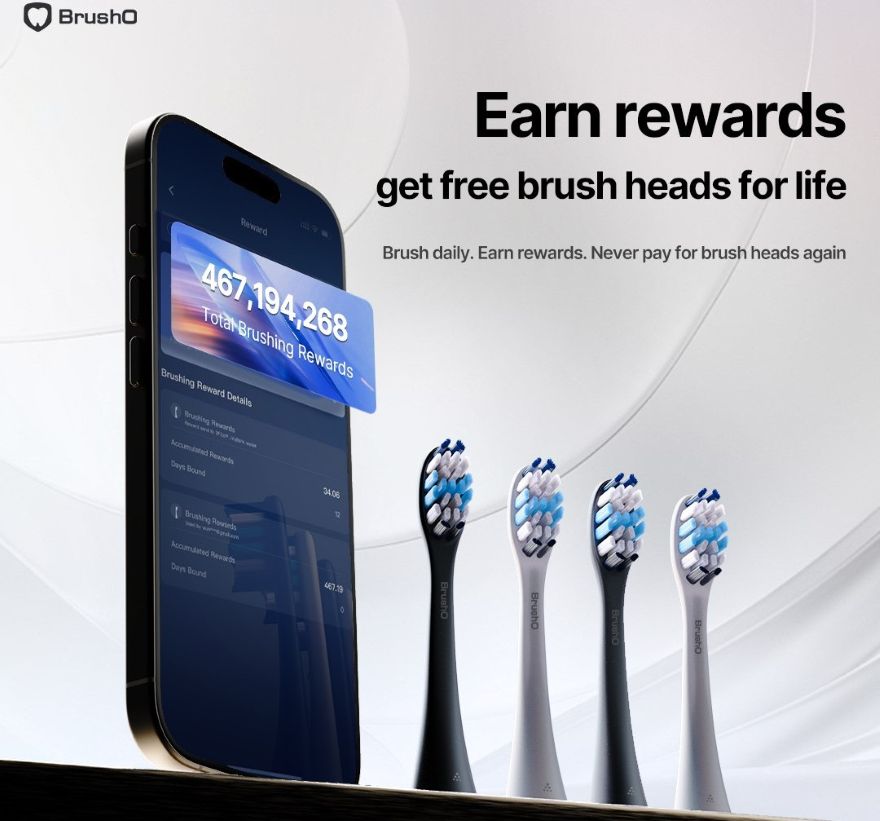
BrushO solves this problem with an industry-disrupting model: you get free brush heads for life.
Use BrushO to brush your teeth daily
Earn points for each brushing session via the BrushO app
Redeem points to claim free replacement brush heads
This means you’re rewarded for good habits—and never need to worry about overspending on essential care.
Fresh bristles remove bacteria and plaque more effectively, leading to fresher breath and less buildup.
New brush heads are gentle on the gumline and better at reducing inflammation and preventing gingivitis.
BrushO’s smart system syncs better with fresh bristles, giving you more accurate feedback and reports.
Bristles are frayed or bent
Discoloration (bristles turning yellow or gray)
Unusual smell or sticky residue
Your app alerts you (if using a smart brush like BrushO)
It’s been over 3 months
Replacing your toothbrush head isn’t just a hygiene tip—it’s a non-negotiable for good oral care. And with BrushO’s AI reminders and lifetime brush head plan, keeping your teeth protected has never been easier—or more affordable.
You’re not just brushing smarter—you’re brushing better, longer, and healthier.
Jul 30
Jul 30
Jul 29
Jul 22
Jul 19
Jul 17

PPM describes concentration, not the amount to put on the brush. Learn how to read fluoride information while keeping regional guidance and individual advice in view.

That forgotten tube deserves a label check. Learn what toothpaste shelf-life information refers to, why storage matters, and how to avoid guessing from appearance.

Clear gel or opaque paste? Texture is only one feature. Learn which label details matter when comparing toothpastes for your brushing routine.

Minty toothpaste can create a cooling sensation without being chilled. Explore what menthol does and why a fresh feeling is different from complete cleaning.

The sound of a powered brush comes with its moving mechanism. Learn how normal operating noise differs from alerts or an unexpected change that needs checking.

Toothpaste on the mirror? Check when you switch the brush on and off, how you position it, and how to pause without rushing your routine.

A whitening brushing program and a bleaching treatment are different things. Learn how to interpret mode names, surface-stain claims, and realistic expectations.

A tiny cluster of bristles serves a different purpose from a full-size head. Learn where a single-tuft brush may fit into an individually recommended cleaning routine.

Angled tufts, different bristle heights, and the angle of your hand are separate design questions. Learn how to read a toothbrush-head description clearly.

A larger head is not an automatic shortcut to cleaner teeth. Learn how head size affects access, positioning, and the fit of your daily brushing routine.

El cepillo eléctrico BrushO con IA ofrece guía de cepillado en tiempo real, feedback de presión, seguimiento de cobertura e informes de progreso en la app para una rutina diaria más limpia.
El cepillo eléctrico BrushO con IA ofrece guía de cepillado en tiempo real, feedback de presión, seguimiento de cobertura e informes de progreso en la app para una rutina diaria más limpia.


Address: RM 1427, 14/F RADIO CITY 505, HENNESSY RD CAUSEWAY BAY, HONG KONG
Code: 000000
Phone: +852-53758652
Email: customerservice@brusho.com