
Jul 30
Jul 30
Jul 29
Jul 22
Jul 19
Jul 17
Brushing your teeth is not just about frequency or duration — angle and positioning play a critical role in protecting enamel, preventing gum recession, and removing plaque effectively. Scientific dental research shows that improper brush angles can leave harmful biofilm behind or cause mechanical damage to soft tissue and tooth surfaces. Understanding the biomechanics of brushing angles allows individuals to improve technique, reduce oral health risks, and maintain long-term dental stability. This article examines the dental science behind optimal brush positioning and how modern smart brushing technology enhances both precision and protection.
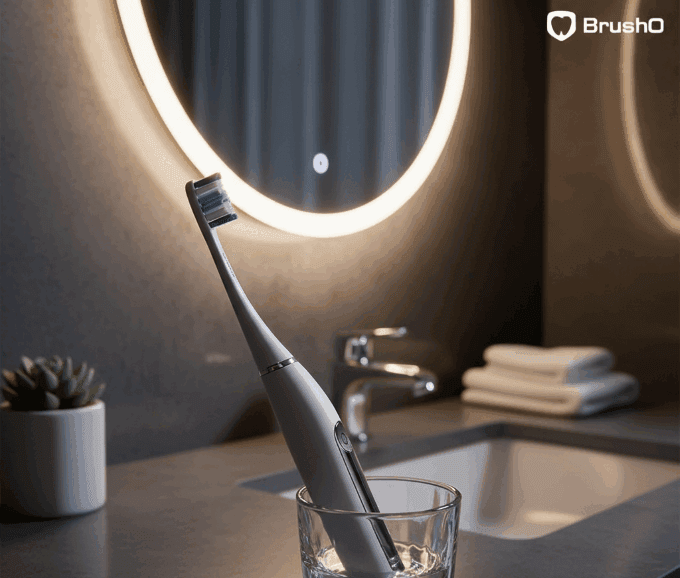
Tooth surfaces are not flat, and plaque accumulates most heavily along the gumline and in microscopic grooves. The angle of toothbrush bristles determines:
• Plaque removal efficiency
• Gumline cleaning coverage
• Pressure distribution
• Enamel wear risk
Incorrect angles can either fail to reach plaque-prone areas or concentrate force in ways that damage teeth and gums.
Dentists consistently emphasize technique because mechanical biofilm disruption — not toothpaste alone — drives effective cleaning outcomes.
Clinical dental guidance widely supports holding the toothbrush at roughly a 45-degree angle toward the gumline.
This positioning:
• Allows bristles to enter the sulcus (gum margin)
• Removes plaque before inflammation begins
• Protects connective tissue attachment
• Improves coverage along tooth contours
Gentle vibrating or circular motions further enhance bacterial disruption without excessive abrasion.
For inner tooth surfaces, especially lower incisors:
• A vertical brush position
• Upward or downward rolling strokes
provides better access to narrow anatomical areas where plaque often hardens quickly.
Molars benefit from:
• A flatter brush angle
• Short controlled strokes
to clean fissures where food particles accumulate.
Brushing horizontally with excessive pressure concentrates friction on enamel surfaces, accelerating wear.
Improper angles combined with force can traumatize the gingival tissue, exposing the tooth roots and increasing sensitivity.
Angles that avoid the gumline leave bacteria undisturbed, allowing biofilm maturation and disease progression.
Over time, technique errors can outweigh brushing frequency in determining oral health outcomes.
Tooth protection relies on balancing mechanical cleaning and tissue preservation.
Effective brushing angles:
• Distribute force evenly
• Maximize bristle contact area
• Reduce localized abrasion
• Reach bacterial reservoirs
This biomechanical balance explains why trained technique correlates strongly with lower periodontal risk.
Maintaining ideal brushing angles manually can be difficult, particularly for hard-to-see zones.
AI-enabled tools like BrushO improve consistency by:
• Tracking brush orientation and movement patterns
• Monitoring coverage across 6 zones and 16 surfaces
• Detecting technique irregularities
• Providing performance reports after each session
• Reinforcing proper habits through feedback and rewards
By translating brushing mechanics into measurable data, smart brushing minimizes user error and supports long-term tooth protection.
Dentist-backed strategies include:
• Dividing the mouth into zones
• Maintaining relaxed grip pressure
• Spending balanced time per region
• Checking coverage symmetry
• Using guided brushing tools
Habit awareness combined with technique feedback significantly improves plaque removal outcomes.
The science of brushing angle highlights an often-overlooked truth: how you brush matters as much as how often you brush. Correct positioning protects enamel, preserves gum health, and maximizes plaque removal efficiency. Improper angles can accelerate wear, inflammation, and long-term dental deterioration. Understanding brushing biomechanics — and leveraging precision tools like BrushO — transforms oral care from routine repetition into targeted protection. When angle, pressure, and coverage align, brushing becomes a proactive strategy for lifelong tooth preservation.
Feb 11
Feb 11
Jul 30
Jul 30
Jul 29
Jul 22
Jul 19
Jul 17

If you are thirsty after brushing, choose plain water. Plan your usual bedtime drink before brushing and skip the immediate rinse at the sink.

Waterpik recommends warm water for its flossers. Check your own model and use comfortably lukewarm water if cold water feels sharp.

Let an intact handle return to room temperature before you consider charging it. Check your manual and watch for signs of battery or housing damage.

Lift away the paste, check the care label, and use cool water on washable fabric. Here is a quick approach for a fresh spot.

Turn the brush off, then check the fit, the connection, and the condition of the head. A second compatible head can help you narrow it down.

Look for a clean, rigid container with a secure lid and keep it with your belongings. A napkin on a lunch tray is easy to clear away.

Check the care directions for your clear retainer. Clinics give different instructions, and the right cleaning method depends on the appliance you received.

Try a gentle rinse first. If the hull sits between teeth and floss moves freely, make a careful pass and stop if it still feels stuck.

A tight gap or rough edge can catch floss. Notice where it snags, keep the movement gentle, and find out when to ask your dentist to check.

Your first sip can taste sharp after brushing. Here is what may be changing and how to make breakfast taste like breakfast again.

El cepillo eléctrico BrushO con IA ofrece guía de cepillado en tiempo real, feedback de presión, seguimiento de cobertura e informes de progreso en la app para una rutina diaria más limpia.
El cepillo eléctrico BrushO con IA ofrece guía de cepillado en tiempo real, feedback de presión, seguimiento de cobertura e informes de progreso en la app para una rutina diaria más limpia.


Address: RM 1427, 14/F RADIO CITY 505, HENNESSY RD CAUSEWAY BAY, HONG KONG
Code: 000000
Phone: +852-53758652
Email: customerservice@brusho.com