The Future of Toothbrush Technology and Smart Brushes
Jan 19

Jan 19

As technology advances, toothbrushes have evolved from simple tools to sophisticated smart devices. The future of toothbrush technology is transforming how we care for our oral health with AI-powered features, real-time feedback, and personalized modes that guide users to better brushing habits. Smart toothbrushes are not only designed to clean teeth but to offer insights, track progress, and integrate seamlessly with other health devices. This article dives into the future of smart toothbrushes, their key features, and how they’ll continue to improve oral hygiene for years to come.
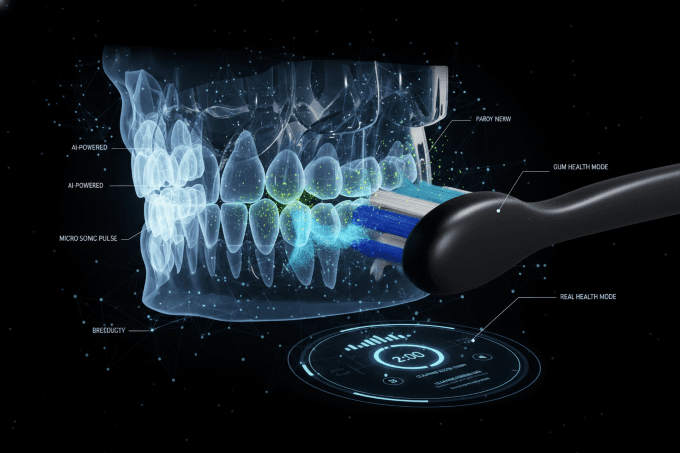
The Future of Toothbrush Technology: A New Era of Smart Brushes

Toothbrush technology has come a long way from manual brushes to electric devices, but we’re now entering a new era of smart toothbrushes that promise to revolutionize oral care. These AI-powered toothbrushes are designed not just to clean, but to track, monitor, and improve brushing habits in real-time. With features like real-time feedback, personalized brushing modes, and oral health tracking, the future of toothbrush technology is looking more advanced and user-centric than ever before.
The primary goal of these innovations is to help users brush more effectively and efficiently, reducing the risk of common dental problems such as cavities, gum disease, and enamel wear. Rather than relying solely on habit or memory, smart toothbrushes ensure that each brushing session is personalized to the user's unique needs. By integrating artificial intelligence (AI) and machine learning, these devices can analyze brushing patterns, offer immediate feedback, and guide users through the entire process, ultimately enhancing oral health outcomes.
 

Key Features Defining the Future of Smart Toothbrushes

The technology behind smart toothbrushes is continuously evolving, and several features will define the future of these devices:

1. AI-Powered Personalization

AI is already at the core of many smart toothbrushes, and as the technology improves, these devices will become even more personalized. Future brushes will be able to analyze users' brushing habits, detect areas of improvement, and offer tailored suggestions to optimize brushing. Whether you need extra attention to gum care or a deep cleaning after sugary foods, your toothbrush will automatically adjust to provide the right experience for your oral health.

2. Real-Time Feedback and Guidance

Real-time feedback is a game-changer in the world of oral hygiene. Traditional toothbrushes don’t give any indication of whether you’re brushing too hard, skipping areas, or not brushing for long enough. Smart brushes, like BrushO, use pressure sensors, motion detection, and timers to guide users through their routine. For example, if you apply too much pressure, the toothbrush alerts you, ensuring that your gums and enamel are protected. Similarly, feedback on brushing duration and coverage helps ensure a comprehensive clean.

3. Advanced Oral Health Tracking

The future of toothbrush technology will also include more sophisticated oral health tracking features. With sensors that monitor plaque buildup, gum health, and even signs of early cavities, smart toothbrushes will provide users with a comprehensive picture of their oral health. This data will be synced with an app, giving you access to detailed progress reports, brushing scores, and health analytics. Such tracking will help users identify problem areas and adjust their habits before issues become serious.

4. Gamification and Motivational Features

Incorporating gamification into oral care is already gaining popularity, especially for children. The future of toothbrush technology will see even more creative ways to encourage healthy brushing habits. Smart toothbrushes will feature rewards systems, where users can earn points or digital tokens for consistent, thorough brushing. This makes brushing more engaging, reinforcing good habits in a way that feels like a game. These gamified elements will not only appeal to children but to adults as well, creating motivation for regular and effective brushing.

5. Seamless Integration with Other Smart Devices

As part of the growing Internet of Things (IoT), smart toothbrushes will integrate with other health and wellness devices, such as fitness trackers, smart mirrors, and mobile health apps. These integrations will provide a holistic view of a user’s health, combining oral care with broader wellness goals. For instance, a smart toothbrush could sync with a health app to offer advice on hydration or nutrition based on your oral health data, helping users make lifestyle changes that support overall health.
 

How Smart Toothbrushes Will Evolve Over Time

The evolution of smart toothbrushes is about more than just upgrading features—it’s about transforming the way we approach oral care. Future devices will continuously adapt to new advancements in AI and machine learning, offering smarter, more precise, and user-friendly experiences. These improvements will make brushing easier, more efficient, and more impactful, ensuring that everyone can maintain excellent oral health.
In addition to their personalization and real-time feedback, smart toothbrushes will become more cost-effective as technology advances, making them accessible to a larger population. As data-driven oral care becomes the norm, these devices will become as essential to our health routines as smartphones and fitness trackers are today. Their ability to monitor and correct brushing habits will significantly reduce the number of people with preventable dental issues, such as cavities and gum disease, making smart brushing an indispensable part of daily wellness.
Moreover, the future holds promise for sustainability. Smart toothbrushes will likely feature more environmentally friendly materials, like biodegradable brush heads and energy-efficient charging systems. This focus on sustainability will ensure that the oral care industry can keep up with the growing global demand for eco-conscious products.
 

Conclusion: Embracing the Future of Oral Health

The future of toothbrush technology is bright, with smart toothbrushes leading the charge in creating a more effective, personalized, and interactive approach to oral hygiene. As AI and machine learning continue to enhance the capabilities of these devices, they will become an integral part of our daily health routines. From real-time feedback to gamification and comprehensive health tracking, the next generation of smart toothbrushes will revolutionize how we care for our teeth, making oral health management more proactive and accessible.
By embracing smart dental devices, we not only improve the way we brush but also take control of our long-term oral health. With advanced features designed to optimize brushing efficiency and track progress, the toothbrush of the future will be a crucial tool in maintaining a healthier, happier smile.
 

About BrushO

BrushO is an AI-powered smart toothbrush designed to improve oral health through real-time feedback, full-mouth coverage tracking, and personalized brushing guidance. With features like pressure monitoring, habit analytics, and a Web3-enabled Brush & Earn rewards system, BrushO helps users turn daily brushing into a structured, data-driven health habit.

Publicaciones recientes

Orthodontic Bracket Ligature Techniques: Ties and Self-Ligation

Orthodontic Bracket Ligature Techniques: Ties and Self-Ligation

The force that a fixed orthodontic appliance applies to a tooth depends on more than the bracket and the archwire. The way the archwire is secured inside the bracket slot, the ligation, determines how much of the wire's stored energy is transmitted to the tooth and how much friction resists the d...

Nickel-Titanium Rotary Files: Fracture Modes and Prevention

Nickel-Titanium Rotary Files: Fracture Modes and Prevention

The introduction of nickel-titanium (NiTi) rotary instruments has transformed modern root canal treatment, allowing curved canals to be shaped more rapidly and predictably than with stainless steel hand files. Yet every clinician who uses rotary systems must also manage a distinct hazard: instrum...

Temporary Restorative Pulp Dressing: Role of Zinc Oxide Eugenol

Temporary Restorative Pulp Dressing: Role of Zinc Oxide Eugenol

Between the diagnosis of a pulp problem and its definitive treatment, a clinician needs a dependable interim: a material that seals the cavity, protects the treated pulp, and holds the medicament until the next visit. Zinc oxide eugenol (ZOE) and its reinforced form, IRM, have served this role fo...

Clear Aligner Therapy: Attachment Design and Tooth Movement

Clear Aligner Therapy: Attachment Design and Tooth Movement

Clear aligner therapy has moved from a niche option to one of the most popular forms of orthodontic treatment, valued by patients for its appearance. Yet the aligner is not a magic appliance: a smooth plastic shell has limited ability to grip a tooth without help from attachments. Attachments, sm...

Canine-Guided Occlusion: Rationale and Clinical Application

Canine-Guided Occlusion: Rationale and Clinical Application

The way the teeth meet when the jaw moves is one of the most consequential decisions in restorative dentistry. In a canine-guided occlusion, the upper and lower canines take over the guidance of the mandible during lateral movements, so that the posterior teeth are disengaged and the load is carr...

Porcelain Veneers: Preparation and Cementation

Porcelain Veneers: Preparation and Cementation

Porcelain veneers are thin ceramic shells that are bonded to the facial surfaces of anterior teeth to improve their color, shape, alignment, and overall appearance. They have become one of the most requested esthetic procedures in modern dentistry because they offer predictable, long-lasting resu...

Myofascial Pain in Orofacial Region: Trigger Points

Myofascial Pain in Orofacial Region: Trigger Points

Myofascial pain is one of the most common causes of chronic pain in the head and neck region, yet it is frequently overlooked or misdiagnosed. It arises from hypersensitive bands within skeletal muscle, known as trigger points, which produce local tenderness and characteristic patterns of referre...

Inlay and Onlay Restorations: Preparation and Materials

Inlay and Onlay Restorations: Preparation and Materials

Inlay and onlay restorations are indirect restorations that replace missing tooth structure without the circumferential coverage of a full crown. An inlay fits within the cusps of a tooth, while an onlay extends over one or more cusps, distributing occlusal forces more favorably and preserving so...

Gingival Biotype: Assessment and Clinical Relevance

Gingival Biotype: Assessment and Clinical Relevance

The gingival biotype describes the thickness and form of the gingiva that surrounds the teeth, and it has become a central concept in periodontal therapy, implant dentistry, and restorative treatment planning. A thick biotype is associated with deeper probing depths, a scalloped gingival margin, ...

Posterior Crossbite Correction in Children

Posterior Crossbite Correction in Children

A posterior crossbite occurs when one or more of the upper back teeth bite inside the lower back teeth, so that the buccal cusps of the maxillary molars and premolars sit lingual to the mandibular cusps. It is one of the most common malocclusions in the mixed dentition and, when left untreated, i...
