
Jul 30
Jul 30
Jul 29
Jul 22
Jul 19
Jul 17
It may feel harmless to share your toothbrush charger with a partner or family member—after all, it’s not the brush head, right? But the truth is, sharing a charger can expose you to cross-contamination, corrosion, and long-term device damage, especially in humid bathroom environments. In this article, we explore the hidden risks of charger sharing, how different toothbrushes respond to shared use, and how BrushO was built to encourage smarter, safer hygiene habits with its smart, wireless, and waterproof charging technology.
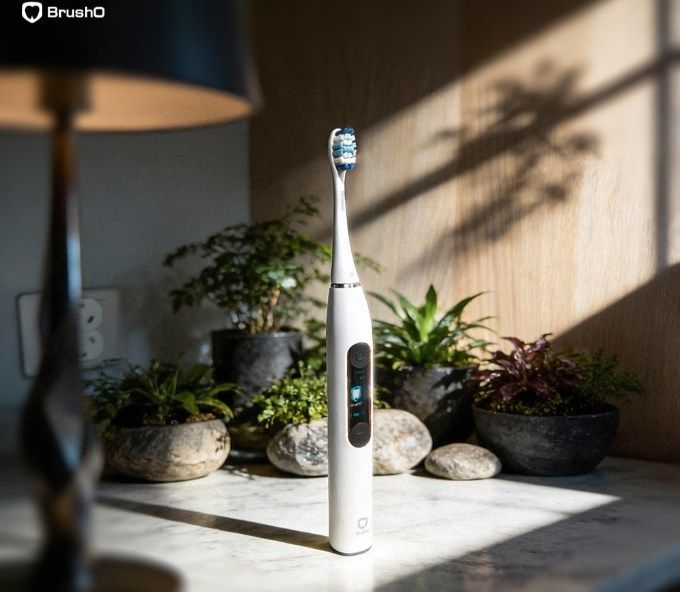
In most households, space is limited and convenience matters. So if multiple people use the same brand of toothbrush, sharing one charger base feels like a smart way to reduce clutter.
But here’s the problem: chargers are not immune to contamination. Bathrooms are wet, steamy places, and shared charger bases quickly become hotspots for bacteria buildup.
Even if you’re not sharing brush heads, you’re still touching the same charger, placing wet toothbrushes on the same surface, and exposing it to oral bacteria. Over time, water droplets, toothpaste residue, and humidity create the perfect environment for:
• Mold and mildew
• Bacterial growth
• Cross-contamination, especially if someone is sick
Studies have shown that charger bases can harbor more germs than toilet seats, especially when not cleaned regularly.
You might think all electric toothbrush chargers are the same—but they’re not.
• Overheating
• Battery strain or undercharging
• Damaged circuits
• Compromised waterproof seals
BrushO, for example, uses magnetic wireless charging with built-in protection to regulate voltage and prevent damage. Sharing with a different toothbrush brand could cause power inconsistencies.
The more people use the same charger, the more it’s unplugged, replugged, and repositioned—especially in wet environments. This increases the chances of:
• Rust and corrosion on metal contacts
• Internal water damage from small leaks
• Reduced charging efficiency over time
BrushO combats this with a seamless, screw-free design and a fully enclosed waterproof base—but still, one user per base is the gold standard.
BrushO is built with the philosophy of one user, one smart system. The charger is calibrated for precision charging, minimal degradation, and zero friction with your brushing habits. It also supports travel-friendly, compact wireless charging—no need to swap bases with others or mix devices at home.
✅ Don’t share chargers, especially in shared bathrooms
✅ Use original BrushO chargers only for guaranteed compatibility
✅ Keep chargers dry and clean, wiping regularly
✅ Use travel chargers when away from home
✅ Reward individual brushing routines—with BrushO, every user earns points via the app by maintaining independent, consistent brushing habits
Sharing is caring—except when it comes to toothbrush accessories. If you value your health and your device’s longevity, keep your charger personal. It’s a small step that protects you from bacteria, keeps your toothbrush in top shape, and ensures you get the most out of every clean.
BrushO is an AI-powered smart toothbrush engineered for smarter, healthier, and longer-lasting oral care. With intelligent pressure sensors, real-time app feedback, magnetic charging, and a waterproof build, BrushO helps you build better brushing habits and rewards you for consistency.
Dec 17
Dec 16
Jul 30
Jul 30
Jul 29
Jul 22
Jul 19
Jul 17

The posterior maxilla is the most demanding site in implant dentistry, because the pneumatized maxillary sinus frequently leaves the clinician with less bone than the implant requires. Maxillary sinus augmentation, the surgical procedure that raises the sinus floor to create vertical bone, has be...

The rubber dam is the oldest and still the most effective isolation device in restorative dentistry, and its reputation as an inconvenient extra step survives among practitioners who have never measured the time it actually saves. The dam isolates the field from the saliva, the tongue, and the ch...

The margin is the most vulnerable line in fixed prosthodontics, because it is the only boundary between the prepared tooth, the restoration, and the oral environment that the clinician cannot fully seal by effort alone. A restoration that fits seamlessly at the margin resists leakage, caries, and...

The masticatory system is built for function, yet much of its damage comes from habits that serve no purpose. Parafunctional habits, the clenching, the grinding, and the tongue pressing performed outside of normal function, sit behind much of the tooth wear, the temporomandibular pain, and the my...

Chronic mouth breathing in the growing child is seldom a dental problem in origin and almost always a facial one in consequence. The child who sleeps with the mouth open bypasses the physiologic benefits of nasal respiration, and the posture that the airway forces upon the tongue, the mandible, a...

The immediate denture is the prosthesis placed on the day the teeth are extracted, sparing the patient the edentulous interval the conventional denture imposes and preserving the occlusal vertical dimension, the facial support, and the appearance through the transition. The clinical literature ha...

The Class III malocclusion in the growing child carries a special urgency, because the maxillary deficiency that marks the pattern does not correct itself and the window for the growth-modifying treatment closes with the skeletal maturity. Elastic protraction, the orthopedic therapy that pulls th...

The denture is the only prosthetic device in medicine that its owner is expected to wear daily and to clean personally, yet it is also the device most commonly neglected until the signs of disease appear. A biofilm that forms on the acrylic base within hours is a reservoir of candida and bacteria...

The complete denture stands or falls on the impression, because the impression determines how well the base follows the mucous membrane and how evenly the occlusal load is distributed across the basal seat. For a century the profession has argued about whether the impression should record the muc...

The all-ceramic crown has moved from a niche product to the default restoration for the anterior single tooth in a single clinical generation, driven by patient demand for metal-free appearance and by materials that now survive functional loading as reliably as their metal-ceramic predecessors. A...

El cepillo eléctrico BrushO con IA ofrece guía de cepillado en tiempo real, feedback de presión, seguimiento de cobertura e informes de progreso en la app para una rutina diaria más limpia.
El cepillo eléctrico BrushO con IA ofrece guía de cepillado en tiempo real, feedback de presión, seguimiento de cobertura e informes de progreso en la app para una rutina diaria más limpia.


Address: RM 1427, 14/F RADIO CITY 505, HENNESSY RD CAUSEWAY BAY, HONG KONG
Code: 000000
Phone: +852-53758652
Email: customerservice@brusho.com