
Jul 30
Jul 30
Jul 29
Jul 22
Jul 19
Jul 17
Electric toothbrushes have been a major upgrade over manual brushing — but not all electric brushes are created equal. Traditional electric toothbrushes improve plaque removal through vibration or rotation, but they still rely on guesswork and user technique. BrushO, on the other hand, represents the next generation of oral care: a data‑driven, AI‑enabled smart toothbrush that doesn’t just move bristles — it actively guides, coaches, and improves your brushing habits over time. This detailed comparison breaks down the differences between BrushO and traditional electric toothbrushes so you can make an informed choice about what’s best for your teeth and gums.
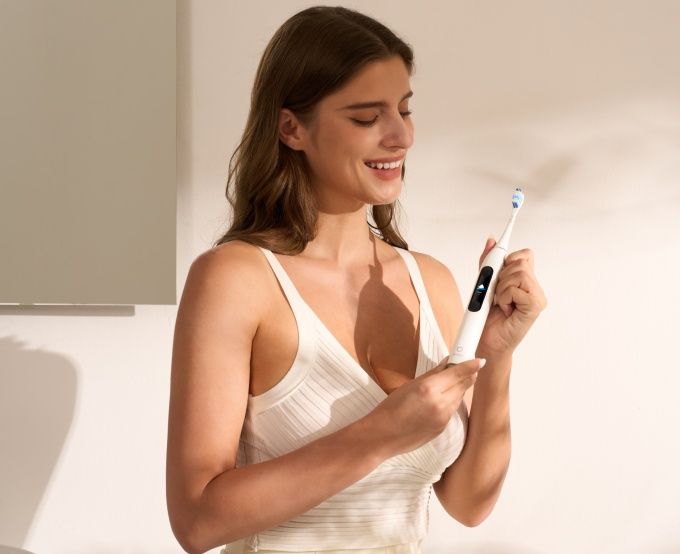
Many people think “electric toothbrush” is a one‑size‑fits‑all upgrade from manual brushing. In reality, there’s a meaningful divide between:
• Traditional electric toothbrushes — vibration/rotation‑based cleaning
• AI‑powered smart toothbrushes — real‑time guidance, analytics, and habit optimization
The difference isn’t just technology for technology’s sake — it shows up in oral health outcomes, habit formation, and user engagement.
Traditional electric brushes—whether sonic or oscillating‑rotating—focus on mechanical cleaning:
• High‑speed movement removes plaque better than manual brushing
• Timers help ensure minimum brushing time
• Some models offer brushing modes (e.g., sensitive, whitening)
➡️ But they don’t know what you’re actually doing — they don’t track pressure, coverage, or technique.
BrushO goes beyond brushing mechanics:
• AI Real‑Time Feedback monitors
• Pressure applied
• Coverage across 16 tooth surfaces
• Angle and brushing duration
• Zone awareness ensures all 6 mouth regions are cleaned evenly
• Adaptive guidance helps correct mistakes instantly
This makes BrushO not just a cleaning tool — but a coaching tool that builds better habits through feedback.
Most traditional electric toothbrushes offer:
• Timers
• Basic vibration patterns
• Maybe a pressure sensor (in higher‑end models)
There’s no personalized feedback, and no way to tell if you missed areas or applied too much force.
With BrushO, you get:
• Pressure alerts: prevent gum damage from over‑brushing
• Heatmap reports: visual coverage maps of missed zones
• Brushing scores: measurable performance tracking
• Trend analysis: shows improvement or patterns over time
This transforms brushing from a guess into a data‑guided routine.
• Encourages longer brushing via timers
• Better plaque removal than manual brushes
• Doesn’t provide habit reinforcement beyond basic mechanics
➡️ Without feedback, users often slip back into old habits over time.
BrushO supports habit formation through:
• Daily scoring and streak tracking
• Gamified rewards system
• Personal suggestions based on your brushing behavior
• App notifications and reminders
These features build accountability and motivation — essential for long‑term oral health success.
Traditional electric brushes are effective at:
• Reducing plaque compared to manual brushing
• Supporting general dental hygiene
• Offering varied modes for sensitivity or whitening
But they lack:
• Targeted gum care guidance
• Real‑time pressure control that protects delicate tissues
• Feedback that prevents recurring issues
By integrating AI monitoring and adaptive guidance, BrushO is designed to:
• Protect enamel via pressure regulation
• Reduce gum inflammation through consistent technique
• Detect risky brushing patterns before they become problems
• Bridge the gap between daily home care and professional advice
This makes BrushO more than a cleaner — it’s a preventive health tool.
Traditional models are predominantly hardware‑centric with minimal smart features. Connectivity is limited or nonexistent. Users don’t get actionable data or behavioral insights.
BrushO leverages a connected app ecosystem:
• Visual insights
• Progress tracking
• Custom programs
• Community challenges
• Rewards for consistent brushing
This transforms a daily routine into an engaging, measurable experience that’s easy to sustain.
Choose a Traditional Electric Toothbrush if:
• You want a basic upgrade from manual brushing
• You value simplicity and don’t care about feedback
• You’re comfortable brushing without performance data
Choose BrushO if:
• You want precision cleaning guided by real data
• You want to fix bad habits, not just scrub harder
• You value long‑term oral health insights
• You want playful motivation and progress tracking
BrushO isn’t just a tool — it’s a long‑term partner in your oral wellness journey.
The shift from traditional electric brushes to AI‑driven smart brushes like BrushO represents a deeper transformation in oral care: from repetitive action to informed action. Instead of guessing whether you brushed well, smart brushes give you certainty — and that’s what drives lasting, measurable oral health improvements.
Jul 30
Jul 30
Jul 29
Jul 22
Jul 19
Jul 17

Hyperdontia is the presence of one or more teeth in excess of the normal dental formula, and the resulting teeth are described as supernumerary. The condition is common enough to appear in routine practice but variable enough in presentation that the decision to intervene is rarely straightforwar...

Few patients complete orthodontic treatment without asking whether their teeth will move back. The honest answer is that they will, to some degree, in the majority of cases. Relapse is not a failure of treatment but a predictable biological response, and understanding why it happens is the basis ...

The mandible is the largest and most frequently fractured bone of the facial skeleton, and its management sits at the interface between trauma surgery and restorative dentistry. Treatment has shifted over four decades from prolonged maxillomandibular fixation towards rigid internal fixation with ...

Chronic liver disease affects hundreds of millions of people worldwide, and its prevalence continues to rise with the epidemic of metabolic liver disease. The liver is central to haemostasis, drug metabolism and immune competence, and its failure therefore alters the risk profile of almost every ...

Excessive gingival display, commonly described as a gummy smile, is one of the most frequent aesthetic concerns presented to dental practitioners. The condition is not a single entity but a clinical presentation that can arise from skeletal, gingival, muscular or dental factors, and the treatment...

Drug-induced gingival overgrowth is a well-recognised adverse effect of several widely prescribed medications, and it remains one of the most common drug-related findings in periodontal practice. The condition produces firm, fibrous enlargement of the gingiva that can interfere with speech, masti...

Denture stomatitis is an inflammatory condition of the denture-bearing mucosa that affects a large proportion of removable prosthesis wearers, yet it is frequently dismissed as a cosmetic annoyance. The condition is driven by a Candida biofilm on the fitting surface of the prosthesis, and it is m...

Chronic kidney disease affects an estimated 850 million people worldwide, and the number of patients surviving on dialysis or with a renal transplant continues to rise. These patients carry an oral disease burden that is substantially higher than that of the general population, and their medical ...

Angular cheilitis is an inflammatory lesion of the labial commissures that presents with erythema, fissuring and crusting at the corners of the mouth. It is one of the most common conditions encountered in general dental practice, yet it is frequently treated as a simple fungal infection and allo...

Adverse reactions to dental materials are uncommon but they are not rare, and they are frequently misdiagnosed because the oral mucosa responds to allergens in a limited number of ways. A burning sensation, a persistent ulcer or an unexplained area of erythema may all represent a hypersensitivity...

El cepillo eléctrico BrushO con IA ofrece guía de cepillado en tiempo real, feedback de presión, seguimiento de cobertura e informes de progreso en la app para una rutina diaria más limpia.
El cepillo eléctrico BrushO con IA ofrece guía de cepillado en tiempo real, feedback de presión, seguimiento de cobertura e informes de progreso en la app para una rutina diaria más limpia.


Address: RM 1427, 14/F RADIO CITY 505, HENNESSY RD CAUSEWAY BAY, HONG KONG
Code: 000000
Phone: +852-53758652
Email: customerservice@brusho.com