
Jul 30
Jul 30
Jul 29
Jul 22
Jul 19
Jul 17
Are toothbrush bristles really important?
Absolutely. Bristles are the first point of contact between your toothbrush and your teeth, and they play a major role in cleaning efficiency, gum protection, and long-term oral health. The wrong bristles can damage enamel or irritate gums, while high-quality bristles improve comfort and effectiveness. In this article, we’ll explore the role of toothbrush bristles, the soft vs hard debate, dentist recommendations, and how BrushO’s premium bristle design, pressure sensor technology, and four included replacement heads ensure your daily brushing is safe, effective, and future-proof.
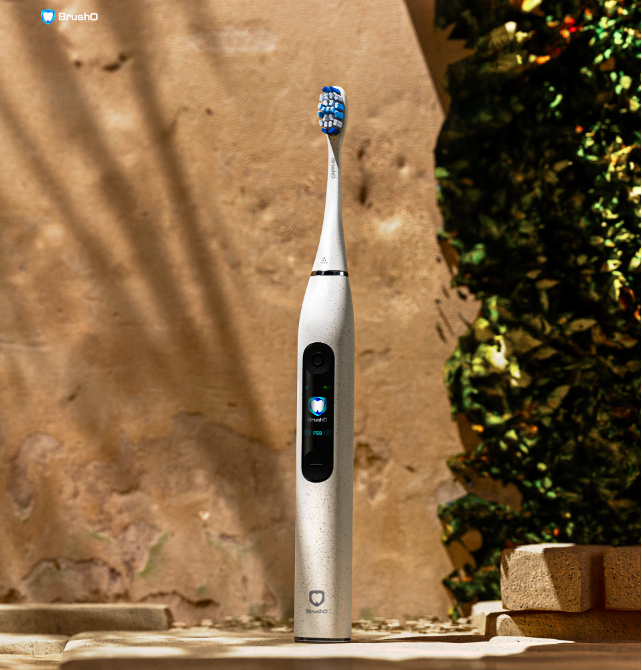
Toothbrush bristles may look simple, but their job is critical:
Without well-designed bristles, even the most advanced toothbrush won’t deliver good results.
Soft Bristles: Recommended by most dentists. They bend easily, reach between teeth, and clean effectively without harming enamel. Perfect for sensitive gums.
Hard Bristles: Often marketed as “extra cleaning,” but can actually wear down enamel and irritate gums if used daily.
👉 The American Dental Association (ADA) generally recommends soft or medium bristles, combined with proper brushing technique.
Not all bristles are created equal. Low-quality brushes may fray quickly, harbor bacteria, or fail to remove plaque effectively. High-quality bristles provide:
Poor bristles can lead to premature wear on your teeth and gums—exactly the opposite of what you want from daily brushing.
Dentists consistently advise patients to:
Proper bristles combined with smart technology are the best formula for healthier teeth and gums.
The BrushO Smart Electric Toothbrush combines advanced design with premium bristle quality to ensure safe and effective cleaning:
Designed for both durability and softness, giving a thorough clean while protecting enamel.
Enough for a full year of dentist-recommended replacements, ensuring optimal hygiene without extra purchases.
Even with soft bristles, brushing too hard can cause damage. BrushO’s sensor prevents enamel erosion and gum irritation.
From Sensitive to Deep Clean, you can pair bristle quality with the right vibration mode for your needs.
👉 With BrushO, bristles aren’t just an afterthought; they’re the foundation of effective, safe brushing.
Q1: Are hard bristles better at cleaning?
Not necessarily. They may remove more plaque short-term, but risk long-term damage.
Q2: Do I really need to replace brush heads every 3 months?
Yes. Old bristles lose effectiveness and harbor bacteria. BrushO makes this easy by including 4 replacements per set.
Q3: What type of bristles are best for sensitive teeth?
Soft bristles are safest, especially when paired with pressure sensors.
Q4: Why are premium bristles worth the cost?
They clean better, last longer, and protect your teeth and gums, preventing costly dental treatments later.
So, are toothbrush bristles really important? Without a doubt. They’re the direct connection between your toothbrush and your teeth, and their quality determines how well you clean and protect your smile. With BrushO’s premium bristles, smart pressure sensing, and multiple cleaning modes, you get the best of both worlds: effective plaque removal and long-term oral health.
Jul 30
Jul 30
Jul 29
Jul 22
Jul 19
Jul 17

PPM describes concentration, not the amount to put on the brush. Learn how to read fluoride information while keeping regional guidance and individual advice in view.

That forgotten tube deserves a label check. Learn what toothpaste shelf-life information refers to, why storage matters, and how to avoid guessing from appearance.

Clear gel or opaque paste? Texture is only one feature. Learn which label details matter when comparing toothpastes for your brushing routine.

Minty toothpaste can create a cooling sensation without being chilled. Explore what menthol does and why a fresh feeling is different from complete cleaning.

The sound of a powered brush comes with its moving mechanism. Learn how normal operating noise differs from alerts or an unexpected change that needs checking.

Toothpaste on the mirror? Check when you switch the brush on and off, how you position it, and how to pause without rushing your routine.

A whitening brushing program and a bleaching treatment are different things. Learn how to interpret mode names, surface-stain claims, and realistic expectations.

A tiny cluster of bristles serves a different purpose from a full-size head. Learn where a single-tuft brush may fit into an individually recommended cleaning routine.

Angled tufts, different bristle heights, and the angle of your hand are separate design questions. Learn how to read a toothbrush-head description clearly.

A larger head is not an automatic shortcut to cleaner teeth. Learn how head size affects access, positioning, and the fit of your daily brushing routine.

El cepillo eléctrico BrushO con IA ofrece guía de cepillado en tiempo real, feedback de presión, seguimiento de cobertura e informes de progreso en la app para una rutina diaria más limpia.
El cepillo eléctrico BrushO con IA ofrece guía de cepillado en tiempo real, feedback de presión, seguimiento de cobertura e informes de progreso en la app para una rutina diaria más limpia.


Address: RM 1427, 14/F RADIO CITY 505, HENNESSY RD CAUSEWAY BAY, HONG KONG
Code: 000000
Phone: +852-53758652
Email: customerservice@brusho.com