
Jul 30
Jul 30
Jul 29
Jul 22
Jul 19
Jul 17
Toothbrush holders are often overlooked when it comes to hygiene—but they’re a surprising hotspot for bacteria, mold, and even harmful pathogens. Studies show they can harbor more germs than most people realize, directly exposing your toothbrush (and mouth) to potential health risks. In this article, we’ll explore why toothbrush holders get so dirty, the hidden dangers they pose, and simple strategies to keep your brushing environment safe and sanitary. We’ll also explain how BrushO’s design minimizes contamination risk and supports a cleaner, healthier routine.
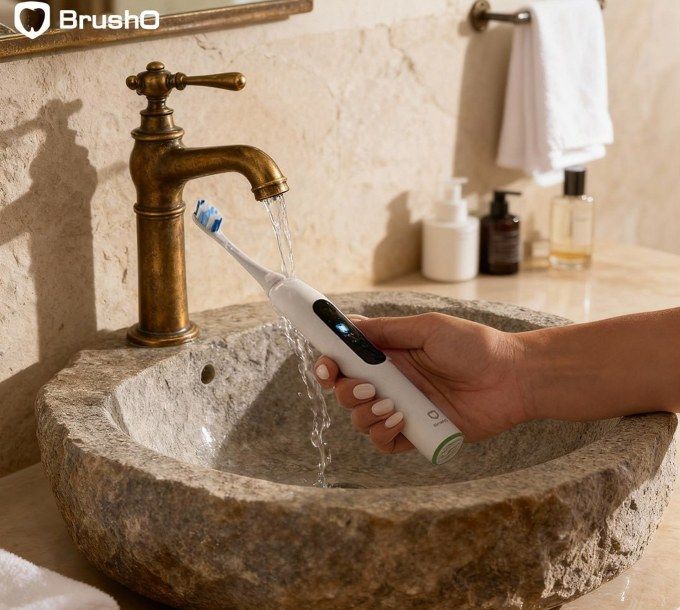
When you think of germ hotspots in your bathroom, your toilet seat probably comes to mind. But did you know your toothbrush holder might be even worse?
Toothbrush holders provide the perfect environment for bacterial growth:
• Moisture from wet brushes
• Dark, enclosed space
• Proximity to the toilet and sink splash
• Rarely cleaned surfaces
These factors create a breeding ground for:
• Staphylococcus aureus
• E. coli and fecal bacteria
• Mold and mildew spores
• Yeasts and fungal pathogens
According to NSF International, toothbrush holders are among the top three dirtiest items in the average home.
When your toothbrush rests in a contaminated holder, it becomes a carrier of those germs—straight into your mouth. This can lead to:
🦷 Gum irritation or infection
😷 Weakened immune response
🤧 Increased risk of illness during cold and flu season
🦠 Harm to oral microbiome balance
For children, the elderly, or those with compromised immunity, the risks are even higher.
Most people clean their bathroom sinks regularly, but forget their toothbrush holder entirely. Studies show:
💡 Less than 20% of people clean their toothbrush holder weekly—some never do.
This means months or even years of accumulated biofilm, dried saliva, and bacterial buildup.
Here’s how to fix the problem and maintain a healthier oral care setup:
Use hot water and disinfectant (like hydrogen peroxide or diluted bleach) to clean all internal surfaces. Let it dry completely before reuse.
Avoid enclosed or hard-to-clean holders. Breathable designs allow faster drying and reduce moisture accumulation.
To reduce exposure to airborne germs after flushing, place your toothbrush and holder at least 3 feet away.
Soak it in mouthwash or use a UV sterilizer every few days, especially if you’ve been sick.
BrushO’s engineering tackles this issue from multiple angles:
🌬 Minimal contact surface: Designed to dry quickly and reduce moisture retention.
📲 Charging base design: Easy-to-clean surface, unlike traditional messy holders.
🧼 Removable brush head system: Encourages regular cleaning and replacement.
🪄 Built-in hygiene reminders: The smart app sends alerts to clean or replace brush heads when needed.
💡 Travel-friendly case (upcoming): Keeps the brush safe from contact during travel or in shared spaces.
We spend so much time brushing, rinsing, and replacing toothbrushes—but almost no time thinking about where we store them. By cleaning your holder regularly and choosing smarter tools like BrushO, you protect your mouth from invisible threats that could be sabotaging your health without you knowing.
BrushO is a next-generation AI-powered smart toothbrush designed to improve oral hygiene through precision guidance, pressure sensing, real-time feedback, and long-term habit tracking. Combined with a minimalist, hygienic design and commitment to clean brushing environments, BrushO helps users brush better—and cleaner—every day.
Jul 30
Jul 30
Jul 29
Jul 22
Jul 19
Jul 17

Teledentistry—the use of information and communication technologies to deliver dental care, consultation, education, and public health services across geographic distances—has undergone an unprecedented transformation in recent years. While the concept dates to the 1990s, the COVID-19 pandemic catal

The field of endodontics has undergone a paradigm shift over the past two decades. Traditional root canal therapy, while effective at eliminating infection and preserving teeth, ultimately results in a non-vital tooth that is more brittle and susceptible to fracture. Regenerative endodontics offers

The human oral cavity harbors one of the most diverse and dynamic microbial communities in the body, second only to the gut in complexity. Advances in culture-independent molecular techniques—particularly 16S rRNA gene sequencing and shotgun metagenomics—have transformed our understanding of the ora

Medication-related osteonecrosis of the jaw (MRONJ) is a serious adverse event characterized by exposed necrotic bone in the maxillofacial region that persists for more than eight weeks in patients with current or previous antiresorptive or antiangiogenic therapy and no history of head and neck radi

The dental patient population is aging, and the prevalence of chronic medical conditions continues to rise. The World Health Organization projects that by 2050, the proportion of the global population over 60 years will double from 12% to 22%, with a corresponding increase in the burden of multimorb

Saliva has emerged as a powerful diagnostic fluid that reflects the physiological and pathological state of the body. As an ultrafiltrate of blood, saliva contains a complex mixture of proteins, nucleic acids, metabolites, and microorganisms that originate from multiple sources: salivary glands, gin

Peri-implantitis has emerged as one of the most significant complications in implant dentistry, affecting an estimated 20% of patients and 10% of implants at the patient and implant levels respectively. As the global population of dental implants grows, the burden of peri-implant disease is expandin

Molar Incisor Hypomineralization (MIH) is a qualitative developmental enamel defect affecting one to four first permanent molars, frequently with concurrent involvement of permanent incisors. First described systematically by Weerheijm and colleagues in 2001, MIH has since been recognized as a globa

Digital Smile Design (DSD) has revolutionized aesthetic dentistry by providing a systematic, communication-centered approach to treatment planning. Developed by Dr. Christian Coachman in 2007, DSD integrates facial and dental analysis, intraoral and extraoral digital data, and interdisciplinary coll

Additive manufacturing, commonly known as 3D printing, has transformed dentistry over the past decade from a niche prototyping tool into an integral component of digital workflows. The technology enables the fabrication of surgical guides, dental models, temporary and permanent restorations, denture

BrushO AI Electric Toothbrush offers real-time brushing guidance, pressure feedback, coverage tracking, and app-based progress reports for a cleaner daily routine.
BrushO AI Electric Toothbrush offers real-time brushing guidance, pressure feedback, coverage tracking, and app-based progress reports for a cleaner daily routine.


Address: RM 1427, 14/F RADIO CITY 505, HENNESSY RD CAUSEWAY BAY, HONG KONG
Code: 000000
Phone: +852-53758652
Email: customerservice@brusho.com