How Smart Toothbrushes Help Reduce Tooth Sensitivity
Jan 22

Jan 22
Tooth sensitivity affects millions worldwide, causing discomfort and pain during everyday activities like eating, drinking, and brushing. Fortunately, smart toothbrushes offer an advanced solution to alleviate these symptoms. By utilizing cutting-edge technology such as pressure sensors, real-time feedback, and customized brushing modes, these devices are designed to provide a more precise, gentle brushing experience. This blog explores the science behind tooth sensitivity and how smart toothbrushes can address this common issue.


Understanding Tooth Sensitivity and Its Causes

Tooth sensitivity, also known as dentin hypersensitivity, occurs when the underlying layer of the teeth, called dentin, becomes exposed due to the erosion of enamel or gum recession. The dentin contains tiny tubes that lead to the nerve, which is why it triggers sharp pain when exposed to hot, cold, sweet, or acidic substances.
Several factors contribute to this condition, including:
  • Enamel Erosion: Over time, the enamel can wear away due to acidic foods, aggressive brushing, or teeth grinding.
  • Gum Recession: The gums may recede due to age or improper brushing, exposing the sensitive areas of the tooth.
  • Brushing Habits: Using a hard-bristled toothbrush or brushing with excessive force can aggravate sensitivity.
With traditional brushing, individuals often fail to maintain the proper pressure and technique, which can worsen the condition. This is where smart toothbrushes shine—by offering features designed to improve brushing effectiveness and protect sensitive teeth.

How Smart Toothbrushes Help Reduce Tooth Sensitivity

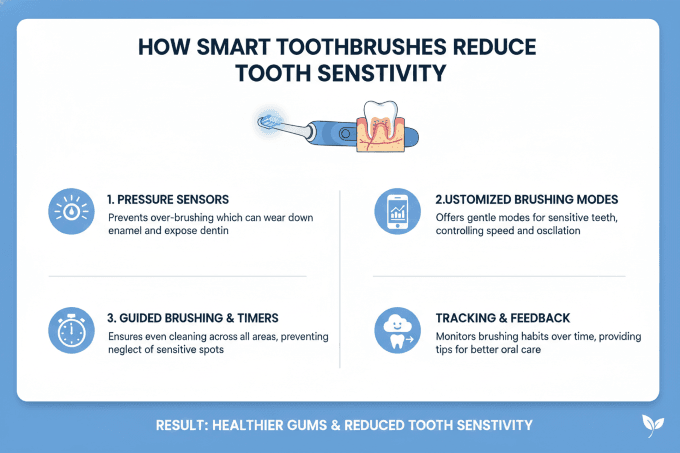
Smart toothbrushes, such as the BrushO smart toothbrush, come equipped with advanced technology that can help prevent or reduce tooth sensitivity. Here’s how:
  1. Pressure Sensors

    One of the key features of smart toothbrushes is pressure sensors that alert users when they are brushing too hard. Brushing with excessive force can lead to enamel wear and gum recession, both of which are major causes of tooth sensitivity. By receiving real-time feedback, users can adjust their brushing technique to avoid unnecessary pressure.
  2. Personalized Brushing Modes

    Smart toothbrushes offer various brushing modes, including gentle settings specifically designed for sensitive teeth. These modes adjust the brush's speed and motion to provide a softer, more comfortable cleaning experience, helping to reduce the likelihood of triggering pain or discomfort.
  3. Full-Mouth Coverage Tracking

    Many smart toothbrushes come with tracking capabilities that ensure users brush every part of their mouth equally, preventing areas from being missed or over-brushed. This technology ensures an even and thorough clean, which is important for maintaining optimal oral health and minimizing gum irritation.
  4. Real-Time Feedback

    Using an accompanying app, smart toothbrushes can offer real-time feedback on brushing technique and pressure. This ensures that users are consistently following recommended oral care practices to prevent tooth sensitivity and achieve the best possible results.
  5. Timers and Alerts

    Smart toothbrushes are equipped with timers that ensure users brush for the recommended two minutes. The built-in alerts also notify users when it's time to change the brushing area, which prevents focusing too much pressure on any one spot, helping to protect sensitive teeth.


Conclusion

Smart toothbrushes offer a modern solution to the age-old problem of tooth sensitivity. By incorporating innovative features like pressure sensors, personalized modes, and real-time feedback, these devices provide a more precise and comfortable brushing experience, protecting sensitive teeth from further damage. Whether you're looking to prevent tooth sensitivity or alleviate existing discomfort, a smart toothbrush may be your key to better oral health.

Recent Posts

Why Teeth May Still Feel Fuzzy After Brushing

Why Teeth May Still Feel Fuzzy After Brushing

Teeth that still feel fuzzy after brushing often indicate incomplete plaque removal rather than a lack of brushing time alone. Common causes include uneven coverage, rushed technique, weak contact at the gumline, and repeatedly missing the same surfaces during daily brushing.

When Uneven Brushing Leaves One Side Dirtier

When Uneven Brushing Leaves One Side Dirtier

Uneven brushing often happens without users noticing it, especially when one hand position or one brushing direction feels easier than the other. Over time, this imbalance can leave one side of the mouth cleaner than the other and create repeated plaque retention in the same zones.

What a Consistent Brushing Route Changes

What a Consistent Brushing Route Changes

A consistent brushing route helps turn brushing from a loose habit into a more reliable cleaning system. By reducing random movement and repeated skipping, it can improve coverage, make timing more meaningful, and help users notice where their routine is still weak.

Signs Your Gumline Is Getting Too Little Attention

Signs Your Gumline Is Getting Too Little Attention

The gumline is one of the easiest areas to under-clean during daily brushing, even in routines that seem long enough. Subtle changes such as lingering plaque, tenderness, or recurring roughness near the base of the teeth can signal that brushing coverage is missing this zone too often.

Short Brush Strokes Can Work Better Than You Think

Short Brush Strokes Can Work Better Than You Think

Short brush strokes can improve control, maintain steadier contact, and help users clean detail-heavy areas more effectively than broad sweeping motions. In many routines, smaller movements support better plaque removal because they reduce skipping and preserve angle accuracy near the gumline and molars.

Night Brushing Quality Matters More Than Speed

Night Brushing Quality Matters More Than Speed

Night brushing is often the most rushed part of an oral-care routine, yet its quality can shape how clean and comfortable the mouth feels overnight and the next morning. A short but careful brushing session is usually more useful than a fast, distracted one that leaves repeated blind spots behind.

Missing the Back Teeth While Brushing

Missing the Back Teeth While Brushing

Missing the back teeth during daily brushing is common because the area is harder to see, easier to rush, and often reached with weaker hand control. Learning the early signs of skipped molars can help reduce plaque buildup, bad breath, and gum irritation before those problems become more serious.

Clean-Looking Teeth Can Still Hold Plaque

Clean-Looking Teeth Can Still Hold Plaque

Teeth can look clean in the mirror while still holding plaque in less visible or less thoroughly brushed areas. Surface appearance often hides the difference between a routine that looks complete and one that actually provides balanced plaque removal across the whole mouth.

Brushing Too Fast Can Leave Plaque Behind

Brushing Too Fast Can Leave Plaque Behind

Fast brushing may feel efficient, but speed often reduces surface contact, weakens angle control, and increases the chance of skipping key zones such as the gumline and back teeth. More motion does not always mean better plaque removal if the brushing pattern becomes shallow and inconsistent.

A Better Two-Minute Brushing Habit Starts Here

A Better Two-Minute Brushing Habit Starts Here

A better two-minute brushing habit is not just about reaching the clock target. It depends on route consistency, balanced coverage, and enough control to keep all areas of the mouth included rather than letting easy surfaces take most of the attention.