
Jul 30
Jul 30
Jul 29
Jul 22
Jul 19
Jul 17
When choosing a toothbrush, most people focus on speed, modes, or app connectivity—but few consider sound. However, the noise level of your electric toothbrush directly impacts your daily experience. From early morning peace to nighttime routines without waking others, a quiet toothbrush plays a subtle but essential role in maintaining consistent, enjoyable brushing habits. In this article, we explore why low-noise smart toothbrushes like BrushO are changing the game—and why this underrated feature may be your favorite one yet.
Let’s face it: electric toothbrushes have come a long way. From AI integration to brushing feedback and app syncing, innovation is everywhere. But amidst the high-tech features, quiet operation often goes unnoticed. It’s not flashy, but once you use a low-noise toothbrush like BrushO, it’s hard to go back. Why? Because sound affects your routine more than you realize.
A loud toothbrush can be jarring—especially in the morning when you’re just waking up or at night when you’re winding down. Quiet operation provides a more relaxing experience, making it easier to stick to your two-minute brushing routine without irritation. BrushO’s advanced motor design delivers powerful performance at minimal decibel levels, helping you start and end your day on a calmer note.
Whether you live with roommates, a partner, or kids, noise matters. A noisy toothbrush can disrupt others, especially if you’re brushing early in the morning or late at night. BrushO’s low-noise operation lets you maintain your routine without disturbing sleeping family members, making it perfect for shared households and parents with young children.
For individuals with sensory sensitivities—especially children or those with neurodivergent conditions—sound can be a significant barrier. A loud, buzzing toothbrush may discourage consistent brushing. A quieter option like BrushO reduces sensory discomfort, promoting better hygiene and independence in oral care for sensitive users.
When your toothbrush isn’t buzzing loudly in your ear, it’s easier to concentrate on brushing technique. Real-time feedback from BrushO, combined with its quiet hum, helps users stay mindful and attentive during each session. The result? Improved coverage, pressure control, and habit formation—all without distraction.
Don’t mistake quiet for weak. BrushO’s motor delivers up to 64,000 RPM of brushing power while remaining impressively silent. This balance between performance and peace is what makes BrushO ideal for modern users who want effectiveness without disruption.
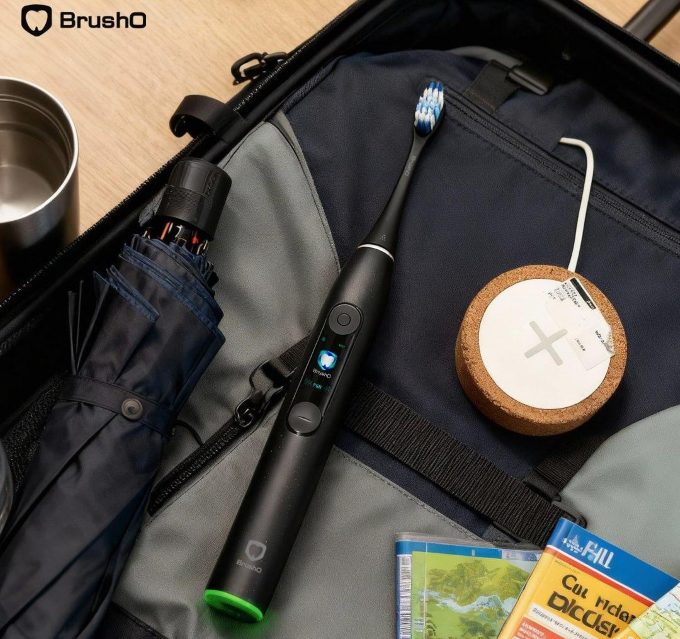
In hotels, Airbnbs, or shared bathrooms, a loud toothbrush can feel intrusive. With BrushO’s quiet operation, you can brush discreetly anytime, anywhere—no awkward buzzing sounds echoing through thin walls.
While sound may not be the first thing you consider when choosing a toothbrush, it’s a feature you’ll appreciate daily. A quieter brush supports better habits, family harmony, and a more peaceful start or end to your day. With BrushO’s intelligent, low-noise engineering, you get all the benefits of high-performance brushing—without the buzz.
BrushO is a next-generation smart toothbrush brand designed to elevate daily habits through technology. From AI-powered brushing feedback to eco-conscious design and quiet motors, BrushO makes oral care smarter, calmer, and more effective.
Jul 30
Jul 30
Jul 29
Jul 22
Jul 19
Jul 17

Hyperdontia is the presence of one or more teeth in excess of the normal dental formula, and the resulting teeth are described as supernumerary. The condition is common enough to appear in routine practice but variable enough in presentation that the decision to intervene is rarely straightforwar...

Few patients complete orthodontic treatment without asking whether their teeth will move back. The honest answer is that they will, to some degree, in the majority of cases. Relapse is not a failure of treatment but a predictable biological response, and understanding why it happens is the basis ...

The mandible is the largest and most frequently fractured bone of the facial skeleton, and its management sits at the interface between trauma surgery and restorative dentistry. Treatment has shifted over four decades from prolonged maxillomandibular fixation towards rigid internal fixation with ...

Chronic liver disease affects hundreds of millions of people worldwide, and its prevalence continues to rise with the epidemic of metabolic liver disease. The liver is central to haemostasis, drug metabolism and immune competence, and its failure therefore alters the risk profile of almost every ...

Excessive gingival display, commonly described as a gummy smile, is one of the most frequent aesthetic concerns presented to dental practitioners. The condition is not a single entity but a clinical presentation that can arise from skeletal, gingival, muscular or dental factors, and the treatment...

Drug-induced gingival overgrowth is a well-recognised adverse effect of several widely prescribed medications, and it remains one of the most common drug-related findings in periodontal practice. The condition produces firm, fibrous enlargement of the gingiva that can interfere with speech, masti...

Denture stomatitis is an inflammatory condition of the denture-bearing mucosa that affects a large proportion of removable prosthesis wearers, yet it is frequently dismissed as a cosmetic annoyance. The condition is driven by a Candida biofilm on the fitting surface of the prosthesis, and it is m...

Chronic kidney disease affects an estimated 850 million people worldwide, and the number of patients surviving on dialysis or with a renal transplant continues to rise. These patients carry an oral disease burden that is substantially higher than that of the general population, and their medical ...

Angular cheilitis is an inflammatory lesion of the labial commissures that presents with erythema, fissuring and crusting at the corners of the mouth. It is one of the most common conditions encountered in general dental practice, yet it is frequently treated as a simple fungal infection and allo...

Adverse reactions to dental materials are uncommon but they are not rare, and they are frequently misdiagnosed because the oral mucosa responds to allergens in a limited number of ways. A burning sensation, a persistent ulcer or an unexplained area of erythema may all represent a hypersensitivity...

Die BrushO KI-Elektrozahnbürste bietet Echtzeit-Anleitung, Druckfeedback, Abdeckungsverfolgung und Fortschrittsberichte in der App für eine sauberere tägliche Routine.
Die BrushO KI-Elektrozahnbürste bietet Echtzeit-Anleitung, Druckfeedback, Abdeckungsverfolgung und Fortschrittsberichte in der App für eine sauberere tägliche Routine.


Address: RM 1427, 14/F RADIO CITY 505, HENNESSY RD CAUSEWAY BAY, HONG KONG
Code: 000000
Phone: +852-53758652
Email: customerservice@brusho.com