
Jul 30
Jul 30
Jul 29
Jul 22
Jul 19
Jul 17
It is a common misconception that oral health outcomes depend primarily on the tools used. In reality, behavioral technique, biomechanical pressure application, coverage accuracy, brushing duration, and oral microbiome variability all play far greater roles than the toothbrush model alone. Clinical research consistently shows that users of identical toothbrushes can produce vastly different plaque removal rates, gum responses, and enamel preservation outcomes. Understanding the behavioral and physiological variables behind these differences provides insight into how oral hygiene effectiveness can be optimized. Modern smart brushing technologies that provide real-time feedback and performance tracking help reduce human variability, ensuring that brushing results are determined by precision rather than guesswork.
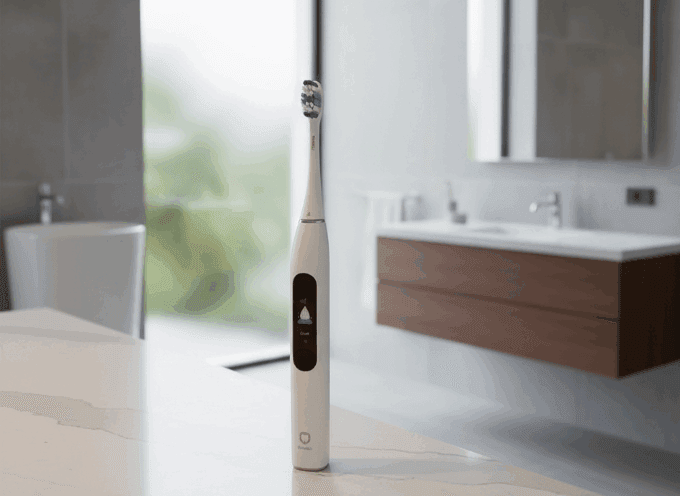
Many individuals assume that purchasing a high-quality toothbrush guarantees improved dental outcomes. However, dental science shows that user behavior accounts for the majority of brushing effectiveness variation.
Two users with identical equipment can produce:
• Different plaque reduction levels
• Different gum irritation responses
• Different enamel wear patterns
• Different long-term oral health outcomes
The toothbrush is only a delivery mechanism — technique determines performance.
Angle, motion, and positioning dramatically influence plaque removal.
Effective technique typically includes:
• 45-degree gumline angle
• Small controlled strokes
• Full-surface coverage
Incorrect technique leaves bacterial biofilm intact regardless of brush quality.
Force variability affects both cleaning efficiency and tissue safety.
Too much pressure leads to:
• Gum recession
• Enamel abrasion
• Sensitivity
Too little pressure results in:
• Plaque retention
• Tartar formation
Humans are poor at self-assessing applied force without feedback.
Studies show users commonly miss:
• Back molars
• Inner tooth surfaces
• Gumline edges
Even experienced brushers may leave up to 30% of surfaces insufficiently cleaned. Uneven coverage explains large outcome discrepancies.
The recommended brushing duration is two minutes, yet behavioral data indicates many users stop early.
Short sessions reduce:
• Mechanical plaque disruption
• Fluoride distribution
• Biofilm destabilization
Time inconsistency produces measurable hygiene differences.
Individual physiology also contributes:
• Saliva composition
• Microbiome diversity
• Tooth alignment
• Gum sensitivity
These factors affect how quickly plaque accumulates and how tissue responds to brushing.
Manual and standard electric brushes provide limited performance feedback. Users rely on perception rather than measurement, leading to:
• Inconsistent habit formation
• Undetected technique errors
• Persistent coverage gaps
This behavioral variability explains why identical tools yield unequal results.
Smart oral care systems like BrushO address variability by introducing measurable guidance.
Sensors alert users to excessive force, protecting gums and enamel.
Tracking of the 6 oral zones and 16 surfaces ensures uniform cleaning.
Session monitoring encourages full-duration brushing.
Performance reports help users refine technique over time.
Reducing behavioral variability produces measurable improvements:
• More consistent plaque control
• Reduced gingival inflammation
• Slower enamel wear
• Predictable oral health outcomes
Data-guided brushing transforms hygiene from habit-based variability to performance-based consistency.
The effectiveness of oral hygiene is determined far less by the toothbrush itself and far more by human behavioral execution. Differences in technique, pressure, coverage, duration, and biology explain why identical tools produce different results. AI-guided brushing technologies like BrushO narrow these performance gaps by introducing measurable feedback, helping users refine technique and achieve consistent, predictable oral health outcomes regardless of baseline habits.
Feb 6
Feb 6
Jul 30
Jul 30
Jul 29
Jul 22
Jul 19
Jul 17

Hyperdontia is the presence of one or more teeth in excess of the normal dental formula, and the resulting teeth are described as supernumerary. The condition is common enough to appear in routine practice but variable enough in presentation that the decision to intervene is rarely straightforwar...

Few patients complete orthodontic treatment without asking whether their teeth will move back. The honest answer is that they will, to some degree, in the majority of cases. Relapse is not a failure of treatment but a predictable biological response, and understanding why it happens is the basis ...

The mandible is the largest and most frequently fractured bone of the facial skeleton, and its management sits at the interface between trauma surgery and restorative dentistry. Treatment has shifted over four decades from prolonged maxillomandibular fixation towards rigid internal fixation with ...

Chronic liver disease affects hundreds of millions of people worldwide, and its prevalence continues to rise with the epidemic of metabolic liver disease. The liver is central to haemostasis, drug metabolism and immune competence, and its failure therefore alters the risk profile of almost every ...

Excessive gingival display, commonly described as a gummy smile, is one of the most frequent aesthetic concerns presented to dental practitioners. The condition is not a single entity but a clinical presentation that can arise from skeletal, gingival, muscular or dental factors, and the treatment...

Drug-induced gingival overgrowth is a well-recognised adverse effect of several widely prescribed medications, and it remains one of the most common drug-related findings in periodontal practice. The condition produces firm, fibrous enlargement of the gingiva that can interfere with speech, masti...

Denture stomatitis is an inflammatory condition of the denture-bearing mucosa that affects a large proportion of removable prosthesis wearers, yet it is frequently dismissed as a cosmetic annoyance. The condition is driven by a Candida biofilm on the fitting surface of the prosthesis, and it is m...

Chronic kidney disease affects an estimated 850 million people worldwide, and the number of patients surviving on dialysis or with a renal transplant continues to rise. These patients carry an oral disease burden that is substantially higher than that of the general population, and their medical ...

Angular cheilitis is an inflammatory lesion of the labial commissures that presents with erythema, fissuring and crusting at the corners of the mouth. It is one of the most common conditions encountered in general dental practice, yet it is frequently treated as a simple fungal infection and allo...

Adverse reactions to dental materials are uncommon but they are not rare, and they are frequently misdiagnosed because the oral mucosa responds to allergens in a limited number of ways. A burning sensation, a persistent ulcer or an unexplained area of erythema may all represent a hypersensitivity...

Die BrushO KI-Elektrozahnbürste bietet Echtzeit-Anleitung, Druckfeedback, Abdeckungsverfolgung und Fortschrittsberichte in der App für eine sauberere tägliche Routine.
Die BrushO KI-Elektrozahnbürste bietet Echtzeit-Anleitung, Druckfeedback, Abdeckungsverfolgung und Fortschrittsberichte in der App für eine sauberere tägliche Routine.


Address: RM 1427, 14/F RADIO CITY 505, HENNESSY RD CAUSEWAY BAY, HONG KONG
Code: 000000
Phone: +852-53758652
Email: customerservice@brusho.com