
Jul 30
Jul 30
Jul 29
Jul 22
Jul 19
Jul 17
Many people brush their teeth the same way every day—quick sweeps across the front, maybe a few seconds on the molars, and done. But even if you’re brushing twice a day, you may be missing key zones and surfaces in your mouth that need attention. That’s where the 6 Zones and 16 Surfaces model comes in. Used by dental professionals and now integrated into smart toothbrushes like BrushO, this model helps you understand your mouth better and brush smarter.
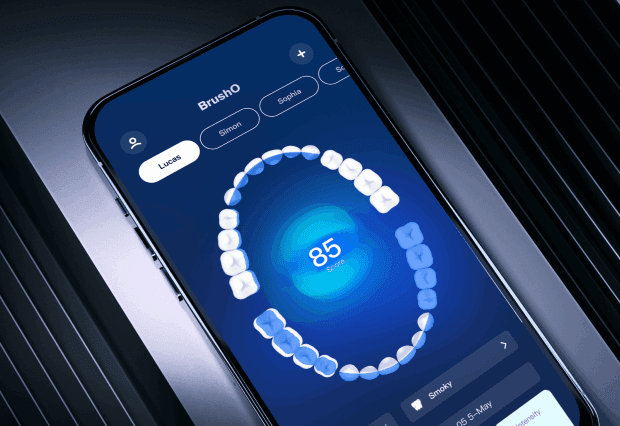
Your mouth is divided into 6 major zones for optimal cleaning:
1. Upper Right (back teeth to front)
2. Upper Left
3. Lower Left
4. Lower Right
5. Upper Front (inner and outer)
6. Lower Front (inner and outer)
These zones ensure that both sides and both arches (top and bottom) are cleaned evenly—no zone gets neglected.
Within each zone, your teeth have multiple surfaces that bacteria can cling to. The 16 surfaces typically refer to:
• Outer (buccal): Facing your cheeks and lips
• Inner (lingual/palatal): Facing your tongue
• Top (occlusal): The biting/chewing surface
• Interproximal: Between teeth (flossing zones)
If you multiply surfaces across molars, premolars, canines, and incisors in all zones, you get at least 16 unique brushing surfaces that need attention in each session.
Even if you brush twice a day, missing just one surface repeatedly allows plaque and bacteria to thrive. Over time, this leads to:
• Uneven whitening or yellowing
• Gum inflammation in neglected zones
• Cavities in hard-to-reach molars
• Tartar buildup near the gumline
• Bad breath from trapped food or bacteria
In other words, incomplete brushing leads to preventable oral health problems.
Manually remembering 6 zones and 16 surfaces during a 2-minute brush? Not realistic for most people. That’s why BrushO’s smart technology does the work for you:
Using motion sensors and AI, BrushO detects which zone you’re brushing and for how long.
It analyzes angles, pressure, and position to ensure you’re reaching all tooth surfaces—not just the visible ones.
If you skip or underbrush an area, BrushO reminds you to go back before finishing.
See a daily report of which zones were fully cleaned, over-brushed, or missed entirely—turning guessing into data.
We’ve entered an age where precision matters more than routine. The 6 zones and 16 surfaces framework moves brushing from an unconscious habit to a targeted hygiene strategy. Think of it like skincare—you wouldn’t only apply product to your cheeks and skip your forehead. Your mouth deserves the same care. Understanding your mouth’s zones and surfaces is the first step toward better dental health. With the help of AI-powered tools like BrushO, you don’t have to memorize anything—just brush as guided, and let the tech handle the coverage. Because in oral health, what gets measured gets managed.
BrushO is a next-generation smart toothbrush that uses AI and zone detection to transform how you brush. From personalized feedback to zone-by-zone guidance, BrushO helps users build healthier, more effective brushing habits—powered by technology and backed by dental science.
Jul 30
Jul 30
Jul 29
Jul 22
Jul 19
Jul 17

PPM describes concentration, not the amount to put on the brush. Learn how to read fluoride information while keeping regional guidance and individual advice in view.

That forgotten tube deserves a label check. Learn what toothpaste shelf-life information refers to, why storage matters, and how to avoid guessing from appearance.

Clear gel or opaque paste? Texture is only one feature. Learn which label details matter when comparing toothpastes for your brushing routine.

Minty toothpaste can create a cooling sensation without being chilled. Explore what menthol does and why a fresh feeling is different from complete cleaning.

The sound of a powered brush comes with its moving mechanism. Learn how normal operating noise differs from alerts or an unexpected change that needs checking.

Toothpaste on the mirror? Check when you switch the brush on and off, how you position it, and how to pause without rushing your routine.

A whitening brushing program and a bleaching treatment are different things. Learn how to interpret mode names, surface-stain claims, and realistic expectations.

A tiny cluster of bristles serves a different purpose from a full-size head. Learn where a single-tuft brush may fit into an individually recommended cleaning routine.

Angled tufts, different bristle heights, and the angle of your hand are separate design questions. Learn how to read a toothbrush-head description clearly.

A larger head is not an automatic shortcut to cleaner teeth. Learn how head size affects access, positioning, and the fit of your daily brushing routine.

Die BrushO KI-Elektrozahnbürste bietet Echtzeit-Anleitung, Druckfeedback, Abdeckungsverfolgung und Fortschrittsberichte in der App für eine sauberere tägliche Routine.
Die BrushO KI-Elektrozahnbürste bietet Echtzeit-Anleitung, Druckfeedback, Abdeckungsverfolgung und Fortschrittsberichte in der App für eine sauberere tägliche Routine.


Address: RM 1427, 14/F RADIO CITY 505, HENNESSY RD CAUSEWAY BAY, HONG KONG
Code: 000000
Phone: +852-53758652
Email: customerservice@brusho.com