
Jul 30
Jul 30
Jul 29
Jul 22
Jul 19
Jul 17
If you struggle with stubborn acne, jawline breakouts, or inflamed skin, the cause may not be your skincare routine — it may be your mouth. Modern research shows a powerful connection between oral bacteria, systemic inflammation, and skin health. Gum disease, plaque buildup, and oral infections release inflammatory molecules and bacteria into the bloodstream, which can trigger hormonal imbalances, immune reactions, and clogged pores. In this article, you’ll learn how oral health quietly influences skin breakouts, why brushing technique matters more than you think, and how AI-powered brushing with BrushO helps reduce inflammatory triggers that damage both your teeth and your skin.
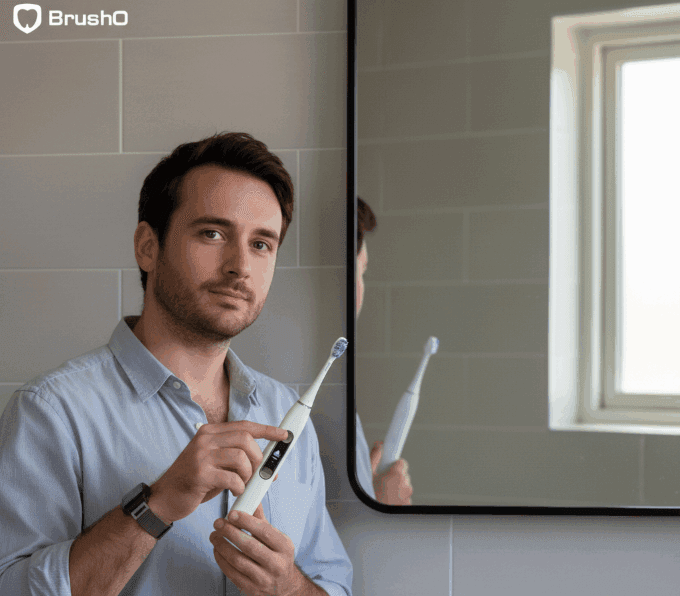
Your mouth is one of the largest bacterial ecosystems in your body. When oral bacteria are controlled, your immune system stays balanced. When they are not, inflammation spreads far beyond the mouth.
Oral bacteria can:
• Enter the bloodstream through inflamed gums
• Trigger immune responses
• Increase systemic inflammation
• Disrupt hormones linked to acne
• Promote skin oil overproduction
This is why dermatologists increasingly view oral health as part of acne management.
Gum disease (gingivitis and periodontitis) creates chronic inflammation. Inflammatory molecules such as cytokines and endotoxins travel through the blood and reach the skin.
This can cause:
• Red, painful breakouts
• Jawline and chin acne
• Hormonal acne flares
• Slow-healing blemishes
• Increased oil production
This is especially common in people who:
• Bleeds when brushing
• Have chronic bad breath
• Have gum sensitivity
• Have plaque buildup near the gumline
Certain oral bacteria produce toxins that:
• Stress the immune system
• Increase insulin resistance
• Raise cortisol levels
• Promote inflammation in hair follicles
This creates the perfect environment for acne-causing bacteria (like Cutibacterium acnes) to thrive.
That’s why people with:
• Gum disease
• Tooth infections
• Chronic plaque
often experience persistent breakouts even with expensive skincare.
Most people miss critical areas when brushing — especially the gumline and back teeth. These zones harbor the most bacteria.
When plaque stays:
• Toxins leak into the bloodstream
• Inflammation rises
• Skin flare-ups increase
Simply brushing twice a day is not enough — coverage and pressure matter.
BrushO is designed to eliminate the hidden bacterial zones that drive both oral disease and skin inflammation.
BrushO protects skin health by:
• 6-Zone × 16-Surface tracking so no bacteria are left behind
• Pressure sensors to prevent gum injury that allows bacteria into the bloodstream
• Real-time guidance to clean the gumline thoroughly
• Daily reports that reveal chronic missed areas
• Habit reinforcement so bacteria never get the upper hand
By lowering oral inflammation, BrushO helps calm the immune triggers that cause acne.
You may have an oral-skin imbalance if you experience:
• Acne along the jaw or cheeks
• Bad breath despite brushing
• Bleeding gums
• Puffy or sensitive gums
• Frequent canker sores
These are signs of chronic oral inflammation affecting your whole body.
1. Use BrushO nightly to remove gumline bacteria
2. Floss to eliminate trapped toxins
3. Use alcohol-free fluoride rinse
4. Stay hydrated to support saliva
5. Avoid late-night sugar
Your skin often improves within weeks once oral inflammation drops.
Clear skin does not start in a bottle — it starts in your mouth. Oral bacteria and gum inflammation quietly drive systemic inflammation that shows up as acne, redness, and breakouts. When you control your oral microbiome, your skin can finally heal. With BrushO’s AI-powered brushing, you protect both your smile and your complexion — every night.
Feb 4
Feb 4
Jul 30
Jul 30
Jul 29
Jul 22
Jul 19
Jul 17

A lateral cephalometric radiograph is only as useful as the analysis applied to it. The same tracing can be read as a skeletal discrepancy by one method and as a dental compensation by another, and the conclusions reached about extraction, surgery or growth modification may differ accordingly. Un...

Premature fusion of the cranial sutures produces a group of conditions in which the skull, the midface and the occlusion develop abnormally, and the dental team is central to long-term care. Apert and Crouzon syndromes are the best known craniosynostosis syndromes with major oral consequences. Bo...

A dense opacity on a panoramic radiograph above the molar roots or within the nasal cavity is a familiar finding that is often dismissed as an incidental artifact. When that opacity proves to be an antrolith or a rhinolith, the discovery explains years of unilateral obstruction, discharge and fac...

A firm, board-like swelling at the angle of the jaw that slowly breaks down into multiple draining sinuses should raise suspicion of cervicofacial actinomycosis, a chronic bacterial infection that is easily mistaken for a tumor. Nocardiosis, caused by related filamentous organisms, can produce a ...

Enlargement of the jaw, widening spaces between the teeth and a slowly changing facial profile may bring a patient to the dental office years before the underlying endocrine disease is diagnosed. Acromegaly and Cushing syndrome both leave recognizable signatures in the craniofacial region, and th...

A slowly growing, painless lump at the angle of the jaw in a middle-aged or older man who smokes is the classic presentation of a Warthin tumor. Formally called papillary cystadenoma lymphomatosum, this benign neoplasm is one of the most common tumors of the parotid gland and the second most comm...

Painful ulcerated gums that bleed easily, a foul metallic taste and severe mouth odor can signal Vincent stomatitis, an acute fusospirochetal necrotizing infection of the gingival and oral tissues. First described during wartime and historically called trench mouth, the disease still occurs today...

A painful swelling under the jaw that appears at mealtimes and subsides slowly afterward is the classic symptom of a salivary stone blocking a duct. Sialolithiasis, the formation of calcified stones in the salivary glands, and sialodochitis, the inflammation of the ducts that follows, are common ...

Paget disease of bone, also called osteitis deformans, is a chronic disorder of bone remodeling that can silently affect the skull and the jaws. In the maxillofacial region it produces progressive bony enlargement, distinctive cotton-wool radiographs and dental complications such as hypercementos...

The sudden appearance of widespread, painful oral erosions with crusted lips can be alarming, and it may represent either erythema multiforme or a drug-induced severe reaction such as Stevens-Johnson syndrome. Both belong to a spectrum of immune-mediated mucocutaneous disorders, and both can begi...

Die BrushO KI-Elektrozahnbürste bietet Echtzeit-Anleitung, Druckfeedback, Abdeckungsverfolgung und Fortschrittsberichte in der App für eine sauberere tägliche Routine.
Die BrushO KI-Elektrozahnbürste bietet Echtzeit-Anleitung, Druckfeedback, Abdeckungsverfolgung und Fortschrittsberichte in der App für eine sauberere tägliche Routine.


Address: RM 1427, 14/F RADIO CITY 505, HENNESSY RD CAUSEWAY BAY, HONG KONG
Code: 000000
Phone: +852-53758652
Email: customerservice@brusho.com