
Jul 30
Jul 30
Jul 29
Jul 22
Jul 19
Jul 17
Teens today are constantly exposed to oral care advice from influencers, TikTok hacks, and viral trends—but not all of it is healthy or scientifically backed. While social media can raise awareness of dental hygiene, it can also spread misinformation or promote unsafe practices. This article explores the double-edged impact of social media on teen brushing behaviors, and how smart brushing solutions like BrushO can help teens build lasting, safe oral habits.
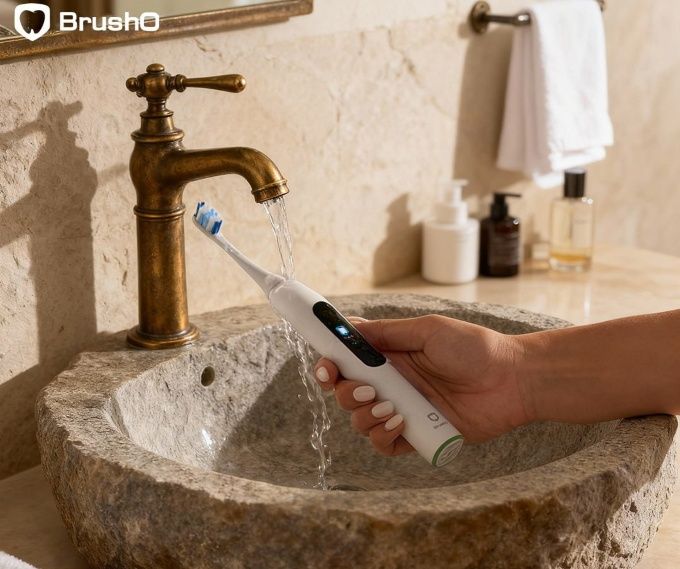
Social media platforms such as TikTok, Instagram, and YouTube Shorts dominate teen attention spans. With millions of views on “#oralcare” and “#teethwhitening,” teens are bombarded with:
• DIY whitening tricks using baking soda or lemon juice
• Speed-brushing challenges
• Influencer brushing routines (some helpful, some harmful)
These content types shape teen perceptions of oral care more than advice from dentists or parents.
Trends that use acidic or abrasive ingredients can erode enamel, leading to:
• Tooth sensitivity
• Long-term decay
• Yellowing (ironically)
Teens often try multiple whitening products at once due to influencer suggestions, unaware of cumulative damage, like:
• Gum irritation
• Enamel thinning
• Unnatural white patches
Trends that promote 10-second brushing or skipping nighttime care for aesthetics create a false sense of hygiene, leading to plaque buildup and poor gum health.
Not all content is harmful. Some influencers, including dental professionals, share videos on:
• Proper brushing technique
• The importance of flossing
• Smart toothbrush comparisons
• Gum health and tongue cleaning tips
Brands and professionals can leverage this medium to correct misinformation and gamify brushing routines for teens.
BrushO’s AI-powered guidance ensures every zone of the mouth is covered properly, countering the “shortcut” mindset with precise brushing routines.
Teens can track progress via the BrushO app and see brushing scores, which are more engaging than passive routines.
BrushO’s reward system motivates teens with tokens for consistent brushing—transforming boring routines into a fun, challenge-based experience.
Helps teens avoid overbrushing or missing spots, especially useful for those influenced by misleading trends.
• Monitor the content teens are watching about oral care.
• Encourage use of smart tools like BrushO to develop safe habits.
• Replace misinformation with fun, validated sources of education.
Social media is a powerful force in shaping teen behavior, and oral hygiene is no exception. While trends can mislead, they can also be an entry point to better health. By providing teens with smart, science-backed tools like BrushO, we can transform risky fads into lasting healthy habits—and keep their smiles bright for years to come.
Jul 30
Jul 30
Jul 29
Jul 22
Jul 19
Jul 17

Fluoride in drinking water is the most cost-effective caries preventive measure in public health, and it is also the source of most avoidable fluoride exposure in young children. The balance between benefit and risk depends on concentration, on total intake from all sources and on the age of the ...

A mouthguard is the only piece of protective equipment that a dentist can prescribe, and the difference between the cheapest and the best version is often less than the cost of a single repair. This guide explains what each type of mouthguard actually protects, how to judge fit, and what to check...

Distinguishing reversible from irreversible pulpitis is the single most consequential decision in endodontic diagnosis, because one leads to a restoration and the other to root canal treatment or extraction. The distinction rests on symptoms and pulp testing rather than on radiographs alone, and ...

A pregnancy epulis is a benign overgrowth of gum tissue that appears during pregnancy, most often in the second or third trimester. It can alarm patients because it grows quickly and bleeds easily, yet in most cases it needs no surgery and settles after delivery. Understanding what drives the gro...

When several teeth are missing, the choice usually narrows to a removable partial denture or a fixed implant-supported restoration, and cost is the factor patients raise first. Upfront price is only part of the comparison, because the two options differ in maintenance, comfort, effects on neighbo...

Most root canal failures are not caused by inadequate cleaning of canals that were found, but by canals that were never located. Molar anatomy varies widely, and the variation is not random: specific teeth in specific populations have predictable additional canals. Knowing where they hide is the ...

Gum massage is one of the oldest recommendations in oral care and one of the least understood. It has been described as a treatment for bleeding gums, a route to firmer tissue and, more recently, a way to reduce brushing force. This article separates the mechanisms that are supported by physiolog...

Interdental cleaning is the part of oral hygiene most people abandon first, and the choice between a floss pick and a length of string floss is often made on convenience. Convenience matters, because a tool that is used daily outperforms a superior tool that stays in the drawer, but the two devic...

Dementia changes the way a denture is worn, cleaned and tolerated, and the people who notice the change first are usually family carers rather than clinicians. Poor denture hygiene in this group is associated with mucosal infection, reduced food intake and, in frail patients, respiratory complica...

Chewing tobacco keeps nicotine and plant irritants in prolonged contact with a small area of mucosa, and the damage that results is concentrated exactly where the quid is held. The lesions that develop are often painless, which is why they are discovered during routine examination rather than bec...

Die BrushO KI-Elektrozahnbürste bietet Echtzeit-Anleitung, Druckfeedback, Abdeckungsverfolgung und Fortschrittsberichte in der App für eine sauberere tägliche Routine.
Die BrushO KI-Elektrozahnbürste bietet Echtzeit-Anleitung, Druckfeedback, Abdeckungsverfolgung und Fortschrittsberichte in der App für eine sauberere tägliche Routine.


Address: RM 1427, 14/F RADIO CITY 505, HENNESSY RD CAUSEWAY BAY, HONG KONG
Code: 000000
Phone: +852-53758652
Email: customerservice@brusho.com