
Jul 30
Jul 30
Jul 29
Jul 22
Jul 19
Jul 17
Not all teeth are the same—and neither should your brushing routine be. Whether you have sensitive teeth, wear orthodontics, or simply want a deeper clean, smart toothbrushes now offer tailored modes to meet individual oral care needs. Understanding these modes helps you maximize brushing results while protecting your enamel, gums, and restorations.
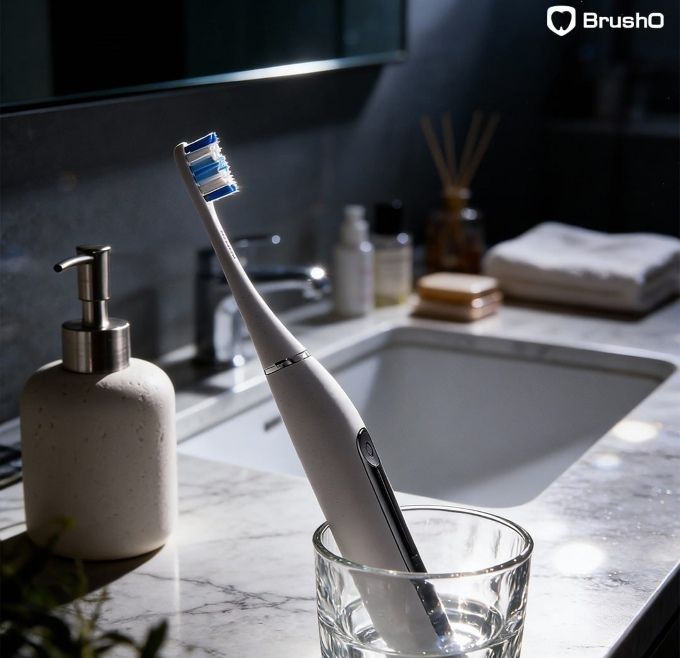
Modern electric toothbrushes go beyond a single-speed setting. They come with brushing modes designed to adjust:
• Speed
• Vibration intensity
• Motion pattern
• Duration
These tailored settings enhance cleaning without over-brushing or damaging delicate areas. Choosing the right mode ensures effective plaque removal, comfort, and oral safety—especially for people with unique dental conditions.
Recommended Mode: Sensitive Mode
This gentle mode reduces vibration intensity and speed, offering a soothing experience for those with sensitivity to pressure or temperature. It helps avoid gum recession and enamel wear.
💡 BrushO Tip: Use BrushO’s sensitive mode in combination with a soft bristle head and monitor pressure alerts to prevent over-brushing.
Recommended Mode: Deep Clean Mode
Crowded teeth are harder to clean thoroughly. A deep clean mode provides high-frequency vibrations and longer brushing time to reach tight spaces and remove stubborn plaque.
💡 BrushO Tip: BrushO’s app-guided 6-zone, 16-surface feedback ensures these hard-to-reach areas aren’t missed.
Recommended Mode: Ortho Mode (or Deep Clean if Ortho Mode is unavailable)
Brushing around wires and brackets requires precision. A mode with a pulsing or oscillating pattern helps clean behind hardware without applying excessive force.
💡 BrushO Tip: Use BrushO’s AI feedback to identify neglected spots around brackets and set reminders for post-meal brushing.
Recommended Mode: Gentle or Sensitive Mode
These surfaces require careful cleaning to protect the margins without scratching materials or irritating gum tissue.
💡 BrushO Tip: BrushO’s pressure sensor ensures delicate areas around restorations are protected during daily use.
Recommended Mode: Whitening Mode
This mode uses rapid vibrations and a polishing motion to help lift surface stains, especially from coffee, wine, or tobacco.
💡 BrushO Tip: Combine whitening mode with a low-abrasion whitening toothpaste and BrushO’s 45-second feedback loop to prevent overuse.
Recommended Mode: Standard or Daily Clean Mode
For general maintenance, this balanced mode delivers consistent vibration and coverage, ideal for everyday brushing.
💡 BrushO Tip: Rotate modes weekly to stimulate different areas of the mouth and enhance gum health.
BrushO isn’t just about multiple modes—it’s about smart personalization:
• Auto-adjust mode recommendations based on your brushing feedback
• Pressure and coverage analysis to suggest gentler or deeper settings
• Customizable preferences in the BrushO app for every family member
• $BRUSH rewards for maintaining healthy brushing habits in your ideal mode
Whether you’re recovering from dental work, managing braces, or just want a brighter smile, BrushO evolves with your needs.
Brushing isn’t a one-size-fits-all routine. With smart toothbrushes like BrushO, choosing the right mode for your teeth type ensures cleaner results, better protection, and a more enjoyable experience. Tailoring your brushing settings isn’t just smart—it’s essential for long-term oral wellness.
BrushO is an AI-powered electric toothbrush designed to make brushing personal, smart, and effective. With multiple brushing modes, smart zone tracking, pressure sensors, and brushing reports—plus token rewards for healthy habits—BrushO transforms oral care into a goal-driven, tech-forward routine.
Jan 15
Jan 14
Jul 30
Jul 30
Jul 29
Jul 22
Jul 19
Jul 17

Torus mandibularis and torus palatinus are benign bony overgrowths that arise on the lingual surface of the mandible and on the midline of the hard...

Oral pigmented lesions are a diverse group of conditions that appear as areas of abnormal color in the oral mucosa, ranging from brown and black...

Gingivoplasty is a periodontal surgical procedure designed to reshape the gingiva and restore a natural, harmonious contour to the gum line. Unlike...

Fusion and gemination are developmental dental anomalies in which two teeth appear to be joined together, producing a single crown that is wider than...

An anterior open bite is a malocclusion in which the anterior teeth fail to meet in the vertical dimension when the posterior teeth are in occlusion,...

Zirconia implant abutments have become the standard of care in the esthetic zone because of their ability to mimic the natural translucency of tooth structure and to preserve the appearance of peri-implant soft tissue. As patients increasingly demand restorations that are indistinguishable from n...

A frenectomy is a minor surgical procedure that removes or releases a frenum, the small fold of tissue that connects the lips, cheeks, or tongue to the underlying structures. When a frenum is abnormally positioned, large, or tight, it can interfere with speech, feeding, oral hygiene, the eruption...

The separation of an instrument within a root canal is one of the most stressful events in endodontic practice, and it occurs in every clinician's career at some point. When a nickel-titanium or stainless steel file fractures, its fragment remains in the canal and can obstruct cleaning, shape, fi...

Corticotomy-assisted orthodontics is an advanced technique that combines surgical stimulation of the alveolar bone with conventional tooth movement to shorten treatment time. The approach, popularized as periodontally accelerated osteogenic orthodontics, or PAOO, has transformed the management of...

Bruxism, the involuntary clenching and grinding of the teeth, affects a large proportion of the population and can cause severe damage to the dentition, the supporting structures, and the temporomandibular joint. The occlusal splint, or night guard, is the most widely used appliance for the manag...

Die BrushO KI-Elektrozahnbürste bietet Echtzeit-Anleitung, Druckfeedback, Abdeckungsverfolgung und Fortschrittsberichte in der App für eine sauberere tägliche Routine.
Die BrushO KI-Elektrozahnbürste bietet Echtzeit-Anleitung, Druckfeedback, Abdeckungsverfolgung und Fortschrittsberichte in der App für eine sauberere tägliche Routine.


Address: RM 1427, 14/F RADIO CITY 505, HENNESSY RD CAUSEWAY BAY, HONG KONG
Code: 000000
Phone: +852-53758652
Email: customerservice@brusho.com