
Jul 30
Jul 30
Jul 29
Jul 22
Jul 19
Jul 17
Brushing harder doesn’t mean brushing better. A smart, gentle routine—plus BrushO’s pressure sensor and app coaching—keeps gums comfortable, prevents recession, and still delivers a deep clean. If your goal is healthier gums (not just cleaner teeth), this guide is for you. 😊
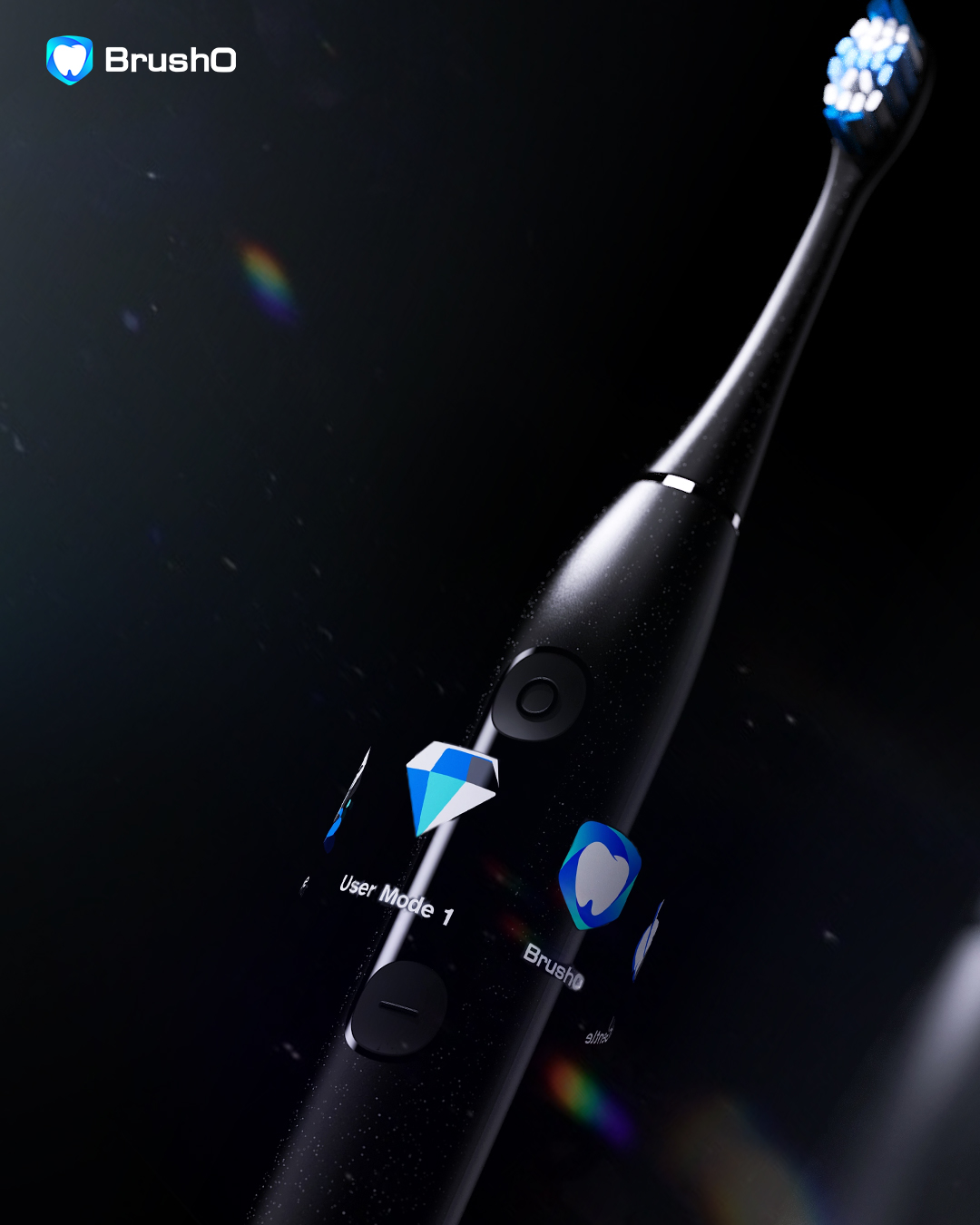
Healthy gums anchor and nourish your teeth. Yet many people brush with too much force, causing soreness, bleeding, and long-term recession. Think of it like polishing glass with sandpaper—effective at first, damaging over time.
Common signs you’re brushing too hard:
The sweet spot for daily brushing force is surprisingly light—about the weight of a small orange (≈150–200 g). Above that, bristles can:
A smart pressure sensor acts like cruise control for your hand, keeping force gentle while sonic vibrations do the heavy lifting.
BrushO doesn’t just beep and hope—its protection is active and adaptive:
1. Instant sensing 📳 — The handle detects excess force the moment it happens.
2. Gentle alerts — A soft cue nudges you to ease up (no panic, no drama).
3. Adaptive power ⚡ — Intensity subtly drops to a gum-safe level.
4. App coaching 📱 — See your pressure heatmap and weekly trend; get micro-tips to fix habits for good.
Result: safe, consistent, dentist-approved pressure—every session.
With sonic technology, BrushO sweeps plaque from the gumline and between teeth using fluid dynamics (micro-bubbles + high-frequency motion). Translation: a deep clean without heavy hand pressure. Pair that with soft, rounded bristles and you’ve got a recipe for calm, happy gums. 🧼✨
Want more routine tips? Browse our BrushO blog for quick guides and how-tos.
🚀 Ready to Treat Your Gums Right?
Protect your gumline today—future-you (and your dentist) will thank you.
Aug 14
Aug 13
Jul 30
Jul 30
Jul 29
Jul 22
Jul 19
Jul 17

Fluoride in drinking water is the most cost-effective caries preventive measure in public health, and it is also the source of most avoidable fluoride exposure in young children. The balance between benefit and risk depends on concentration, on total intake from all sources and on the age of the ...

A mouthguard is the only piece of protective equipment that a dentist can prescribe, and the difference between the cheapest and the best version is often less than the cost of a single repair. This guide explains what each type of mouthguard actually protects, how to judge fit, and what to check...

Distinguishing reversible from irreversible pulpitis is the single most consequential decision in endodontic diagnosis, because one leads to a restoration and the other to root canal treatment or extraction. The distinction rests on symptoms and pulp testing rather than on radiographs alone, and ...

A pregnancy epulis is a benign overgrowth of gum tissue that appears during pregnancy, most often in the second or third trimester. It can alarm patients because it grows quickly and bleeds easily, yet in most cases it needs no surgery and settles after delivery. Understanding what drives the gro...

When several teeth are missing, the choice usually narrows to a removable partial denture or a fixed implant-supported restoration, and cost is the factor patients raise first. Upfront price is only part of the comparison, because the two options differ in maintenance, comfort, effects on neighbo...

Most root canal failures are not caused by inadequate cleaning of canals that were found, but by canals that were never located. Molar anatomy varies widely, and the variation is not random: specific teeth in specific populations have predictable additional canals. Knowing where they hide is the ...

Gum massage is one of the oldest recommendations in oral care and one of the least understood. It has been described as a treatment for bleeding gums, a route to firmer tissue and, more recently, a way to reduce brushing force. This article separates the mechanisms that are supported by physiolog...

Interdental cleaning is the part of oral hygiene most people abandon first, and the choice between a floss pick and a length of string floss is often made on convenience. Convenience matters, because a tool that is used daily outperforms a superior tool that stays in the drawer, but the two devic...

Dementia changes the way a denture is worn, cleaned and tolerated, and the people who notice the change first are usually family carers rather than clinicians. Poor denture hygiene in this group is associated with mucosal infection, reduced food intake and, in frail patients, respiratory complica...

Chewing tobacco keeps nicotine and plant irritants in prolonged contact with a small area of mucosa, and the damage that results is concentrated exactly where the quid is held. The lesions that develop are often painless, which is why they are discovered during routine examination rather than bec...

Die BrushO KI-Elektrozahnbürste bietet Echtzeit-Anleitung, Druckfeedback, Abdeckungsverfolgung und Fortschrittsberichte in der App für eine sauberere tägliche Routine.
Die BrushO KI-Elektrozahnbürste bietet Echtzeit-Anleitung, Druckfeedback, Abdeckungsverfolgung und Fortschrittsberichte in der App für eine sauberere tägliche Routine.


Address: RM 1427, 14/F RADIO CITY 505, HENNESSY RD CAUSEWAY BAY, HONG KONG
Code: 000000
Phone: +852-53758652
Email: customerservice@brusho.com