
Jul 30
Jul 30
Jul 29
Jul 22
Jul 19
Jul 17
Are electric toothbrushes better for orthodontic patients? Braces create unique oral care challenges—food and plaque build up around brackets, gums get irritated, and cleaning takes more time. Many patients and parents wonder: Should I switch to an electric toothbrush? Research shows that electric toothbrushes remove more plaque and reduce gum inflammation compared to manual brushing. In this article, we’ll explore the science, common mistakes orthodontic patients make, and how the BrushO Smart Toothbrush supports braces wearers with gentle bristles, smart pressure sensors, and real-time brushing feedback.
Wearing braces makes oral hygiene much harder:
Plaque Traps → Brackets and wires collect food particles.
Sensitive Gums → Tightening braces often leaves gums sore.
Hard-to-Reach Areas → Manual brushes often miss spots behind wires.
Time Burden → Bracing patients often spend double the time brushing.
Without proper cleaning, patients risk cavities, gum disease, and even white spot lesions (early signs of enamel decay).
Studies confirm:
Manual toothbrushes depend entirely on user technique, which is hard to perfect around brackets.
Electric toothbrushes deliver consistent, rapid movements that break up plaque more effectively.
One orthodontic study found that patients using electric toothbrushes had 22% less plaque and 18% lower gingivitis scores compared to manual users after 12 weeks.
👉 The conclusion: electric toothbrushes don’t just save time—they actually help braces patients maintain healthier teeth and gums.
Even with an electric toothbrush, orthodontic patients sometimes make errors:
Brushing too hard → This can irritate gums already stressed by braces.
Using the wrong brush head → Hard bristles may scratch enamel and brackets.
Stopping too soon → Less than 2 minutes means plaque remains around wires.
Skipping the gumline → Most plaque hides where gums meet teeth.
Sophie, 15, wearing braces for 8 months:
“At first, brushing was a nightmare. Food got stuck everywhere, and I kept rushing. After switching to BrushO, the app showed me the spots I missed. My orthodontist even noticed my gums looked healthier at the next appointment.”
Daniel, 28, adult braces patient:
“I was worried about gum soreness. BrushO’s gentle mode and pressure alerts made a big difference—I no longer press too hard, and brushing feels safer.”
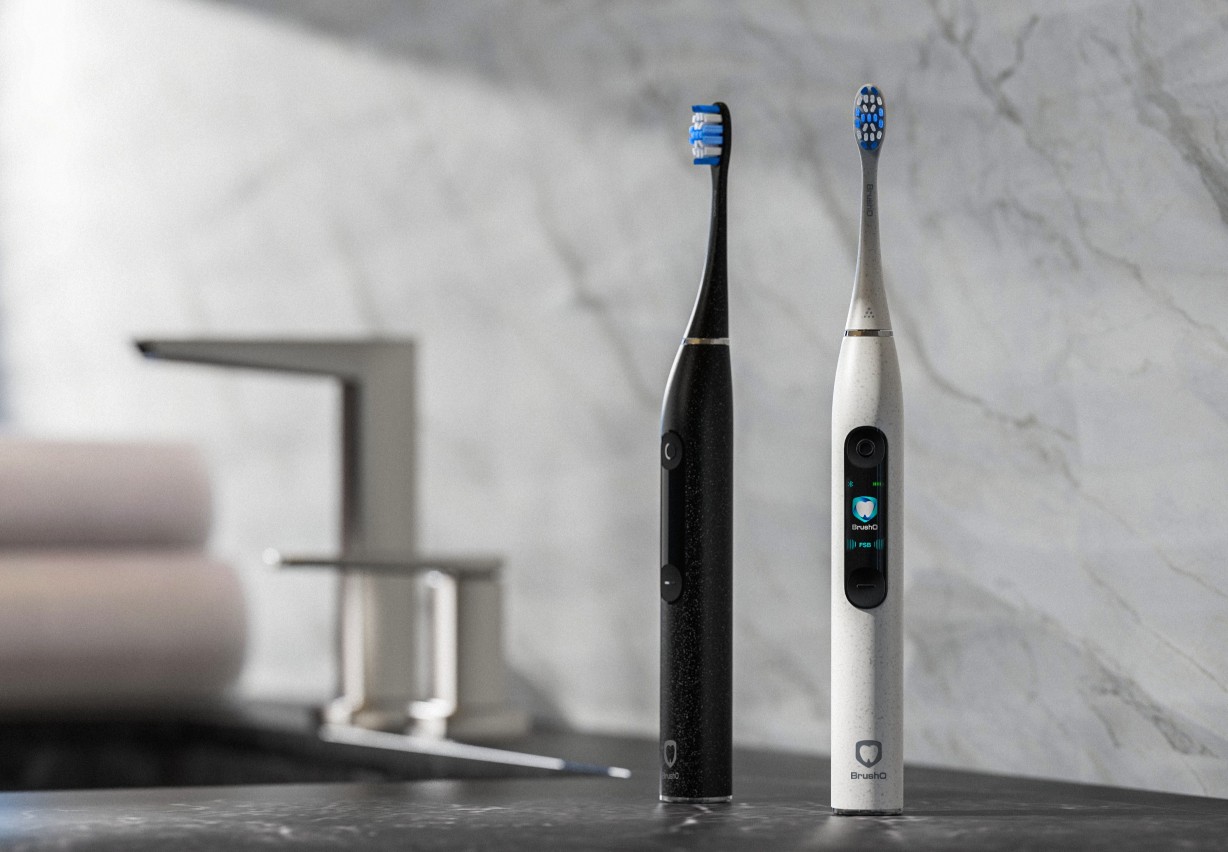
The BrushO AI-Powered Electric Toothbrush is tailored for braces wearers:
Smart Pressure Sensor → Prevents over-brushing that can harm gums around brackets.
Sensitive & Gum Care Modes → Gentle vibration options for orthodontic discomfort.
Real-Time Brushing Feedback → Ensures no spots are missed behind wires or at the gumline.
DuPont Soft Bristles → Gentle on brackets yet tough on plaque.
45-Day Battery + Qi Wireless Charging → Convenient for busy students and travelers.
Most orthodontists agree:
Electric toothbrushes improve plaque control for braces wearers.
Pressure sensors protect against gum irritation.
Brace patients should brush 3 times daily, especially after meals.
Q1: Can electric toothbrushes damage braces?
No, when used with soft bristles and pressure control, they are safe.
Q2: How often should orthodontic patients replace brush heads?
Every 3 months, or sooner if bristles fray.
Q3: Is a smart toothbrush better than a basic electric one?
Yes. Features like BrushO’s AI tracking and real-time feedback ensure braces patients are cleaned thoroughly.
So, are electric toothbrushes better for orthodontic patients? Absolutely. They clean more effectively, protect sensitive gums, and make braces care easier. But not all brushes are equal. The BrushO Smart Toothbrush combines gentle bristles, smart pressure sensors, and AI-powered tracking to give orthodontic patients a healthier, more confident smile.
Jul 30
Jul 30
Jul 29
Jul 22
Jul 19
Jul 17

Hyperdontia is the presence of one or more teeth in excess of the normal dental formula, and the resulting teeth are described as supernumerary. The condition is common enough to appear in routine practice but variable enough in presentation that the decision to intervene is rarely straightforwar...

Few patients complete orthodontic treatment without asking whether their teeth will move back. The honest answer is that they will, to some degree, in the majority of cases. Relapse is not a failure of treatment but a predictable biological response, and understanding why it happens is the basis ...

The mandible is the largest and most frequently fractured bone of the facial skeleton, and its management sits at the interface between trauma surgery and restorative dentistry. Treatment has shifted over four decades from prolonged maxillomandibular fixation towards rigid internal fixation with ...

Chronic liver disease affects hundreds of millions of people worldwide, and its prevalence continues to rise with the epidemic of metabolic liver disease. The liver is central to haemostasis, drug metabolism and immune competence, and its failure therefore alters the risk profile of almost every ...

Excessive gingival display, commonly described as a gummy smile, is one of the most frequent aesthetic concerns presented to dental practitioners. The condition is not a single entity but a clinical presentation that can arise from skeletal, gingival, muscular or dental factors, and the treatment...

Drug-induced gingival overgrowth is a well-recognised adverse effect of several widely prescribed medications, and it remains one of the most common drug-related findings in periodontal practice. The condition produces firm, fibrous enlargement of the gingiva that can interfere with speech, masti...

Denture stomatitis is an inflammatory condition of the denture-bearing mucosa that affects a large proportion of removable prosthesis wearers, yet it is frequently dismissed as a cosmetic annoyance. The condition is driven by a Candida biofilm on the fitting surface of the prosthesis, and it is m...

Chronic kidney disease affects an estimated 850 million people worldwide, and the number of patients surviving on dialysis or with a renal transplant continues to rise. These patients carry an oral disease burden that is substantially higher than that of the general population, and their medical ...

Angular cheilitis is an inflammatory lesion of the labial commissures that presents with erythema, fissuring and crusting at the corners of the mouth. It is one of the most common conditions encountered in general dental practice, yet it is frequently treated as a simple fungal infection and allo...

Adverse reactions to dental materials are uncommon but they are not rare, and they are frequently misdiagnosed because the oral mucosa responds to allergens in a limited number of ways. A burning sensation, a persistent ulcer or an unexplained area of erythema may all represent a hypersensitivity...

Die BrushO KI-Elektrozahnbürste bietet Echtzeit-Anleitung, Druckfeedback, Abdeckungsverfolgung und Fortschrittsberichte in der App für eine sauberere tägliche Routine.
Die BrushO KI-Elektrozahnbürste bietet Echtzeit-Anleitung, Druckfeedback, Abdeckungsverfolgung und Fortschrittsberichte in der App für eine sauberere tägliche Routine.


Address: RM 1427, 14/F RADIO CITY 505, HENNESSY RD CAUSEWAY BAY, HONG KONG
Code: 000000
Phone: +852-53758652
Email: customerservice@brusho.com