Top Benefits of Using a Smart Toothbrush for Sensitive Teeth
Jan 23

Jan 23
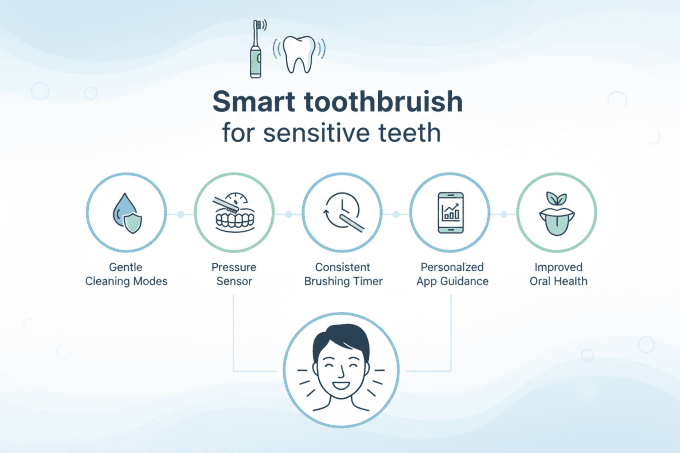
Sensitive teeth can make everyday activities like eating and brushing uncomfortable. A smart toothbrush—with features like pressure sensors, personalized brushing modes, and real‑time feedback—can help improve brushing habits, protect enamel and gums, and reduce sensitivity over time. This article explores the key benefits of using a smart toothbrush specifically for sensitive teeth.


Introduction: Why Sensitive Teeth Need Special Care

Tooth sensitivity, often caused by enamel erosion, gum recession, or aggressive brushing, affects millions of people globally. When dentin—the layer beneath enamel—becomes exposed, it can trigger sharp discomfort from hot, cold, sweet, or acidic foods. Traditional toothbrushes may not provide sufficient protection or guidance to address these issues properly.
This is where smart toothbrush technology becomes especially valuable. Smart toothbrushes are electric toothbrushes equipped with advanced sensors, connectivity, and app integration that help users brush more effectively. They offer science‑backed advantages that go beyond what manual or basic electric brushes can provide.

1. Gentle Cleaning That Protects Sensitive Teeth

One of the most important benefits of using a smart toothbrush for sensitive teeth is its gentle yet effective cleaning action. Unlike hard manual brushing—which can worsen sensitivity by stripping enamel and irritating gums—smart toothbrushes use advanced motion technology to remove plaque without excessive force. Many models also include dedicated “sensitive” or “gentle” brushing modes tailored for users who need milder brushing power and reduced vibration intensity.
This gentle approach helps maintain enamel integrity while still achieving a thorough clean, reducing the risk of irritation and discomfort common among those with sensitive teeth.

2. Pressure Sensors Prevent Over‑Brushing

Excessive brushing pressure is a common cause of gum recession and enamel wear—two major contributors to sensitivity. Smart toothbrushes typically include built‑in pressure sensors that alert you when you are brushing too hard. These real‑time alerts, often communicated through gentle vibration or app notifications, help you maintain the ideal brushing force, protecting your gums and enamel over time.
By preventing over‑brushing, these sensors help reduce the progression of sensitivity and promote healthier brushing habits.

3. Personalized Brushing Modes for Tailored Oral Care

Unlike traditional brushes with one uniform setting, smart toothbrushes offer multiple brushing modes such as sensitive, gum care, deep clean, or daily clean. For individuals with sensitive teeth, switching to a sensitive mode ensures that strokes are softer and less abrasive, focusing on comfort without compromising hygiene.
This personalized capability means smarter brushing that adapts to your needs, rather than a one‑size‑fits‑all approach.

4. Real‑Time Feedback Encourages Better Brushing Technique

Smart toothbrushes provide real‑time feedback through companion apps that guide you on your brushing technique. These apps use data from built‑in motion trackers, timers, and pressure sensors to show whether you are brushing too hard, missing areas, or not brushing long enough. With this guidance, users can make immediate adjustments, leading to healthier and more effective brushing habits.
Over time, this feedback loop improves brushing consistency and helps prevent issues that lead to tooth sensitivity, such as uneven plaque removal or missed regions prone to decay.

5. Coverage Tracking Ensures Even Cleaning

Missing certain areas of your mouth while brushing can leave plaque behind, contributing to gum irritation and sensitivity. Smart toothbrushes often track which areas have been brushed and for how long, ensuring full mouth coverage. This advanced tracking helps you brush thoroughly and evenly, which is essential for maintaining healthy teeth and minimizing the risk of sensitivity‑related conditions.

6. Long‑Term Habit Tracking and Motivation

Many smart toothbrushes sync with mobile apps to track brushing behavior over weeks and months. This habit tracking not only shows progress but also motivates users to stay consistent. Some apps even provide rewards, streaks, or gamified elements that make sticking to a good brushing routine easier—and more engaging.
This long‑term focus encourages healthier daily habits, further reducing the risk and discomfort associated with sensitive teeth.

7. Enhanced Gum Health and Reduced Inflammation

For many people, tooth sensitivity is closely linked with gum health. Smart toothbrushes help by gently stimulating gums and reminding users to brush along the gum line without applying too much force. With improved gum care and reduced inflammation, the overall oral environment becomes healthier, which can decrease sensitivity triggers.
 

Conclusion: Smart Toothbrushes Make Sensitive Teeth Easier to Manage

A smart toothbrush is more than just a high‑tech gadget—it’s a scientifically supported tool that can make a real difference for people with sensitive teeth. From gentle brushing modes and pressure sensors to real‑time feedback and long‑term habit tracking, these devices empower users with precise, adaptive oral care.
By combining expert‑guided brush technology with personalized insights and data‑driven coaching, smart toothbrushes help you protect enamel, minimize discomfort, and build better habits for a lifetime of healthier smiles.

সাম্প্রতিক পোস্ট

Your Dominant Hand May Be Shaping Your Brushing More Than You Realize

Your Dominant Hand May Be Shaping Your Brushing More Than You Realize

Brushing habits are influenced not only by intention, but also by the natural bias of the hand doing the work. This article explains how hand dominance affects brushing symmetry, comfort, and routine design.

Tooth Shape Quietly Changes What Your Brush Can Reach

Tooth Shape Quietly Changes What Your Brush Can Reach

Different teeth present different brushing challenges because their shapes and positions vary. This article explains why tooth shape matters, where coverage often becomes uneven, and how better routines can support cleaner daily brushing outcomes.

Tiny Pauses Can Change How Controlled Brushing Feels

Tiny Pauses Can Change How Controlled Brushing Feels

Small pauses inside a brushing routine can influence control, precision, and attention more than users expect. This article explores micro-pauses, movement quality, and why rhythm is not only about speed.

The Mouth Does Not Feel the Same Everywhere After Brushing

The Mouth Does Not Feel the Same Everywhere After Brushing

Post-brushing sensation is not uniform across the mouth, and that matters for how people judge oral cleanliness. This article explores texture perception, sensory bias, and why feeling clean is not always a simple signal.

The Difference Between Watching Your Routine and Understanding It

The Difference Between Watching Your Routine and Understanding It

Many users observe their brushing habits without truly interpreting them. This article explores the gap between self-monitoring and self-understanding, and why that gap matters for daily oral-care improvement.

Routine Order Often Matters More Than Motivation

Routine Order Often Matters More Than Motivation

Many brushing problems are shaped less by motivation than by the order in which routines are performed. This article explains how sequence affects memory, automaticity, and the reliability of everyday oral-care habits.

One Chewing Side Can Quietly Influence How You Clean Your Mouth

One Chewing Side Can Quietly Influence How You Clean Your Mouth

People often have a preferred chewing side, and that habit may influence how they perceive and perform daily oral care. This article explores chewing-side bias, habit asymmetry, and what it can mean for brushing routines.

Inner Tooth Surfaces Often Get Less Attention Than People Think

Inner Tooth Surfaces Often Get Less Attention Than People Think

Inner tooth surfaces are easy to underestimate during daily brushing. This article explains why those areas are often under-covered, how routine design affects them, and what users can do to build more complete oral-care habits.

Cleaning Curved Tooth Surfaces Takes More Than a Standard Brushing Angle

Cleaning Curved Tooth Surfaces Takes More Than a Standard Brushing Angle

Tooth surfaces are not flat, and brushing angle affects how well different zones are reached. This article explains why curved anatomy matters, where people often miss coverage, and how more stable brushing habits can improve daily cleaning quality.

A Better Way to Read Your Own Brushing Patterns

A Better Way to Read Your Own Brushing Patterns

Better oral-care habits often begin when users can recognize the patterns inside their own brushing routines. This article explains how to interpret repeat behaviors, spot weak zones, and use feedback more effectively.