
Jul 30
Jul 30
Jul 29
Jul 22
Jul 19
Jul 17
Many people unconsciously focus only on the visible front surfaces of their teeth when brushing — especially during rushed mornings or late-night routines. But what happens to the areas you skip? Neglecting the back sides, molars, and inner surfaces can lead to plaque buildup, gum inflammation, and serious oral health issues over time. In this article, we explore why brushing only the front of your teeth isn’t enough and how smart toothbrushes like BrushO help you achieve thorough, all-around cleaning every time.
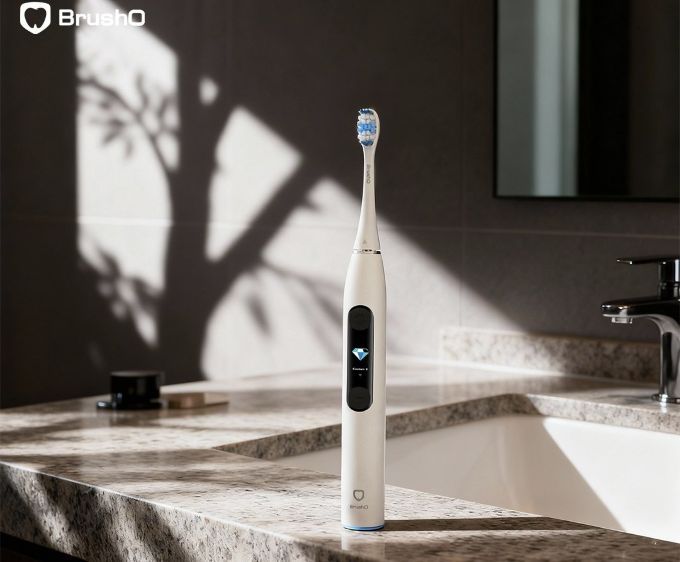
It’s common to brush what you can easily see in the mirror — mostly the front-facing surfaces. But behind every smile lies a complex set of surfaces, including:
• Back of front teeth
• Inner molars
• Gumline areas
• Chewing surfaces
Many people unintentionally rush through these hidden zones, leaving behind food particles and bacteria.
Plaque forms on all surfaces of your teeth, not just the front. When you skip the back or inner surfaces, plaque and bacteria can grow unchecked — especially in hard-to-reach molars and along the gumline.
Cavities often form between teeth or on the back surfaces where brushing is less thorough. Focusing only on the front makes you more likely to miss areas where food debris hides.
Gum disease starts where plaque isn’t removed — typically near the back molars and inner gumline. Inflammation, bleeding, and even recession can follow.
Bacteria lingering on back teeth or the back of your tongue can cause persistent bad breath, even if your front teeth look spotless.
Brushing thoroughly — front, back, sides, and chewing surfaces — is essential. BrushO is designed to make this easy, effective, and even automatic.
BrushO uses AI-powered sensors and algorithms to monitor which zones you’ve cleaned and which ones you’ve missed. If the back molars or inner teeth haven’t been brushed adequately, the app will notify you in real time.
Unlike traditional electric toothbrushes that use a 4-quadrant timer, BrushO divides the mouth into 6 zones and 16 surfaces, giving precise coverage for:
• Front and back of each tooth
• Upper and lower jaws
• Inner and outer surfaces
This ensures no area is skipped.
Each brushing session is scored based on coverage, pressure, and duration. Users see exactly which areas need more attention and improve their habits over time.
The BrushO app generates heatmaps to visualize brushing coverage. You’ll know at a glance if you’re favoring the front and missing the back — and learn how to correct it.
• Angle the brush: Tilt your brush at a 45° angle to clean the gumline effectively.
• Use a mirror: Occasionally check to ensure you’re reaching the back teeth.
• Don’t rush: Spend at least 2 minutes brushing, 30 seconds per major section.
• Let the toothbrush do the work: With smart devices like BrushO, you only need to guide — the AI handles the precision.
Only brushing the front of your teeth may leave you with a nice-looking smile in the mirror, but it’s what happens in the areas you can’t see that truly determines your oral health. By brushing every surface of every tooth — and getting a little help from BrushO’s smart tech — you can prevent decay, reduce gum disease risk, and maintain a truly healthy mouth.
Jul 30
Jul 30
Jul 29
Jul 22
Jul 19
Jul 17

PPM describes concentration, not the amount to put on the brush. Learn how to read fluoride information while keeping regional guidance and individual advice in view.

That forgotten tube deserves a label check. Learn what toothpaste shelf-life information refers to, why storage matters, and how to avoid guessing from appearance.

Clear gel or opaque paste? Texture is only one feature. Learn which label details matter when comparing toothpastes for your brushing routine.

Minty toothpaste can create a cooling sensation without being chilled. Explore what menthol does and why a fresh feeling is different from complete cleaning.

The sound of a powered brush comes with its moving mechanism. Learn how normal operating noise differs from alerts or an unexpected change that needs checking.

Toothpaste on the mirror? Check when you switch the brush on and off, how you position it, and how to pause without rushing your routine.

A whitening brushing program and a bleaching treatment are different things. Learn how to interpret mode names, surface-stain claims, and realistic expectations.

A tiny cluster of bristles serves a different purpose from a full-size head. Learn where a single-tuft brush may fit into an individually recommended cleaning routine.

Angled tufts, different bristle heights, and the angle of your hand are separate design questions. Learn how to read a toothbrush-head description clearly.

A larger head is not an automatic shortcut to cleaner teeth. Learn how head size affects access, positioning, and the fit of your daily brushing routine.

BrushO AI ইলেকট্রিক টুথব্রাশ রিয়েল-টাইম ব্রাশিং গাইড, চাপের ফিডব্যাক, কভারেজ ট্র্যাকিং এবং অ্যাপ-ভিত্তিক অগ্রগতি রিপোর্ট দেয়, যাতে দৈনন্দিন রুটিন আরও পরিষ্কার ও সহজ হয়।
BrushO AI ইলেকট্রিক টুথব্রাশ রিয়েল-টাইম ব্রাশিং গাইড, চাপের ফিডব্যাক, কভারেজ ট্র্যাকিং এবং অ্যাপ-ভিত্তিক অগ্রগতি রিপোর্ট দেয়, যাতে দৈনন্দিন রুটিন আরও পরিষ্কার ও সহজ হয়।


Address: RM 1427, 14/F RADIO CITY 505, HENNESSY RD CAUSEWAY BAY, HONG KONG
Code: 000000
Phone: +852-53758652
Email: customerservice@brusho.com