How Smart Toothbrushes Help Reduce Tooth Sensitivity
Jan 22

Jan 22
Tooth sensitivity affects millions worldwide, causing discomfort and pain during everyday activities like eating, drinking, and brushing. Fortunately, smart toothbrushes offer an advanced solution to alleviate these symptoms. By utilizing cutting-edge technology such as pressure sensors, real-time feedback, and customized brushing modes, these devices are designed to provide a more precise, gentle brushing experience. This blog explores the science behind tooth sensitivity and how smart toothbrushes can address this common issue.


Understanding Tooth Sensitivity and Its Causes

Tooth sensitivity, also known as dentin hypersensitivity, occurs when the underlying layer of the teeth, called dentin, becomes exposed due to the erosion of enamel or gum recession. The dentin contains tiny tubes that lead to the nerve, which is why it triggers sharp pain when exposed to hot, cold, sweet, or acidic substances.
Several factors contribute to this condition, including:
  • Enamel Erosion: Over time, the enamel can wear away due to acidic foods, aggressive brushing, or teeth grinding.
  • Gum Recession: The gums may recede due to age or improper brushing, exposing the sensitive areas of the tooth.
  • Brushing Habits: Using a hard-bristled toothbrush or brushing with excessive force can aggravate sensitivity.
With traditional brushing, individuals often fail to maintain the proper pressure and technique, which can worsen the condition. This is where smart toothbrushes shine—by offering features designed to improve brushing effectiveness and protect sensitive teeth.

How Smart Toothbrushes Help Reduce Tooth Sensitivity

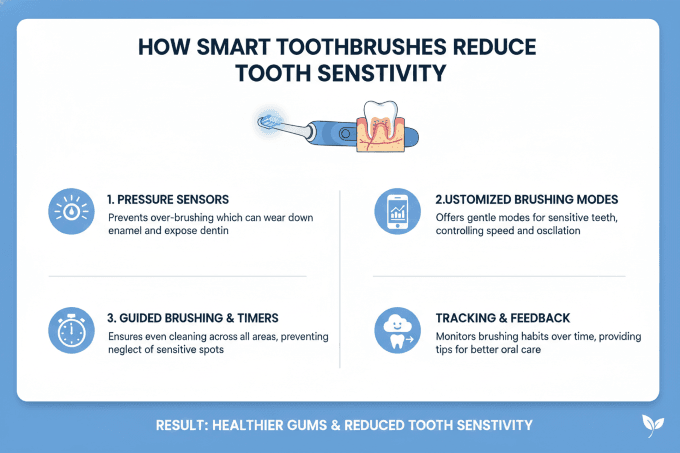
Smart toothbrushes, such as the BrushO smart toothbrush, come equipped with advanced technology that can help prevent or reduce tooth sensitivity. Here’s how:
  1. Pressure Sensors

    One of the key features of smart toothbrushes is pressure sensors that alert users when they are brushing too hard. Brushing with excessive force can lead to enamel wear and gum recession, both of which are major causes of tooth sensitivity. By receiving real-time feedback, users can adjust their brushing technique to avoid unnecessary pressure.
  2. Personalized Brushing Modes

    Smart toothbrushes offer various brushing modes, including gentle settings specifically designed for sensitive teeth. These modes adjust the brush's speed and motion to provide a softer, more comfortable cleaning experience, helping to reduce the likelihood of triggering pain or discomfort.
  3. Full-Mouth Coverage Tracking

    Many smart toothbrushes come with tracking capabilities that ensure users brush every part of their mouth equally, preventing areas from being missed or over-brushed. This technology ensures an even and thorough clean, which is important for maintaining optimal oral health and minimizing gum irritation.
  4. Real-Time Feedback

    Using an accompanying app, smart toothbrushes can offer real-time feedback on brushing technique and pressure. This ensures that users are consistently following recommended oral care practices to prevent tooth sensitivity and achieve the best possible results.
  5. Timers and Alerts

    Smart toothbrushes are equipped with timers that ensure users brush for the recommended two minutes. The built-in alerts also notify users when it's time to change the brushing area, which prevents focusing too much pressure on any one spot, helping to protect sensitive teeth.


Conclusion

Smart toothbrushes offer a modern solution to the age-old problem of tooth sensitivity. By incorporating innovative features like pressure sensors, personalized modes, and real-time feedback, these devices provide a more precise and comfortable brushing experience, protecting sensitive teeth from further damage. Whether you're looking to prevent tooth sensitivity or alleviate existing discomfort, a smart toothbrush may be your key to better oral health.

āϏāĻžāĻŽā§āĻĒā§āϰāϤāĻŋāĻ• āĻĒā§‹āĻ¸ā§āϟ

Whitening Toothpaste May Irritate Receding Gumlines

Whitening Toothpaste May Irritate Receding Gumlines

Whitening toothpaste can feel harsher on receding gumlines because exposed root surfaces and thinned tissue react differently to abrasive polishing, flavoring, and repeated brushing pressure. The problem is often the combination of product choice and technique rather than whitening alone.

Voice Prompts Can Rescue Half Asleep Brushing

Voice Prompts Can Rescue Half Asleep Brushing

Half awake brushing often fails because attention is not fully online yet. Voice prompts can rescue those sessions by replacing fuzzy self direction with simple real time cues that keep zone order, coverage, and timing from drifting while the brain is still catching up.

Sinus Congestion Can Change Upper Tooth Pressure

Sinus Congestion Can Change Upper Tooth Pressure

Sinus congestion can make upper teeth feel sore, full, or oddly pressurized because the tissues above the roots and around the face become inflamed and crowded. The sensation is often more about shared anatomy and pressure transfer than about a tooth problem starting on its own.

Salty Snacks Can Sting Small Mouth Sores

Salty Snacks Can Sting Small Mouth Sores

Salty snacks can make tiny mouth sores feel much bigger by pulling moisture from tender tissue, increasing friction, and keeping irritated spots active after the snack is gone. Texture, dryness, and repeated grazing often matter as much as the salt itself.

Root Furcations Make Molar Cleaning More Demanding

Root Furcations Make Molar Cleaning More Demanding

Molar root furcations create branching anatomy that makes plaque control more demanding when gum support changes or furcation entrances become exposed. Cleaning difficulty comes from shape, access, and brushing blind spots more than from neglect alone.

Retainers Can Trap Plaque Around Back Molars

Retainers Can Trap Plaque Around Back Molars

Retainers can make back molars harder to clean by creating extra edges, pressure points, and blind spots where plaque lingers. The problem is often not the appliance itself but the small behavior changes it creates around chewing, salivary flow, and brushing coverage.

Primary Teeth Enamel Is Thinner Than Adult Enamel

Primary Teeth Enamel Is Thinner Than Adult Enamel

Primary teeth have thinner enamel than adult teeth, which helps explain why small changes in plaque, snacking, and brushing can lead to faster visible damage in children. The difference is structural, not just behavioral, and it changes how parents should think about daily care.

Fizzy Water Can Keep Sensitive Teeth Reactive

Fizzy Water Can Keep Sensitive Teeth Reactive

Fizzy water can seem harmless, yet its acidity and sipping pattern may keep already sensitive teeth from settling down. The issue is usually not one dramatic drink but repeated low-level exposure on teeth with open dentin, wear, or recent enamel softening.

Dentin Layers Spread Force Away From Enamel

Dentin Layers Spread Force Away From Enamel

Dentin helps teeth handle everyday biting by flexing slightly and distributing stress before enamel has to carry it alone. This layered design explains why teeth can feel strong and still become vulnerable when dentin is exposed or dehydrated.

Bedtime Sync Prompts Help Families Brush On Time

Bedtime Sync Prompts Help Families Brush On Time

Bedtime brushing often fails at the family level because everyone is tired on a different schedule. Sync prompts can help by creating a shared transition into brushing before fatigue, distractions, and one more task syndrome push the routine too late.