How Smart Brushes Reduce Dental Visit Costs
Jan 28

Jan 28
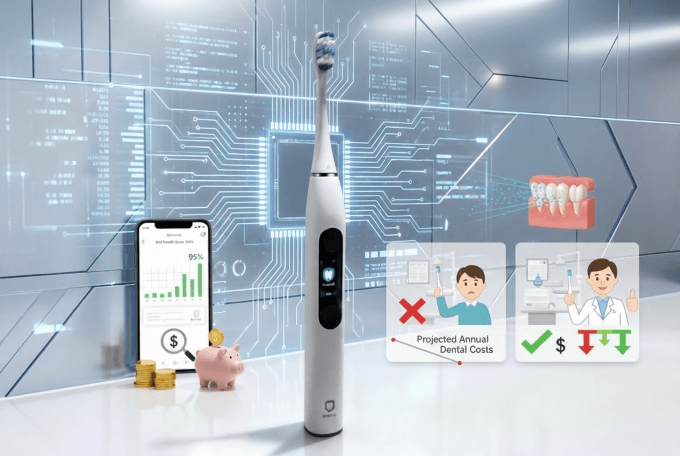
Smart toothbrushes, such as BrushO’s smart toothbrush, help reduce dental visit costs by preventing common oral problems through superior plaque removal, real-time feedback, and personalized tracking. By promoting better brushing habits and catching early signs of dental issues, smart toothbrush technology supports healthier teeth and gums, lowering the need for costly dental treatments over time.
 

Rising Dental Visit Costs and Preventive Care

Dental care costs continue to rise globally, creating financial barriers for many families seeking routine checkups, cleanings, and treatments. A significant portion of these costs stems from preventable issues such as cavities, gingivitis, and periodontal disease—conditions largely caused by inadequate daily oral hygiene. This is where smart toothbrushes play a valuable role: by enhancing daily brushing effectiveness with built-in technology and personalized insights, they can help reduce the likelihood of expensive dental procedures. Unlike manual brushes, smart toothbrushes integrate sensors, guided brushing, and connected apps to promote better technique, consistent habits, and early detection of potential issues. Over time, these benefits contribute directly to fewer dental problems—and lower overall dental expenses.
 

How Poor Brushing Contributes to Dental Costs

Before exploring how smart toothbrushes help, it’s critical to understand why inadequate brushing increases dental costs:
  • Plaque Buildup: Failure to thoroughly remove plaque leads to cavities and gum disease.
  • Gum Inflammation: Persistent bacterial buildup causes gingivitis and eventually periodontal disease.
  • Missed Early Signs: Without proper brushing feedback, early signs of dental issues go unnoticed until they require professional treatment.
Traditional toothbrushes rely entirely on user technique, making it easy to overlook hard-to-reach surfaces, apply incorrect pressure, or brush for insufficient time. These gaps in care allow bacterial buildup and decay to progress—often silently—until they escalate into costly dental procedures like fillings, root canals, or deep cleanings.

1. Better Plaque Removal Reduces Dental Problems

One of the most important ways smart brushes reduce dental visit costs is by enhancing plaque removal. Devices like BrushO’s smart toothbrush use sonic or oscillating-rotating technology combined with coverage sensors to break up plaque more effectively than manual brushing alone. By reaching interdental areas and gumline regions, these toothbrushes help prevent the bacterial buildup that leads to decay and gum disease—common drivers of dental treatment costs.More effective plaque control not only helps maintain a clean oral environment but also preserves enamel and gum integrity, reducing the risk of cavities and periodontal issues.

2. Real-Time Feedback Prevents Costly Mistakes

Unlike manual brushes, smart toothbrushes provide real-time feedback during brushing. By alerting users when they are applying excessive pressure or missing zones, they guide users toward healthier techniques and more thorough cleaning.
For example:
  • Pressure Alerts: Help users avoid brushing too hard, which can cause enamel wear and gum recession.
  • Zone Coverage Feedback: Ensures even attention across all quadrants of the mouth.
This immediate coaching reduces common brushing errors that contribute to oral disease, allowing users to correct habits before they lead to dental complications requiring professional intervention.

3. Personalized Tracking Helps Catch Early Issues

Smart toothbrushes connected to apps track brushing behavior over weeks, months, and years. These long-term insights allow users to spot patterns such as:
  • Frequently missed areas
  • Inconsistent brushing duration
  • Declining habit consistency
By identifying trends early, users can adjust brushing techniques or consult a dentist before issues become severe and costly. This preventive data is a powerful tool for maintaining oral health—and a proactive way to avoid expensive treatments.

4. Encouraging Consistency Through Motivation and Rewards

Many smart toothbrush systems incorporate motivational tools such as progress tracking, brushing “streaks,” and reward mechanisms. BrushO’s Brush & Earn reward system, for instance, incentivizes consistent brushing behaviors with points redeemable for brush heads or discounts. These positive reinforcements encourage users to maintain healthy habits, reducing the likelihood of oral health decline—one of the primary drivers of dental expenses. Consistently effective brushing is one of the most cost-efficient ways to prevent decay, inflammation, and gum disease.

5. Educating Users Leads to Smarter Dental Habits

Smart toothbrushes paired with dental care apps educate users on proper technique, pressure control, and full-mouth coverage. This ongoing education nurtures long-term brushing habits that keep plaque levels low and decrease the need for professional cleanings beyond regular checkups. Many users report improved technique and confidence in their daily oral care after integrating smart toothbrush feedback into their routines. As brushing quality improves, so does overall oral health, reducing the frequency and severity of dental issues that lead to expensive treatments.

6. Integration With Professional Dental Monitoring

Some advanced smart toothbrush apps allow users to share brushing data with their dentist, aiding in remote monitoring and early intervention. By documenting brushing habits and tracking issues over time, dental professionals can customize preventive advice, potentially reducing the need for more invasive procedures. This collaborative approach bridges daily oral care with professional guidance, helping patients avoid costly dental visits beyond routine checkups.
 

Smart Oral Care for Long-Term Savings

Although smart toothbrushes require an initial investment, their proven ability to enhance daily brushing effectiveness pays long-term dividends by preventing oral health problems that contribute to rising dental visit costs. By improving plaque removal, offering real-time feedback, tracking brushing habits, encouraging consistency, and educating users, smart toothbrushes empower better oral hygiene that significantly reduces the risk of cavities, gum disease, and costly dental interventions. In the journey to healthier teeth and gums, smart toothbrush technology—like BrushO’s smart toothbrush—offers a cost-effective way to safeguard your smile and your wallet.

āϏāĻžāĻŽā§āĻĒā§āϰāϤāĻŋāĻ• āĻĒā§‹āĻ¸ā§āϟ

Your Dominant Hand May Be Shaping Your Brushing More Than You Realize

Your Dominant Hand May Be Shaping Your Brushing More Than You Realize

Brushing habits are influenced not only by intention, but also by the natural bias of the hand doing the work. This article explains how hand dominance affects brushing symmetry, comfort, and routine design.

Tooth Shape Quietly Changes What Your Brush Can Reach

Tooth Shape Quietly Changes What Your Brush Can Reach

Different teeth present different brushing challenges because their shapes and positions vary. This article explains why tooth shape matters, where coverage often becomes uneven, and how better routines can support cleaner daily brushing outcomes.

Tiny Pauses Can Change How Controlled Brushing Feels

Tiny Pauses Can Change How Controlled Brushing Feels

Small pauses inside a brushing routine can influence control, precision, and attention more than users expect. This article explores micro-pauses, movement quality, and why rhythm is not only about speed.

The Mouth Does Not Feel the Same Everywhere After Brushing

The Mouth Does Not Feel the Same Everywhere After Brushing

Post-brushing sensation is not uniform across the mouth, and that matters for how people judge oral cleanliness. This article explores texture perception, sensory bias, and why feeling clean is not always a simple signal.

The Difference Between Watching Your Routine and Understanding It

The Difference Between Watching Your Routine and Understanding It

Many users observe their brushing habits without truly interpreting them. This article explores the gap between self-monitoring and self-understanding, and why that gap matters for daily oral-care improvement.

Routine Order Often Matters More Than Motivation

Routine Order Often Matters More Than Motivation

Many brushing problems are shaped less by motivation than by the order in which routines are performed. This article explains how sequence affects memory, automaticity, and the reliability of everyday oral-care habits.

One Chewing Side Can Quietly Influence How You Clean Your Mouth

One Chewing Side Can Quietly Influence How You Clean Your Mouth

People often have a preferred chewing side, and that habit may influence how they perceive and perform daily oral care. This article explores chewing-side bias, habit asymmetry, and what it can mean for brushing routines.

Inner Tooth Surfaces Often Get Less Attention Than People Think

Inner Tooth Surfaces Often Get Less Attention Than People Think

Inner tooth surfaces are easy to underestimate during daily brushing. This article explains why those areas are often under-covered, how routine design affects them, and what users can do to build more complete oral-care habits.

Cleaning Curved Tooth Surfaces Takes More Than a Standard Brushing Angle

Cleaning Curved Tooth Surfaces Takes More Than a Standard Brushing Angle

Tooth surfaces are not flat, and brushing angle affects how well different zones are reached. This article explains why curved anatomy matters, where people often miss coverage, and how more stable brushing habits can improve daily cleaning quality.

A Better Way to Read Your Own Brushing Patterns

A Better Way to Read Your Own Brushing Patterns

Better oral-care habits often begin when users can recognize the patterns inside their own brushing routines. This article explains how to interpret repeat behaviors, spot weak zones, and use feedback more effectively.